Quartzite countertops for bathroom vanities give New England homeowners marble's veining and cool touch with far tougher scratch and etch resistance, and getting it right in 2026 comes down to five checks most buyers skip until it's too late.
- Quartzite countertops for bathroom vanities score 7 on the Mohs scale — buy for daily-use primary baths.
- Light patterns like Taj Mahal and White Macaubas suit small vanities; a honed finish hides water spots.
- Skip unsealed, calcite-heavy quartzite in humid bathrooms — it etches almost like marble.
- Engineered quartz needs zero sealing; compare it against natural quartzite before you commit in 2026.
Why this matters
A bathroom vanity takes a different kind of abuse than a kitchen island. Toothpaste, mouthwash, perfume, nail polish remover, and steady humidity from showers hit the surface every single day. Marble's calcium carbonate structure reacts to that acidic splash and dulls into a matte etch mark within months. Quartzite is a metamorphic quartz sandstone, so it sits at roughly 7 on the Mohs hardness scale, the same range as engineered quartz and well above marble's 3 to 4.
That hardness difference is the entire reason quartzite countertops for bathroom vanities have become the go-to swap for homeowners who love the marble look but hate babying it. If you're still deciding between materials, the guide on how to choose between quartz and quartzite countertops breaks down the sealing and maintenance gap in more detail.
Who this is for
This is for homeowners renovating a primary bathroom or powder room in 2026 who want a natural-stone look on the vanity without a sealing ritual every few months. It's also for anyone who picked marble once, watched it etch near the toothpaste cup, and doesn't want a repeat. If your household runs two kids and a dog through one shared bathroom, quartzite's scratch resistance matters more than the subtle veining differences between slabs.
What to look for in quartzite for bathroom vanities
Scratch and etch resistance
A vanity top gets scraped by hair dryers, razors, and jewelry more than people expect. Quartzite's 7 Mohs rating resists those daily scuffs far better than marble's softer 3 to 4 rating, so the surface still looks new after a few years of real use.
Water and humidity performance
Bathrooms run humid for hours after every shower, and that moisture sits on the countertop edge and around the sink cutout. True quartzite has low porosity once properly sealed, which keeps water spots from turning into permanent stains around a vessel sink base.
Slab veining and color consistency
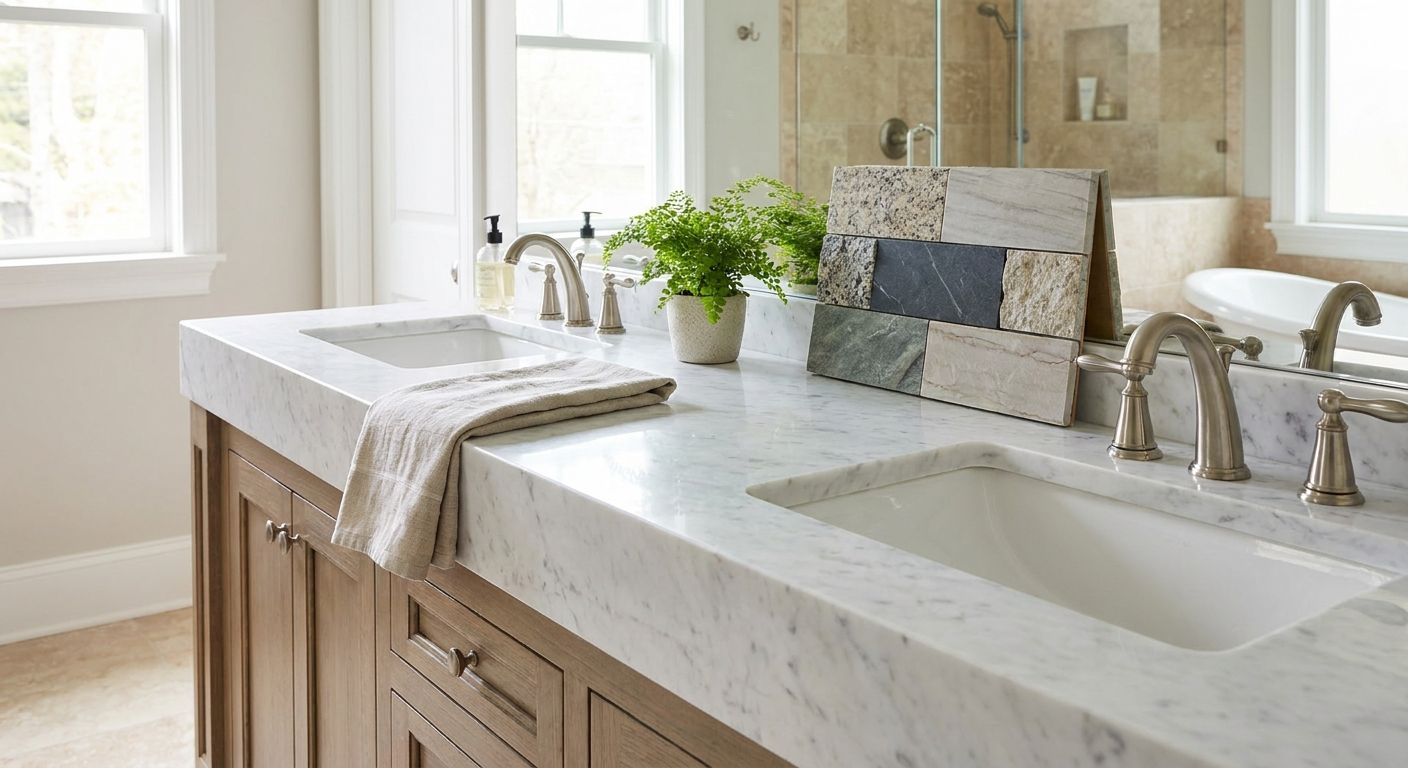
Quartzite slabs vary more than engineered quartz because each one is a natural cut. Walk the slab yard or ask for full-slab photos before fabrication so the veining on your vanity actually matches what you picked, not a smaller sample chip.
Edge profile for vessel or undermount sinks
Vessel sinks need a flat, minimally-eased edge so the bowl sits level. Undermount sinks call for a polished, finished underside edge since it's visible. Get this decided before fabrication — it changes the cutout template.
Finish: polished vs honed
Polished quartzite shows every water spot under bathroom lighting. A honed, matte finish hides mineral deposits and toothpaste splatter much better on a daily-use vanity, though it shows fingerprints on darker colors.
Sealing schedule
Most quartzite needs sealing once a year, sometimes every two years depending on the specific slab's porosity. Skip this and even true quartzite can stain from makeup, hair dye, or mouthwash sitting on the surface overnight.
Ready to plan your vanity upgrade?
Get a free estimate on quartzite countertops for bathroom vanities in 2026.
Top picks for a bathroom vanity
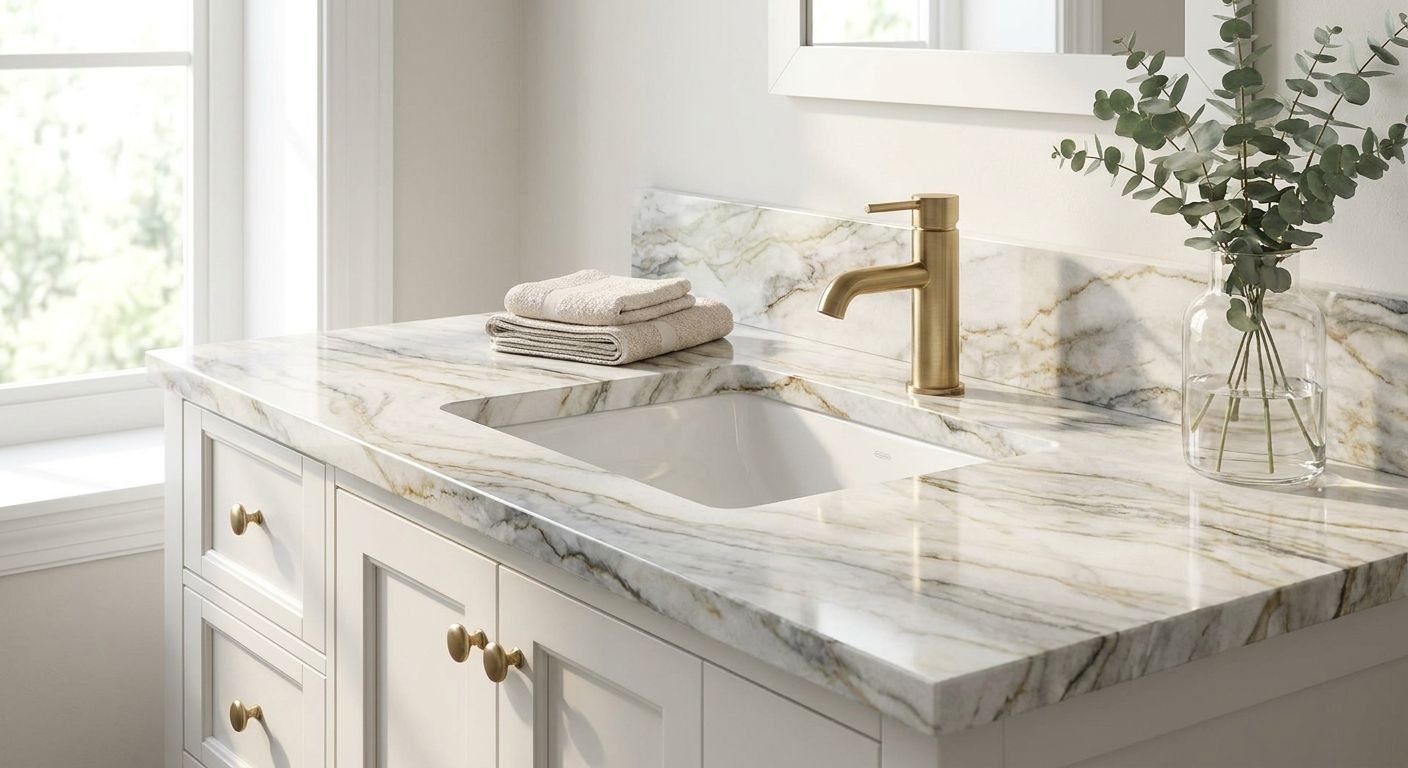
The safe pick — light, tight-veined quartzite (Taj Mahal, White Macaubas style). Spec that matters: low background movement means seams disappear on a two-sink vanity run. These patterns hide water spots and soap scum better than anything with dramatic dark veining. Buy for a shared family bathroom in 2026.
The wildcard — bold-movement quartzite (Fusion, Sea Pearl style). Spec that matters: dramatic veining reads as a focal point on a single-sink powder room vanity where you want a statement. It photographs beautifully but shows every water spot if left polished instead of honed. Consider if the room gets moderate daily use.
The budget flex — smaller powder room slabs. A half slab often covers a single vanity under 30 inches wide, cutting waste and cost versus buying a full slab for a small footprint. If your powder room is genuinely tiny, engineered quartz vanity tops for powder rooms are worth comparing since they need zero sealing at all. Consider quartz here if upkeep is your main worry.
The heavy-vein statement slab. Spec that matters: dramatic full-slab veining costs more per square foot because fabricators need extra yield to match veins across a two-sink vanity. Gorgeous in a primary bath with natural light, but it's overkill and pricier than needed for a small guest bath. Skip it for anything under 40 square feet.
What to avoid
- "Quartzite" that's actually marble-quartzite hybrid. Some stone labeled quartzite at the yard is calcite-rich and etches almost like real marble. Ask your fabricator to test a sample with a drop of vinegar before you sign off — a true quartzite won't dull.
- Skipping the sealing conversation entirely. Even 7-Mohs quartzite has micro-pores that absorb makeup and hair dye if never sealed. Treat sealing like an annual maintenance line item, not an optional extra.
- Choosing a slab from a 4x4-inch sample. Veining that looks subtle on a chip can dominate an entire vanity top. If you're torn between the marble look and quartzite's durability, the comparison on marble countertops for bathroom vanities is worth a read before you fall for a sample chip.
Verdict comparison
| Material | Mohs hardness | Etch resistance | Sealing needed | Best for |
|---|---|---|---|---|
| Quartzite | 7 | High | Annual to biennial | Daily-use primary bath vanities |
| Granite | 6-6.5 | Moderate-high | Annual | Budget-conscious durability |
| Marble | 3-4 | Low | Frequent | Low-traffic powder rooms only |
| Engineered quartz | ~7 | High | None | Zero-maintenance vanities |
Quartzite wins the balance between natural-stone look and low-maintenance durability for most 2026 vanity remodels. Granite countertops for bathroom vanities land close behind on hardness at a often lower price point, while marble stays a look-only choice for rooms that see light use.
FAQ
Is quartzite good for bathroom vanities?
Yes. Quartzite scores about 7 on the Mohs hardness scale, matching engineered quartz and far exceeding marble's 3 to 4, which makes it resistant to daily scratches from hair dryers, razors, and jewelry.
How much sealing does a quartzite vanity need?
Most quartzite needs sealing once a year, sometimes every two years depending on the slab's porosity. Skipping it lets makeup, hair dye, and mouthwash stain the surface overnight.
Is quartzite better than marble for a bathroom vanity?
For daily-use bathrooms, yes. Marble's lower hardness and calcium carbonate content make it etch from acidic products like perfume or nail polish remover, while true quartzite resists that reaction.
Should I choose polished or honed quartzite for a vanity top?
Honed finishes hide water spots and toothpaste residue better on a daily-use vanity. Polished finishes look glossier but show every mineral deposit under bathroom lighting.
Can quartzite look like marble on a vanity?
Light, tight-veined quartzite patterns like Taj Mahal or White Macaubas closely resemble Carrara-style marble veining while resisting scratches and etching far better.
Is quartzite worth it for a small powder room?
It depends on use. For a rarely-used powder room, engineered quartz can deliver a similar look with zero sealing, while quartzite makes more sense for a primary bath vanity used daily.
How do I tell real quartzite from marble at a stone yard?
Ask the fabricator to test a sample with a drop of vinegar. True quartzite resists the etch; calcite-heavy stone mislabeled as quartzite will dull almost like marble.
One last thing
The detail most homeowners miss in 2026: a honed finish on quartzite doesn't just look softer, it hides hard-water spots around the faucet base for years longer than a high-polish finish does. If durability under daily use is the whole point of choosing quartzite over marble, the same logic applies in kitchens — the write-up on quartzite countertops for busy family kitchens shows how the same hardness numbers play out under heavier daily wear.