Granite countertops for bathroom vanities give New England homeowners a stone that shrugs off water, steam, and daily makeup spills without the babying marble demands. This guide breaks down which finishes, colors, and edge details hold up in a bathroom versus which ones just look good in a showroom.
- Granite countertops for bathroom vanities resist water and heat with a Mohs hardness of 6 to 7. Buy polished granite for busy vanities.
- A 3cm slab skips the extra plywood substrate marble often needs and cuts seam risk on double vanities. Consider 3cm over 2cm.
- Honed granite hides water spots but needs sealing roughly twice a year in humid bathrooms. Skip it in steam-heavy spaces.
- Leathered granite traps soap scum in a small vanity footprint faster than a smooth finish does. Skip it for bathrooms.
- Soares Stone fabricates and installs granite bathroom vanities across New England — get measurements taken before demo day.
Why this matters
Soares Stone fabricates granite for kitchens and bathrooms, and the two rooms don't behave the same way. A kitchen island takes knife nicks and hot pans; a bathroom vanity sits under standing water at the faucet, absorbs steam from every shower, and gets hit with acetone, perfume, and hair dye almost daily.
Granite scores 6 to 7 on the Mohs hardness scale, which is why it doesn't etch the way marble does when nail polish remover or perfume lands on it. That single fact is the reason granite still outperforms marble in high-splash bathrooms in 2026, even though marble wins on pure white brightness.
The tradeoff is porosity. Granite needs sealing on a schedule — typically once a year for polished finishes, closer to twice a year for honed ones — or it will pick up stains from standing water and cosmetics faster than a sealed surface should.
Who this is for
This guide is built for homeowners renovating a hall bath, primary suite, or powder room who want a vanity top that matches the durability of their kitchen granite without inheriting marble's sensitivity to acidic products. If your household includes teenagers, daily steam showers, or a vanity that doubles as a getting-ready station, granite countertops for bathroom vanities solve a maintenance problem marble creates.
What to look for in granite countertops for bathroom vanities
Slab thickness
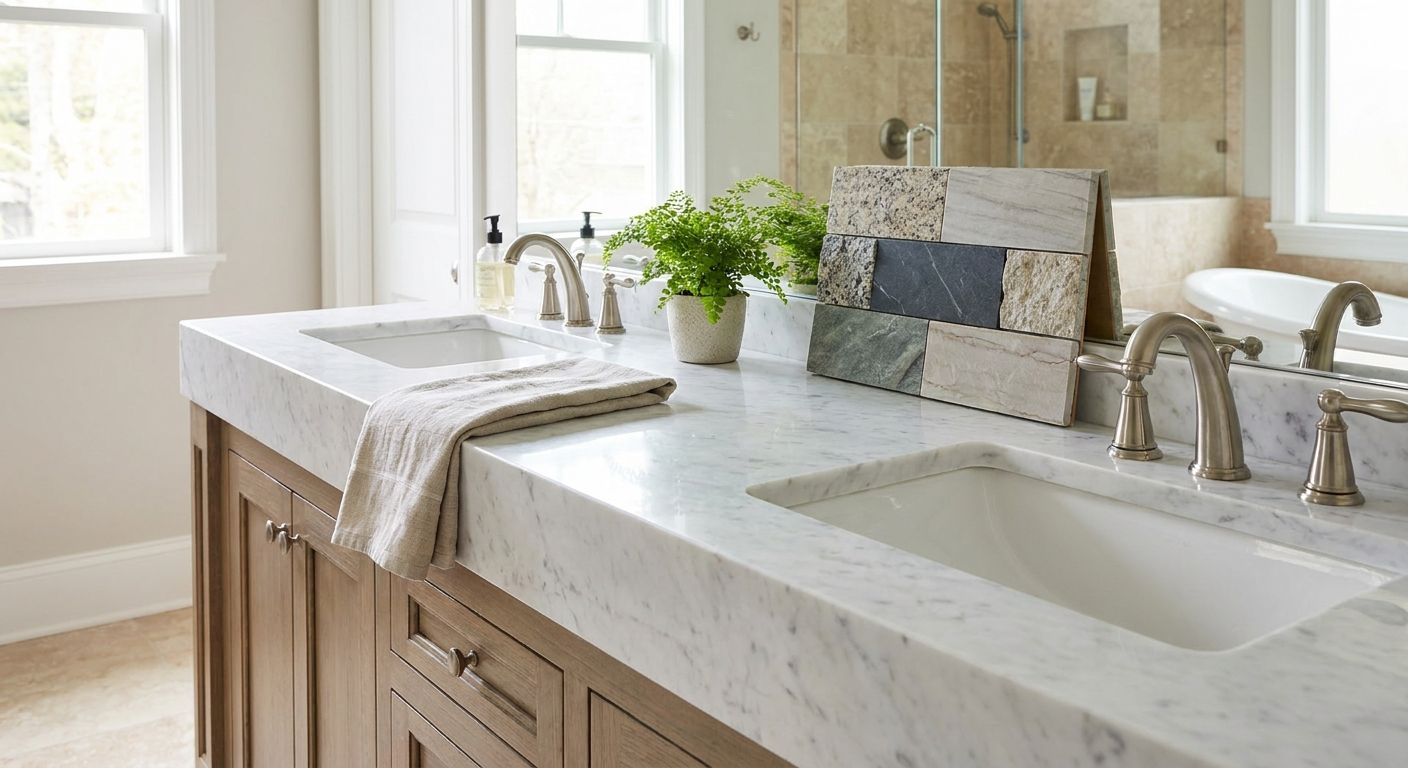
Most bathroom vanities use 2cm or 3cm granite, and the choice affects both look and support. A 3cm slab reads heavier at the edge and often skips the plywood substrate that thinner slabs need under a sink cutout, which matters on a vanity with two undermount bowls close together.
Finish
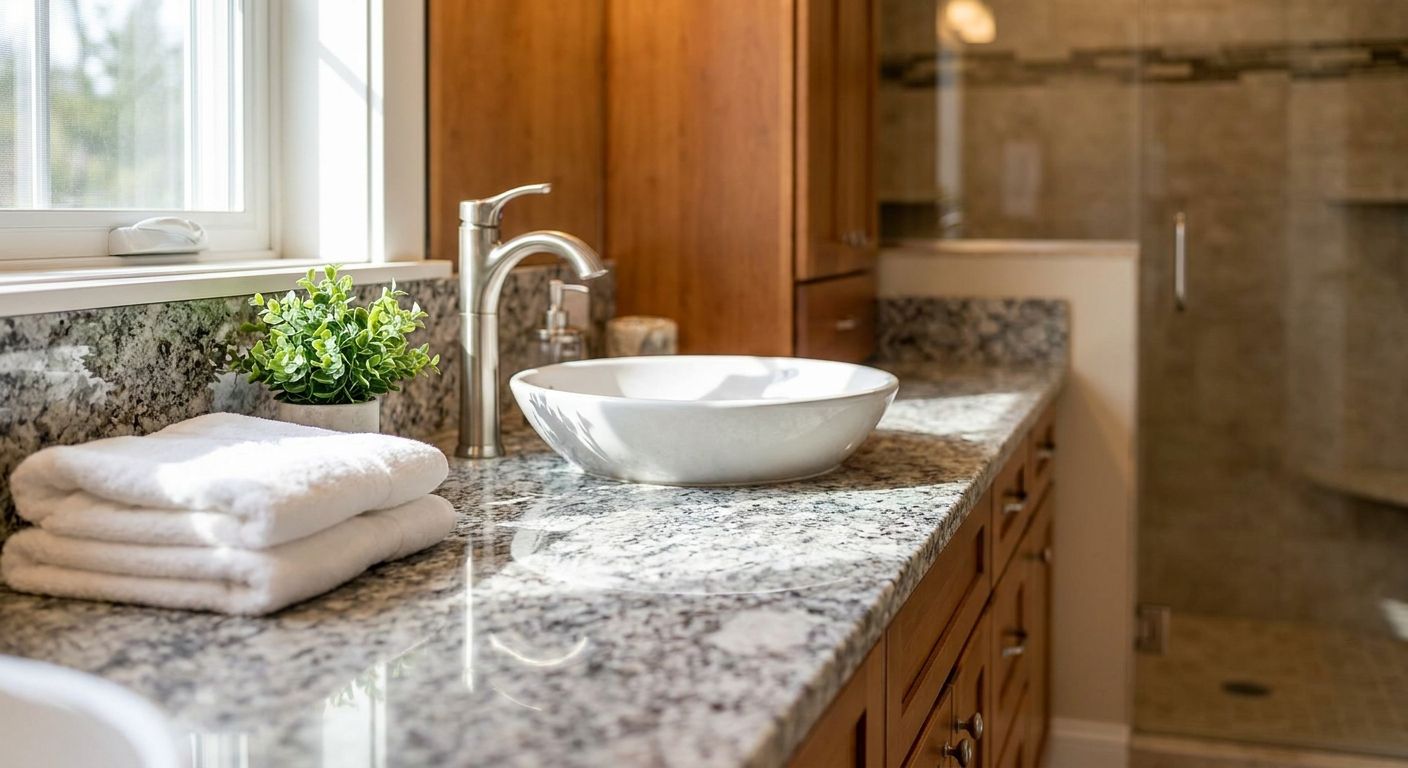
Polished granite reflects light and shows water spots the moment they dry, which sounds bad until you realize it also makes cleaning obvious — you see the spot, you wipe it. Honed and leathered finishes hide those spots but trade that convenience for higher porosity and more frequent sealing.
Edge profile
A compact vanity footprint makes the edge profile more visible than it is on a 9-foot kitchen island. Eased and bullnose edges shed water back toward the sink instead of pooling at a sharp square edge, which matters directly next to a faucet used multiple times a day.
Color and pattern scale
Busy, high-contrast granite that looks striking across a large kitchen island can overwhelm a 24-inch vanity top. Smaller surfaces read better with tighter, more consistent veining or a near-solid background color.
Sealant and porosity
Granite is not maintenance-free — it's low-maintenance, and only if it's sealed. A quality sealer applied once a year on a polished slab keeps steam and standing water from soaking in, and skipping that step is the single biggest reason granite vanities stain.
Sink compatibility
Undermount sinks show a clean granite edge at the basin and are easier to wipe crumbs and toothpaste off the counter directly into the bowl. Overmount sinks work with any thickness but create a lip that traps water and grime, which is a bigger nuisance in a bathroom than a kitchen.
Top picks for granite bathroom vanities
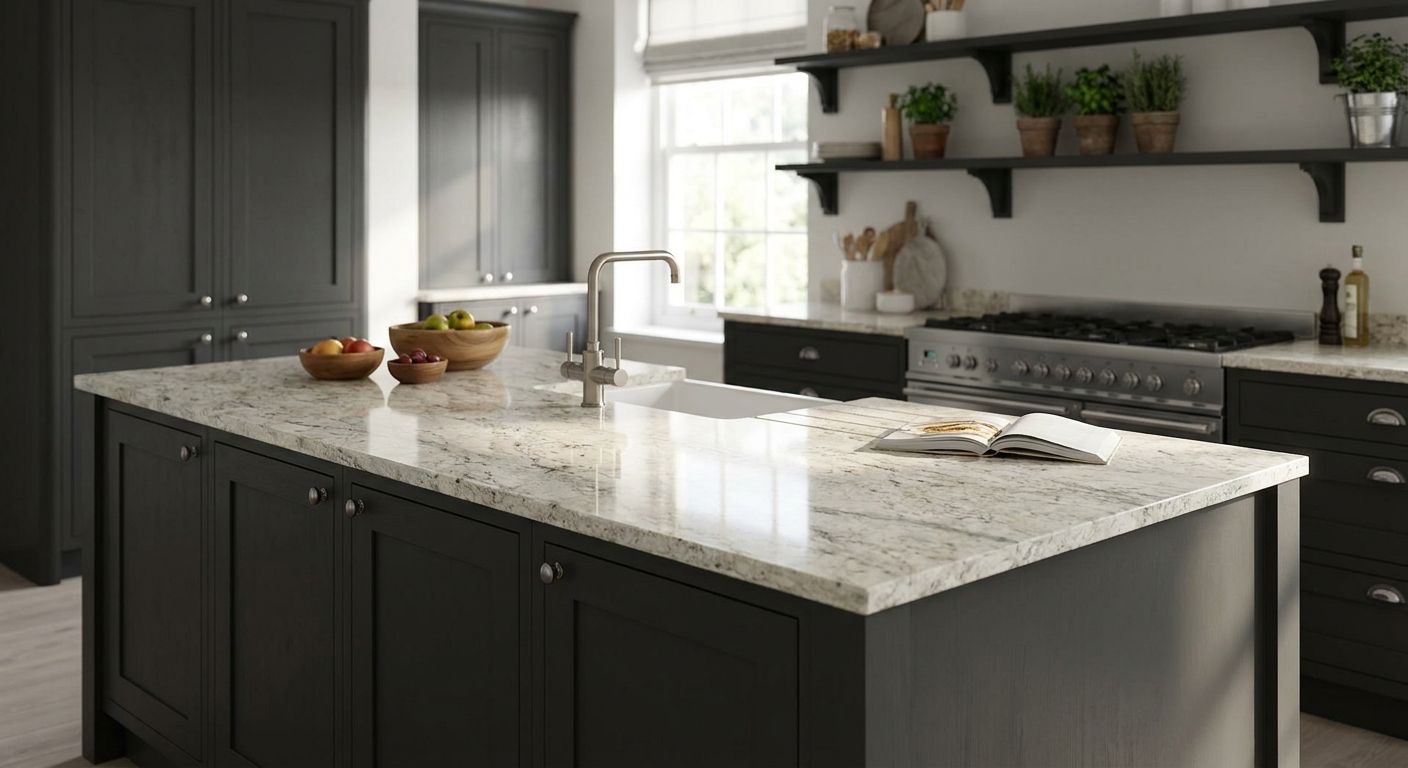
Absolute Black granite (polished) — the safe pick. True black granite hides toothpaste splatter and mascara smudges better than any lighter stone, and its Mohs hardness of 6 to 7 handles daily contact with perfume and lotion without etching. It's the same slab family that holds up on granite countertops for kitchen islands, so matching your bathroom to your kitchen is straightforward. Verdict: Buy.
Colonial White granite (polished) — the small-bath brightener. A pale background with fine black and gray flecking bounces light around a windowless powder room the way marble does, minus marble's sensitivity to acidic spills. It photographs cleanest in listing photos, which matters if resale is part of the plan for 2026. Verdict: Buy.
Giallo Ornamental granite (honed) — the pick that needs upkeep. Warm gold tones with soft veining hide water spots better than a polished slab, but the honed surface is more porous and needs sealing closer to twice a year in a steam-heavy bathroom. It's a good look if you're committed to the maintenance schedule. Verdict: Consider.
Leathered granite, any color — the trend that fights bathrooms. The textured surface looks striking in showroom lighting but catches soap film and lotion residue in its grooves, and a small vanity footprint means you're scrubbing that texture constantly. Verdict: Skip.
What to avoid
- Thin 2cm slabs on a cantilevered vanity overhang without support brackets — the overhang can flex or crack over time without a bracket underneath.
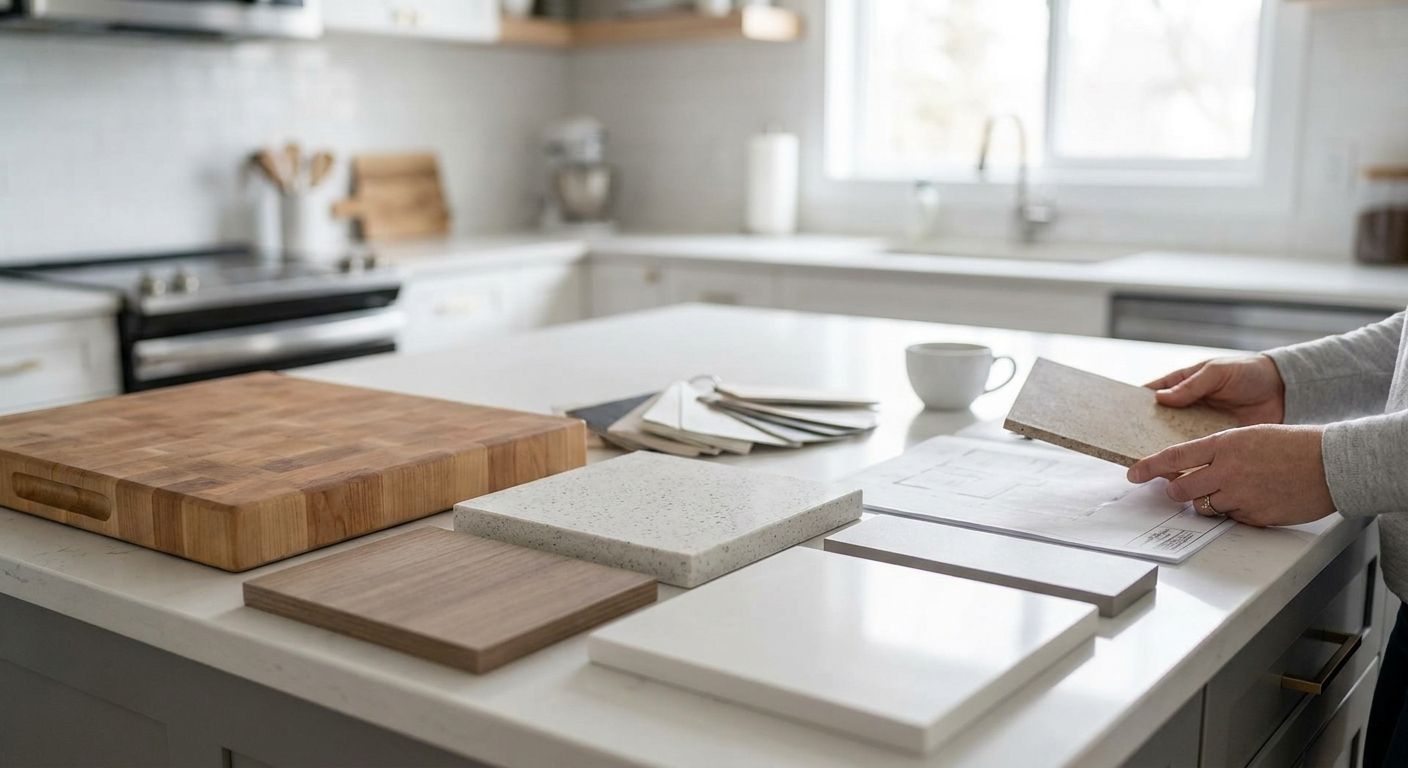
- Matching bathroom granite to kitchen granite from memory — bathroom lighting (usually cooler, closer to the surface) shifts undertones, so bring a kitchen sample into the bathroom before ordering.
- Choosing dark leathered granite for a small, poorly ventilated bathroom — it looks moody in photos and traps grime in real life. If a bright, veined look is the goal instead, marble countertops for bathroom vanities is the better fit, with more sealing required to protect against etching.
Verdict comparison
| Option | Finish | Sealing Frequency | Best For | Verdict |
|---|---|---|---|---|
| Absolute Black | Polished | About once a year | High-traffic vanities | Buy |
| Colonial White | Polished | About once a year | Small or windowless baths | Buy |
| Giallo Ornamental | Honed | About twice a year | Homeowners okay with upkeep | Consider |
| Leathered (any color) | Textured | Twice a year+ | Not recommended for vanities | Skip |
If granite's porosity still feels like too much upkeep, run the numbers against quartz before you commit — how to choose between quartz and quartzite countertops walks through the maintenance tradeoff in more detail.
Get a Granite Vanity Quote
Soares Stone measures, fabricates, and installs granite vanity tops across New England.
FAQ
What's the best granite for a bathroom vanity in 2026?
Polished granite in a tight, low-contrast pattern like Absolute Black or Colonial White is the best granite for a bathroom vanity in 2026 because it resists water spotting and hides daily splash without heavy upkeep. Honed finishes look softer but need sealing more often in humid bathrooms.
Is granite better than marble for bathroom countertops?
Granite holds up better than marble against acidic products like perfume and nail polish remover, since it scores 6 to 7 on the Mohs hardness scale and doesn't etch the way marble does. Marble still wins on pure white brightness if that look matters more than daily maintenance.
How much does granite cost for a bathroom vanity?
Granite bathroom vanity tops are priced by square footage, slab selection, and edge profile, so getting an exact number means measuring the space and picking a slab. A fabricator quote after an in-home measurement is the only reliable way to price a specific vanity.
Does granite need sealing in a bathroom?
Yes, granite needs sealing about once a year for polished finishes and closer to twice a year for honed finishes in a steam-heavy bathroom. Skipping sealant is the main reason granite vanities absorb stains from standing water and cosmetics.
Can you put granite over a floating vanity?
Yes, but a floating vanity with an overhang needs support brackets under a 2cm slab or it can flex over time. A 3cm slab carries more of its own weight and needs less additional bracing.
What thickness should bathroom vanity granite be?
3cm is the more common choice for bathroom vanities because it skips the plywood substrate thinner slabs often need and handles two undermount sinks close together with less flex. 2cm works fine on a fully supported cabinet base.
Does granite stain from makeup or hair dye?
Sealed granite resists staining from makeup and hair dye far better than unsealed granite, since the sealer blocks the pores that would otherwise absorb pigment. Wiping spills quickly still matters even on sealed granite.
How long does granite last in a bathroom?
Granite countertops for bathroom vanities routinely last decades with annual sealing and normal cleaning, since granite doesn't wear down the way laminate or cultured marble does. The slab itself outlasts most vanity cabinets it sits on.
One last thing
Full granite slabs run roughly 9 feet by 5 feet, which means most bathroom vanities get cut from the same slab remnant as a kitchen island order. If matching your bathroom granite to your kitchen granite matters, ask about ordering both from one slab instead of two separate purchases — it's the easiest way to guarantee the veining lines up.