Quartzite handles daily kitchen chaos — knife nicks, hot pans straight off the stove, red wine left overnight — better than almost any natural stone, which is why families planning full remodels in 2026 keep landing on it instead of marble or standard granite.
- Quartzite countertops for busy family kitchens score a 7 on the Mohs hardness scale, beating granite's 6-6.5 and marble's 3-4.
- Soares Stone's quartzite waterfall island pick handles daily kid traffic and hot-pan abuse — Buy verdict for 2026 remodels.
- Skip dyed 'commercial quartzite' slabs — they're often resin-treated quartz sold under the wrong name.
- Engineered quartz stays the lower-maintenance option for families who won't reseal stone every year — Consider it instead.
Why this matters
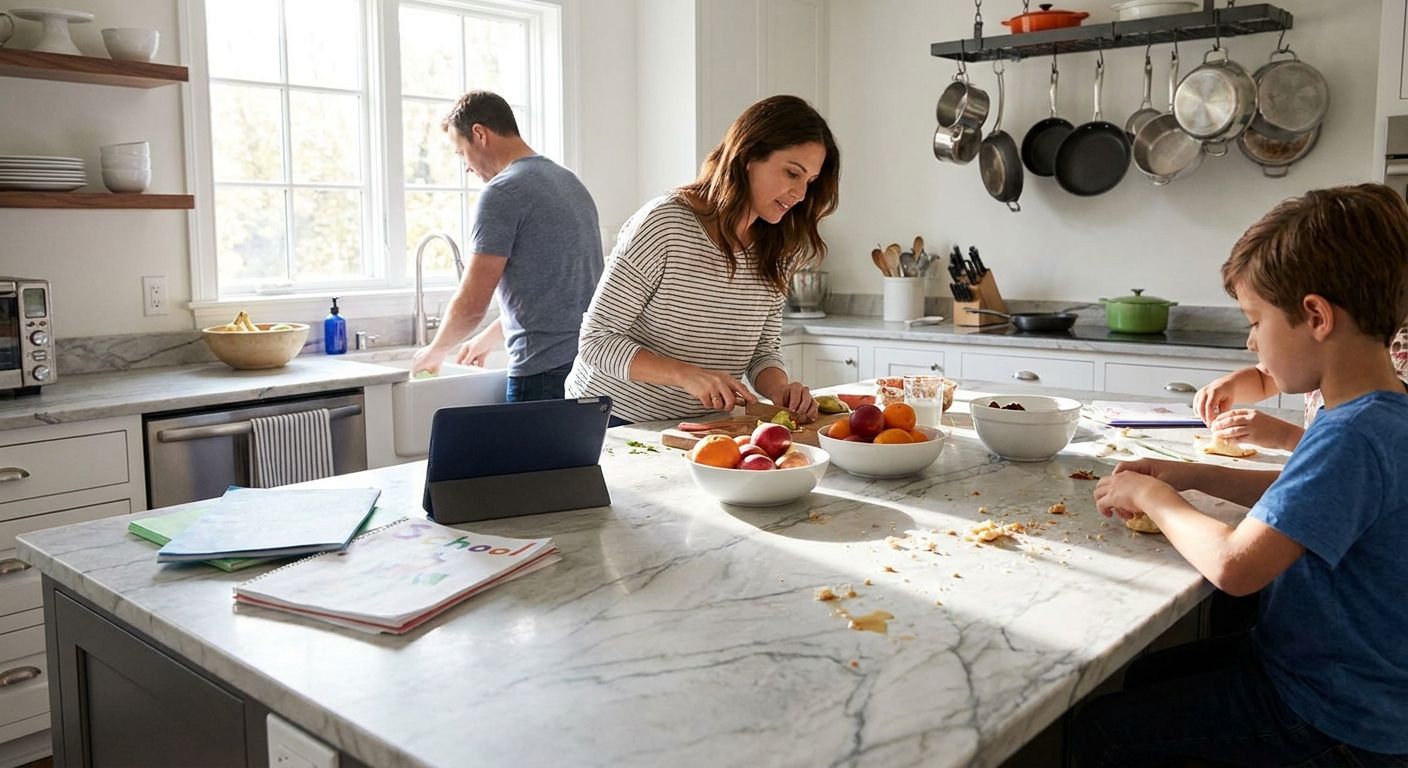
A countertop in a family kitchen gets treated worse than one in a showroom photo. Backpacks land on it, cutting boards get skipped, and someone's always setting a pan straight off the burner onto the slab near the stove.
Quartzite is quartz sandstone that's been metamorphosed under heat and pressure, and that process is what pushes it to roughly 7 on the Mohs hardness scale — the same range as the quartz crystals used in engineered surfaces, and noticeably harder than granite or marble. Soares Stone fabricates and installs quartzite, granite, marble, and quartz across New England kitchens, so the comparison below is grounded in what actually survives a decade of family use, not showroom marketing.
The catch: not every slab labeled "quartzite" at a big-box counter actually is one. Some are dyed quartz or resin-stabilized limestone sold under the same name because it sounds premium. That mislabeling is the single biggest reason families end up disappointed a year into ownership.
Who this is for
This guide is for households with kids or teenagers who use the kitchen island as a homework desk, snack counter, and science-project staging area — not a display piece. If your current countertop already has etch marks from lemon juice or scratch trails from a chef's knife, and you're remodeling in 2026 with a five-to-ten-year-plus horizon before the next redo, quartzite is worth the extra look over standard granite or marble.
What to look for in quartzite for busy family kitchens
Scratch and heat resistance
A true quartzite slab shouldn't show a mark from a steak knife dragged across it or a hot cast-iron skillet set down without a trivet. This matters more in family kitchens than anywhere else because kids don't reach for trivets — verify hardness with your fabricator before assuming a slab labeled "quartzite" actually tests at 7 Mohs.
Stain resistance and sealing schedule
Quartzite is porous compared to engineered quartz, so it needs a penetrating sealer, typically reapplied every 12 to 18 months depending on the specific slab's density. Families who forget maintenance schedules should ask directly how forgiving a given quartzite variety is before red wine and marinara become a testing ground.
Slab pattern that hides daily mess
Dense veining and busy movement in the stone hide crumbs, fingerprints, and water spots far better than a stark, uniform white slab. For a kitchen that's in constant use, a pattern that camouflages daily wear beats a pattern that photographs perfectly on day one.
Edge profile safety for kids
Sharp 90-degree edges on an island corner are a liability with small kids running through the kitchen. Eased or bullnose edge profiles cost little extra during fabrication and remove one of the most common injury points in a busy family layout.
Structural support for waterfall islands
A quartzite waterfall edge — where the slab wraps down the side of the island in one continuous piece — looks striking, but the overhang needs steel or plywood substrate support underneath. Skipping that support is how you end up with a cracked corner two years after installation.
Cost tier relative to quartz and granite
Quartzite generally runs above standard granite and can approach or exceed premium engineered quartz depending on the slab's rarity and origin. Get exact pricing from your fabricator rather than a national average, since slab sourcing swings the number more than the material category does.
Top picks for family kitchens
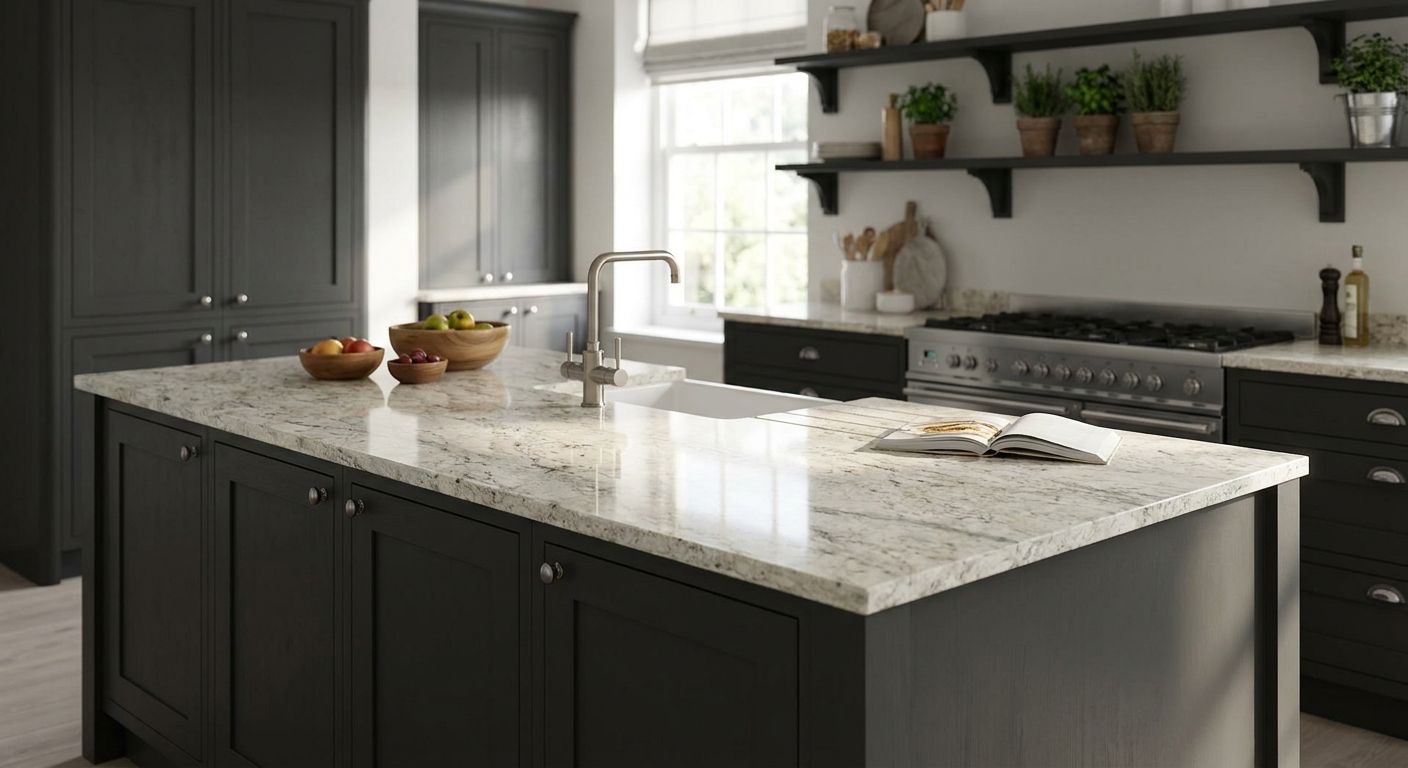
The safe pick: quartzite waterfall island A continuous quartzite waterfall edge on a kitchen island gives you one uninterrupted surface with no seam at the corner, which means no seam line to catch crumbs or grime over years of daily use. The quartzite waterfall island approach concentrates the durability where a family kitchen takes the most abuse — the island edge kids lean on and homework gets done at. Verdict: Buy if your island sees daily traffic and you want one slab doing the heavy lifting.
The wildcard: indoor-outdoor quartzite flow Families with a kitchen that opens onto a patio or covered porch increasingly want the same slab material running from the indoor island straight through to an outdoor prep counter. A quartzite countertop built for outdoor kitchens is engineered to handle UV exposure and temperature swings, which is a stricter bar than most indoor kitchens ever demand — meaning the same slab indoors is over-built for daily family use in the best way. Verdict: Consider if your layout already has or wants an indoor-outdoor connection; Buy if that connection is already planned into the 2026 remodel.
The budget-conscious pick: leathered-finish quartzite A leathered finish (a textured, low-sheen surface instead of high polish) does double duty for busy families: it hides fingerprints and water spots noticeably better than a polished slab, and it's often priced a step below the same stone in a polished finish. It's a lower-drama surface for a kitchen that's used hard every single day. Verdict: Consider for families prioritizing low visible maintenance over a glossy showroom look.
Get a quote on quartzite for your kitchen
Soares Stone fabricates and installs quartzite countertops across New England.
What to avoid
- Dyed or resin-stabilized "quartzite." Some slabs sold as quartzite at big-box retailers are actually treated limestone or quartz dyed to mimic quartzite's look, and they don't carry the same 7 Mohs hardness — ask your fabricator to confirm the mineral composition before you sign off.
- Ultra-porous white quartzite varieties without an upgraded sealer. Some of the trendiest white quartzite slabs are more porous than the average quartzite and need a heavier sealing schedule than the 12-to-18-month standard — skipping that step is how families end up with permanent wine stains within the first year.
- Undersized waterfall overhangs with no hidden support. A waterfall edge that looks continuous but has no steel bracket or plywood backing underneath is a stress-crack risk the moment a toddler decides the corner is a good place to lean.
Verdict comparison
| Pick | Scratch resistance | Maintenance | Best for | Verdict |
|---|---|---|---|---|
| Quartzite waterfall island | Excellent (7 Mohs) | Reseal 12-18 mo | High-traffic island | Buy |
| Indoor-outdoor quartzite | Excellent (7 Mohs) | Reseal 12-18 mo | Open patio-to-kitchen layouts | Buy/Consider |
| Leathered-finish quartzite | Excellent (7 Mohs) | Reseal 12-18 mo | Low-visible-mess families | Consider |
| Standard polished granite | Very good (6-6.5 Mohs) | Reseal annually | Budget-conscious families | Consider |
| Dyed "quartzite" (mislabeled) | Unverified, often lower | Unknown | No one | Skip |
FAQ
Is quartzite good for a busy family kitchen in 2026?
Yes — quartzite tests at roughly 7 on the Mohs hardness scale, which makes it more scratch- and heat-resistant than granite or marble, both common concerns in high-traffic family kitchens.
Is quartzite better than granite for kids and daily wear?
Quartzite is harder than granite (7 Mohs versus 6-6.5), so it resists knife marks and hot-pan damage slightly better, though both need periodic sealing to resist stains.
How often do quartzite countertops need to be resealed?
Most quartzite slabs need resealing every 12 to 18 months, though denser slabs can go longer and more porous white varieties may need it sooner.
Is quartz easier to maintain than quartzite for a family kitchen?
Yes — engineered quartz doesn't require sealing at all since it's a manufactured material, making it the lower-maintenance choice for families who won't keep up a resealing schedule.
Can quartzite crack around a waterfall island edge?
It can if the overhang lacks proper steel or plywood support underneath — a correctly supported waterfall edge holds up fine under daily family use.
How do I know if a slab labeled quartzite is real?
Ask your fabricator to confirm the mineral composition before installation, since some slabs sold as quartzite in 2026 are actually dyed or resin-treated quartz or limestone.
Does quartzite need a special edge profile for kids?
An eased or bullnose edge on island corners reduces injury risk for kids running through the kitchen, and it costs little extra during fabrication compared to a sharp 90-degree edge.
One last thing
The detail most families miss: a leathered finish on quartzite doesn't just look different from polished — it genuinely hides fingerprints, water spots, and light scratches better day to day, which matters more in a house with kids than any spec sheet number. If you're choosing between two nearly identical slabs for a 2026 remodel, ask to see both finishes side by side before deciding.