Laundry rooms take more daily punishment than most kitchens ever will, and getting quartz countertops for laundry rooms wrong means bleach spots, warped edges, or a folding surface that stains inside a year. This guide from Soares Stone covers what actually survives a wash-and-fold routine in 2026 and what to skip.
- Quartz countertops for laundry rooms resist bleach and detergent stains better than marble or granite in 2026 — Buy solid or speckled finishes.
- Skip high-gloss dark quartz; it shows water spots and lint under laundry room lighting.
- Non-porous quartz needs no sealing, unlike granite or marble surfaces near a washer.
- Soares Stone recommends 2cm slabs with an eased edge for tight laundry room footprints.
Why this matters
A laundry counter sits inches from a washer that leaks eventually and detergent bottles that drip. Marble etches on contact with bleach. Granite needs resealing or it soaks up spills at the seams. Quartz countertops for laundry rooms skip both problems because the material is engineered, not quarried whole — it's roughly 90%+ ground quartz bound with resin, which is why it never needs sealing the way natural stone does. That single difference is why quartz dominates utility spaces in New England homes right now.
Who this is for
This guide is for homeowners renovating a mudroom laundry, a basement wash station, or a small utility closet who want a folding surface that survives bleach, fabric softener, and the occasional overflowing washer without babying it. If you're picking material for a laundry room that also doubles as a dog-wash station or a mudroom drop zone, the durability math below matters even more.
What to look for in quartz countertops for laundry rooms
Stain and chemical resistance
Bleach, oxygen cleaners, and stain removers sit on laundry counters more than any kitchen ingredient. Quartz's resin binder seals the surface at the molecular level, so bleach wipes off instead of etching in, unlike calcite-based stones.
Non-porous surface, zero sealing
A porous countertop next to a washer is a slow-motion mold problem. Quartz's non-porous finish means no annual resealing and no hidden moisture soaking into hairline cracks near the sink cutout.
Impact resistance
Detergent jugs, iron caddies, and dropped hangers hit laundry counters daily. A Mohs hardness of 7 means quartz shrugs off small impacts that would chip a softer surface.
Color that hides lint and dust
White laundry rooms look great in photos and terrible three days after folding a load of dark towels. Pattern and fleck density matter more here than in almost any other room.
Slab thickness for tight footprints
Most laundry counters run narrower and shorter than kitchen runs. A 2cm slab with a supported edge keeps the counter from looking bulky in a 24-inch-deep closet, while 3cm gives more overhang strength if you're adding a fold-down ironing extension.
Seam placement around plumbing
Every laundry counter has a sink cutout and often a stacked-washer surround. Seam placement around those cutouts determines whether water finds a weak point — get this reviewed during fabrication, not after installation.
Top picks for laundry room quartz
Solid white or warm white quartz — the safe pick. Hardness of 7 on the Mohs scale and a flat, non-patterned face means nothing to camouflage but also nothing to hide behind — smudges show fast, but they wipe off just as fast. Buy if you clean the counter after every load.
Concrete-look grey quartz — the wildcard. The mottled texture hides detergent drips and hard-water spots better than a flat white field, and it reads modern next to stainless washers. Buy for a laundry room that gets heavy daily use.
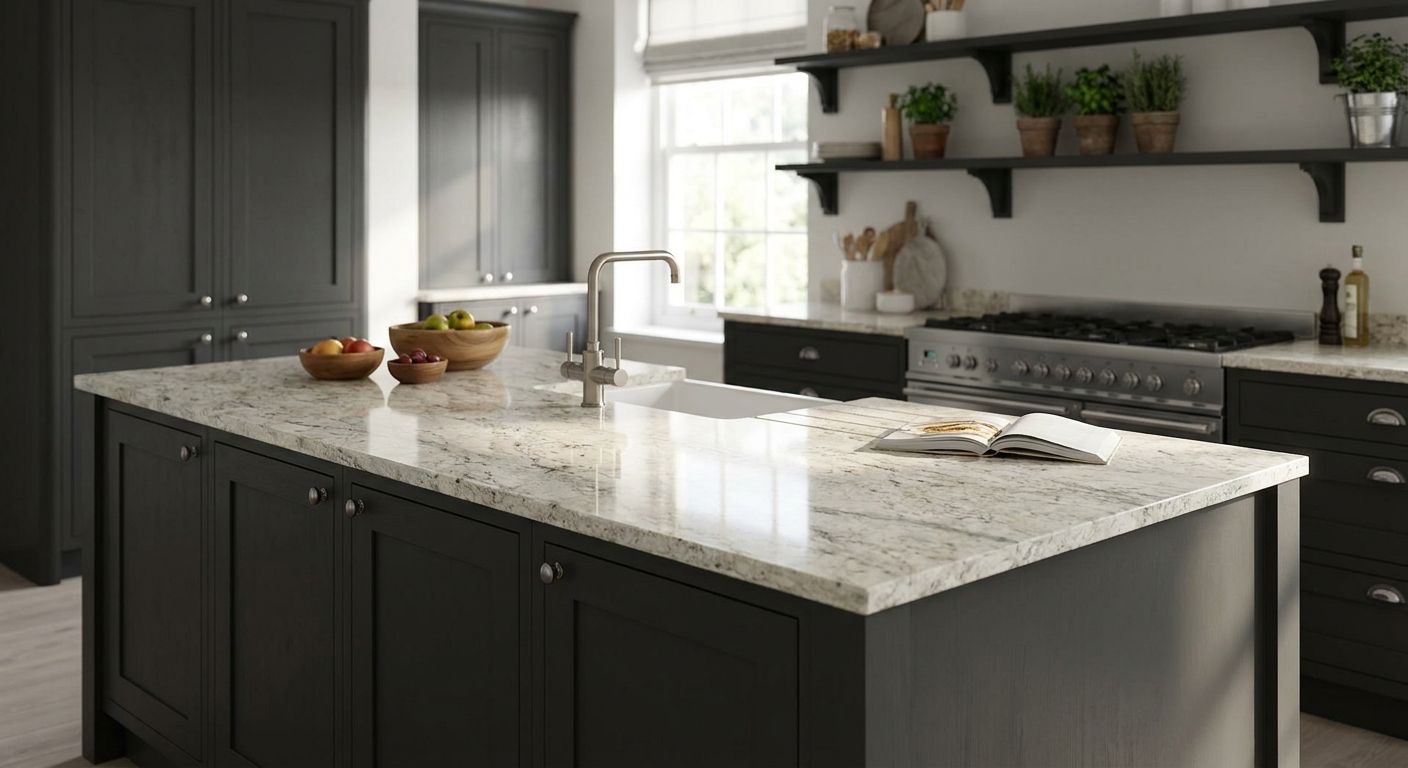
Dark charcoal or black quartz — the workhorse. Stains disappear against a dark field, but dust and lint show up white against black under bright laundry-room lighting. Consider it only if the room has strong task lighting and gets wiped down often.
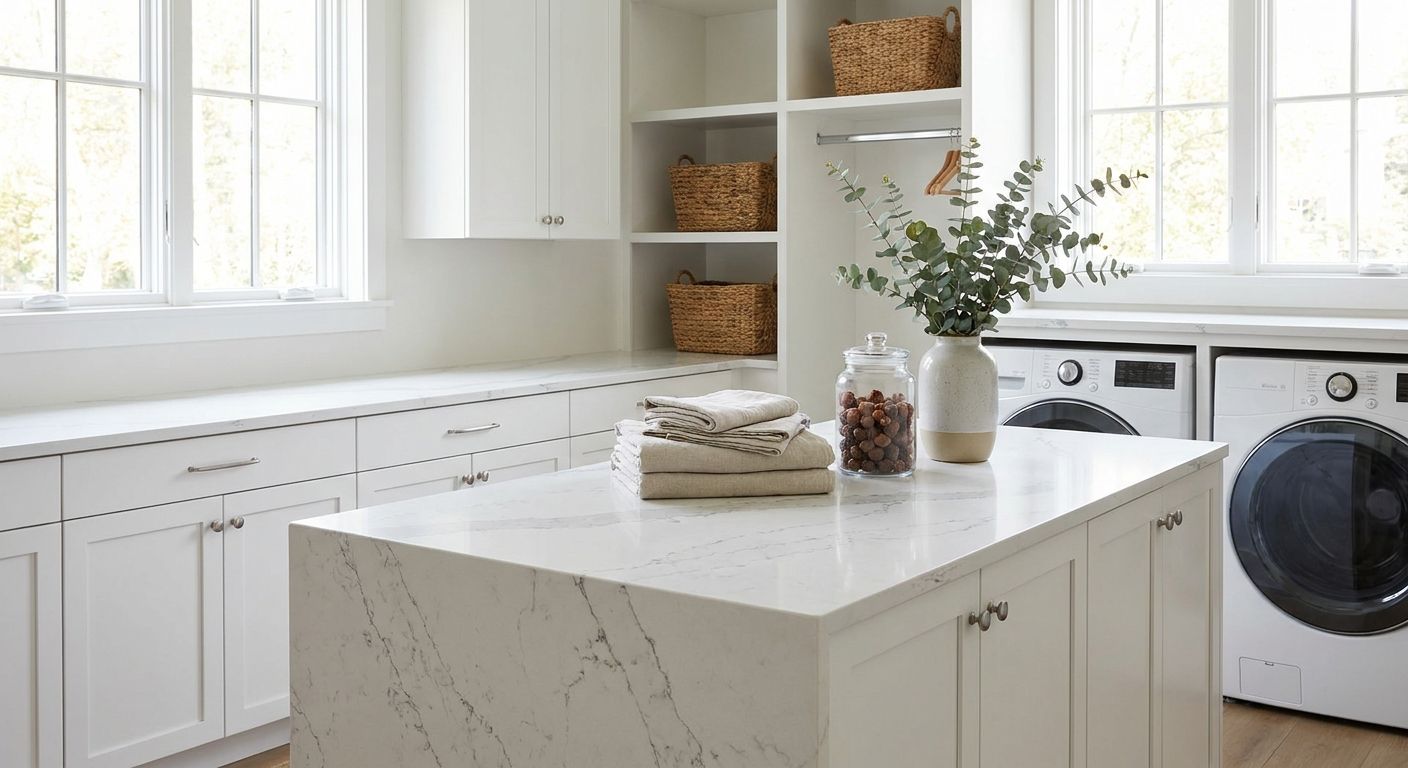
Marble-look veined quartz — the upgrade pick. You get the visual weight of natural stone with the stain resistance quartz actually delivers — a combination that also works well in small kitchens with a similar tight footprint. Buy if the laundry room is visible from a hallway or mudroom entry.
Speckled or terrazzo-look quartz — the practical hider. Dense fleck patterns disguise everything from lint to rust rings under detergent bottles. Buy for a high-traffic basement laundry with kids or pets running through.
What to avoid
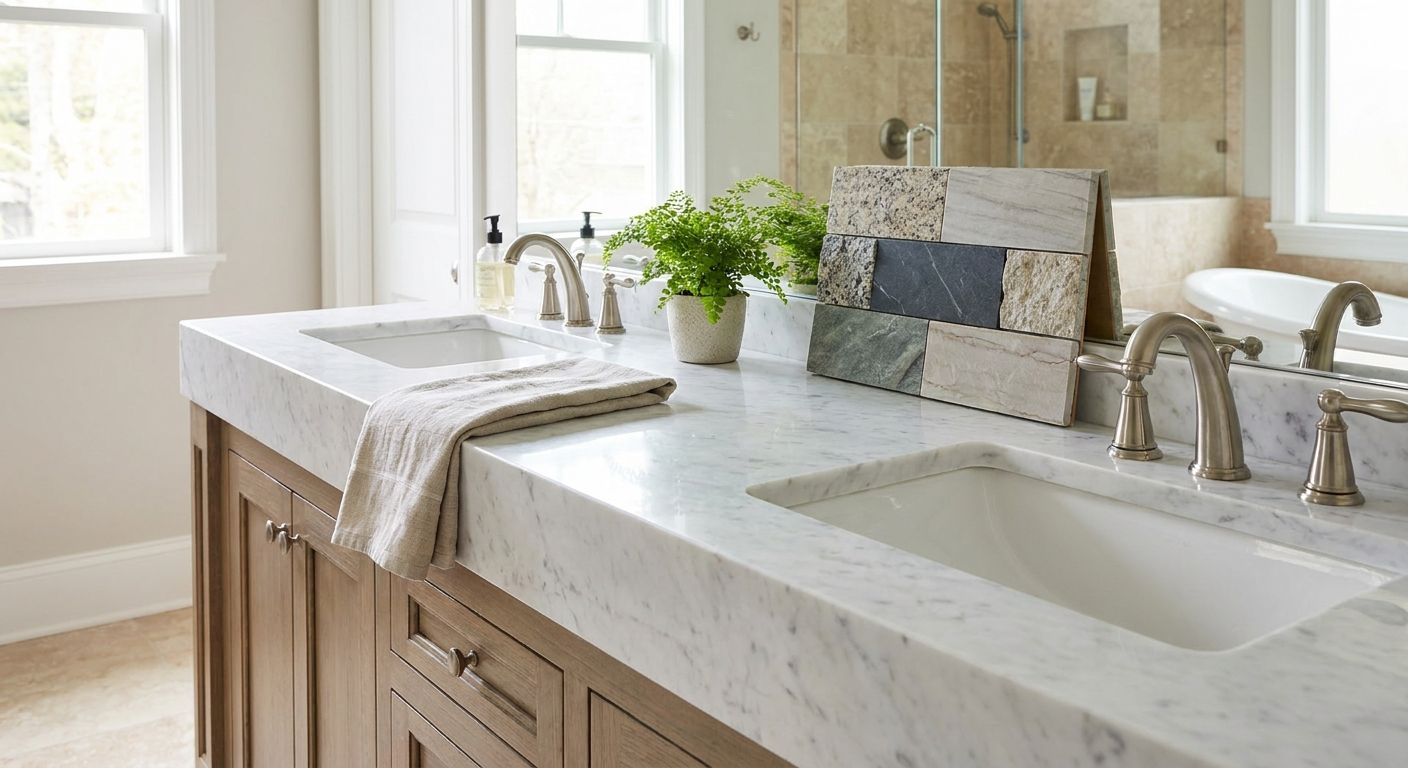
- Polished marble. It looks elegant in a showroom and etches the first time bleach splashes on it — a laundry room is the worst place for a porous, acid-sensitive surface.
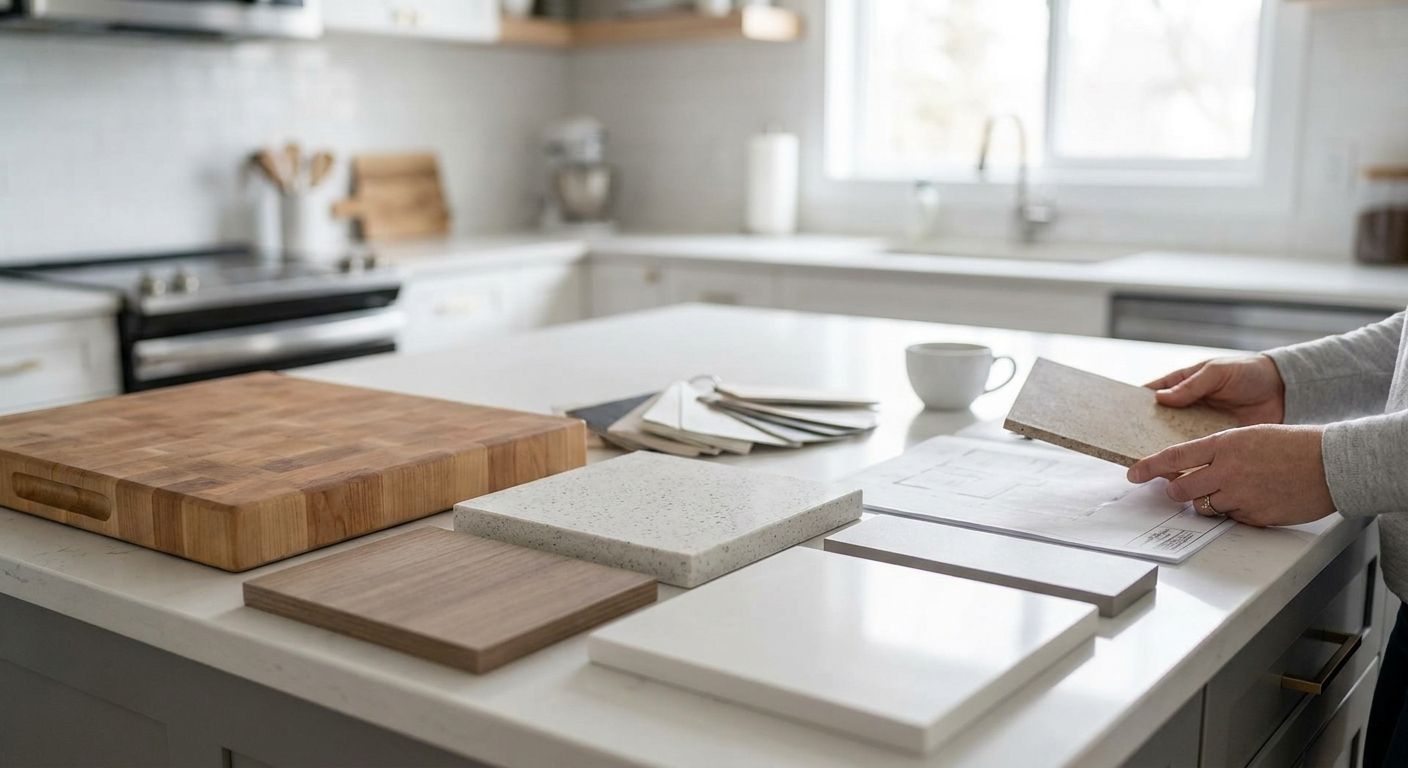
- Butcher block or wood-look laminate. Moisture from a leaking hose or a damp basket warps wood surfaces within months near a washer.
- High-gloss solid black or navy quartz. The reflective finish shows every water spot and fingerprint under direct light, which means constant wiping in a room nobody wants to clean twice a day.
Get a laundry room quartz quote
Soares Stone measures, fabricates, and installs custom quartz for New England laundry rooms.
Verdict comparison table
| Finish | Stain resistance | Hides lint/dust | Sealing needed | Verdict |
|---|---|---|---|---|
| Solid white/warm white | High | Low | No | Buy |
| Concrete-look grey | High | High | No | Buy |
| Dark charcoal/black | High | Low | No | Consider |
| Marble-look veined | High | Medium | No | Buy |
| Speckled/terrazzo | High | High | No | Buy |
| Polished marble (avoid) | Low | Medium | Yes | Skip |
FAQ
What's the best quartz for a laundry room?
Concrete-look grey or speckled quartz works best for laundry rooms in 2026 because the pattern hides lint, detergent drips, and hard-water spots between cleanings. Solid white is the safest visual choice but shows smudges faster.
Is quartz better than granite for a laundry room?
Yes, quartz is non-porous and never needs resealing, while granite can absorb spills at the seams over time. For a room that sees daily bleach and detergent exposure, quartz holds up with less maintenance.
Does bleach damage quartz countertops?
Standard household bleach does not etch quartz because the resin binder seals the surface, unlike marble which reacts to acidic and alkaline cleaners. Wipe up pooled bleach promptly to avoid discoloring the resin over years of exposure.
How thick should a laundry room quartz slab be?
Most laundry counters use 2cm slabs, which keep a narrow utility counter from looking bulky in a tight closet. Choose 3cm if you're adding an overhang for a fold-down ironing surface.
Can you put a quartz countertop over a washer and dryer?
Yes, quartz is a common choice for stacked-laundry surrounds because it resists moisture and vibration better than laminate or wood. Confirm the cabinet base is level and rated for the slab weight before installation.
Does quartz need to be sealed like granite?
No, quartz is non-porous straight from fabrication and never needs sealing, which is one of the main reasons it beats granite and marble in laundry rooms. Granite and marble both require periodic resealing to stay stain-resistant.
What color quartz hides stains best in a laundry room?
Speckled, terrazzo-look, and concrete-look grey quartz hide detergent drips and lint better than solid colors because the fleck pattern breaks up visible marks. Solid dark colors hide liquid stains but show dust and lint instead.
One last thing
Most homeowners spend their planning time picking a laundry room color and skip the edge profile entirely — but a simple eased edge on a narrow 2cm slab is what actually keeps a tight utility counter from chipping at the corner where a laundry basket gets set down every day in 2026.