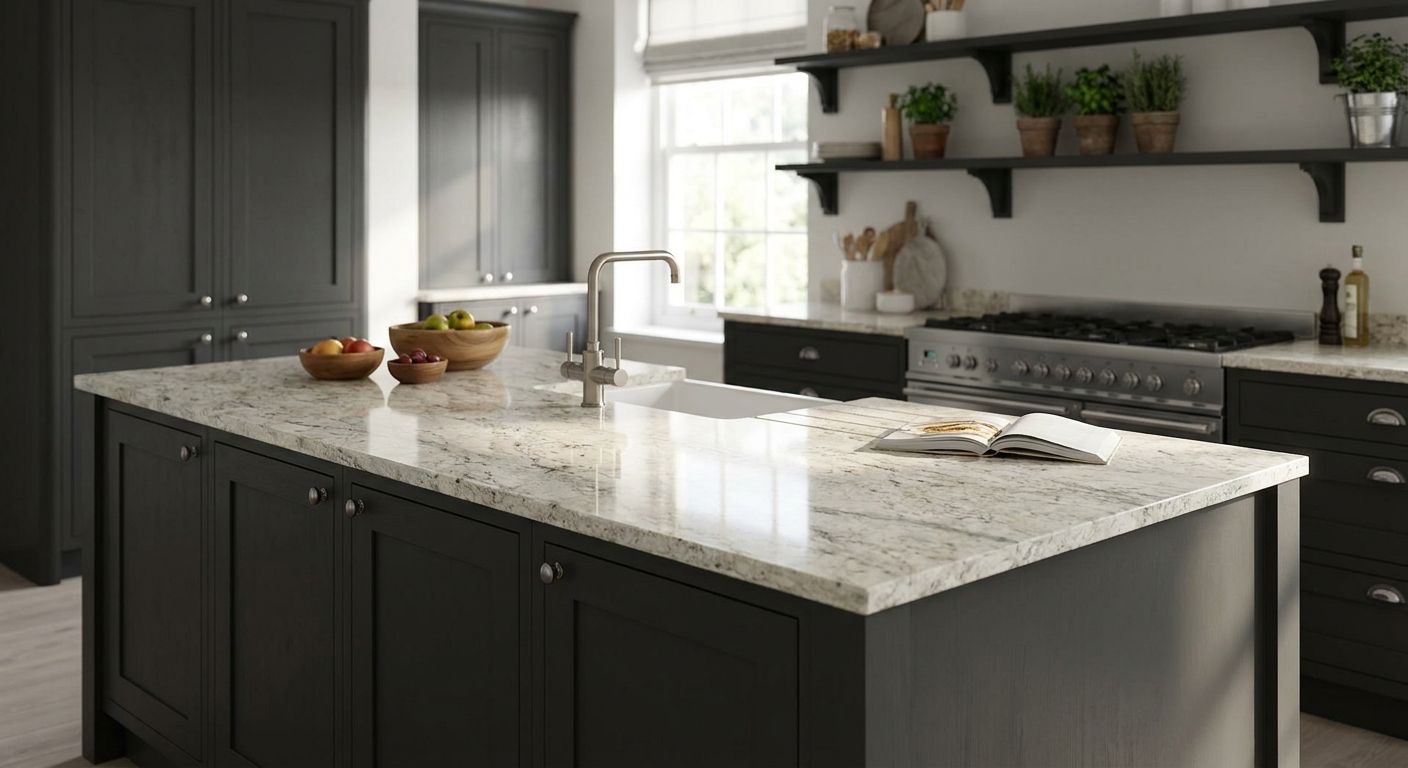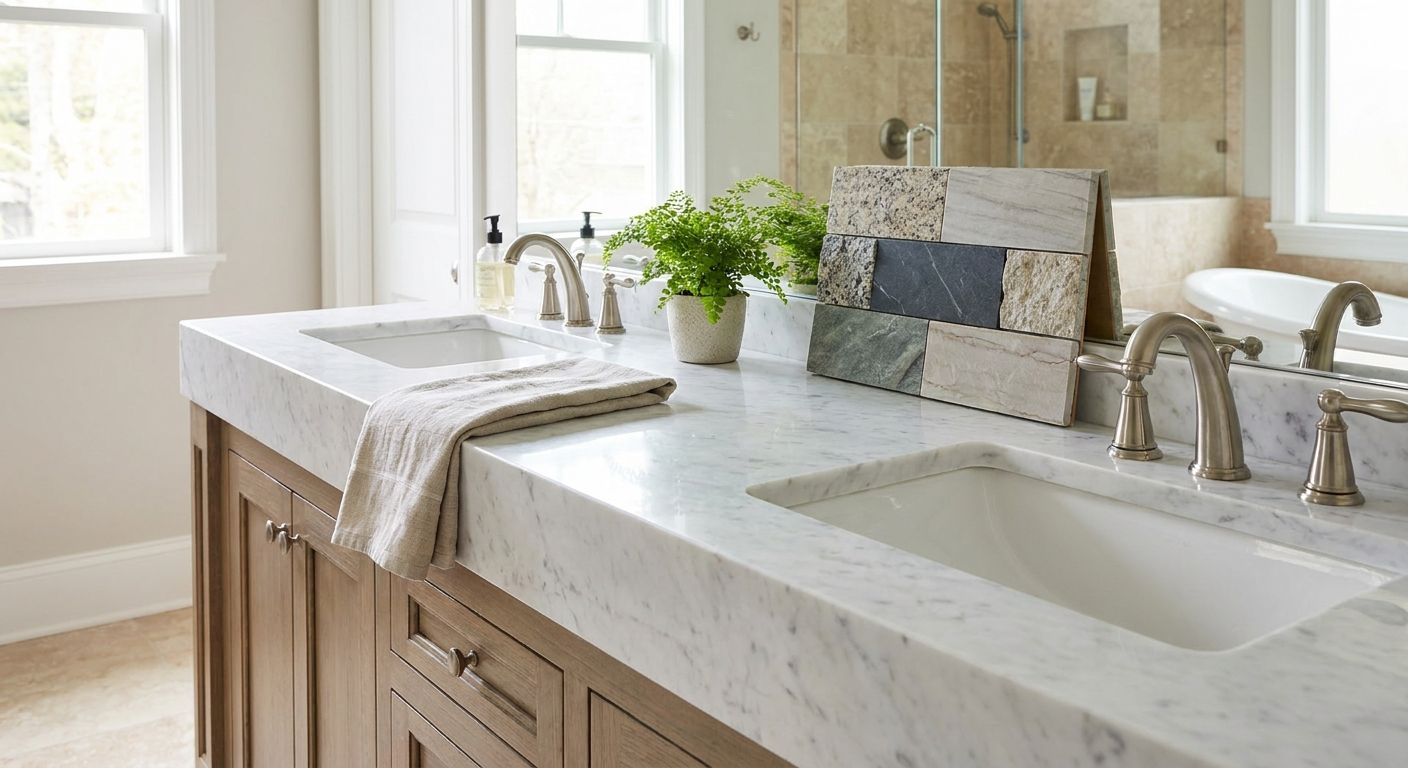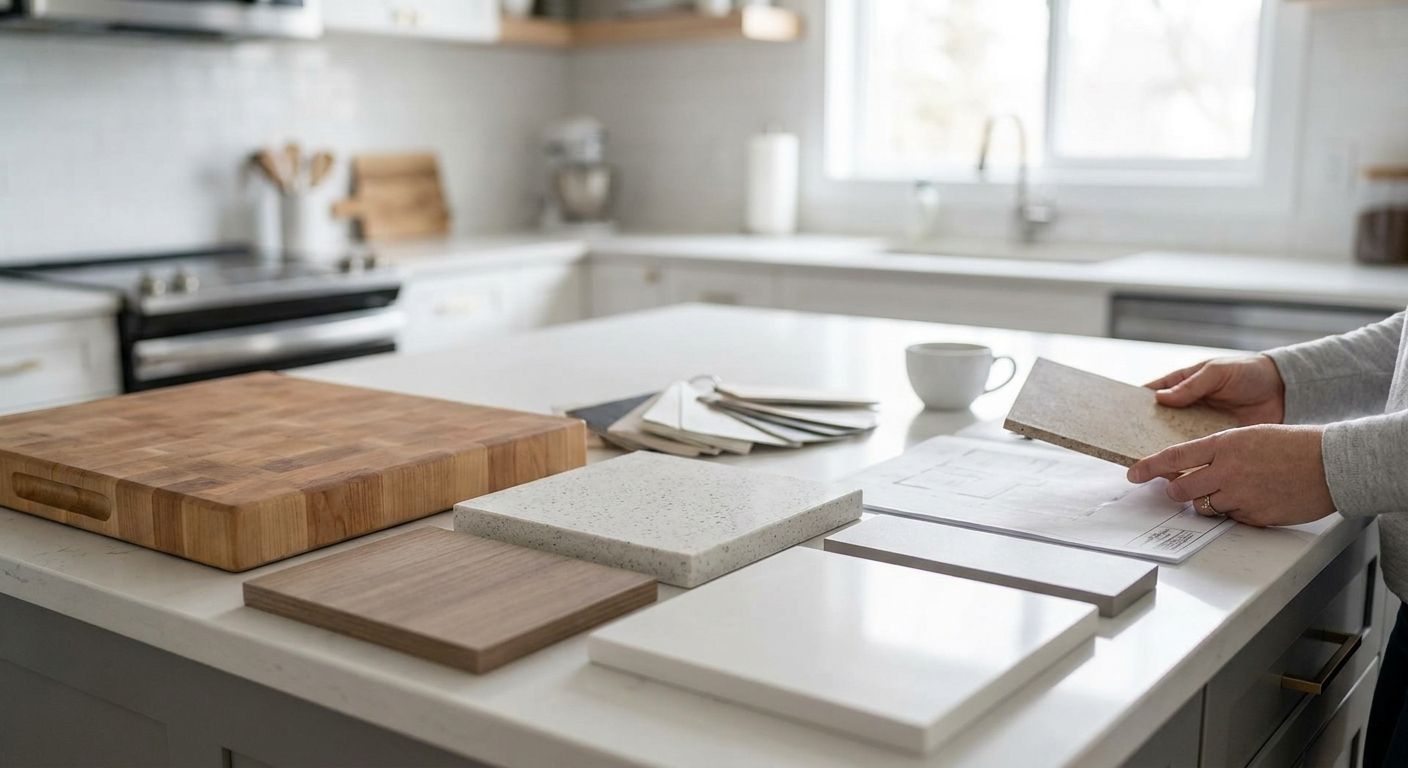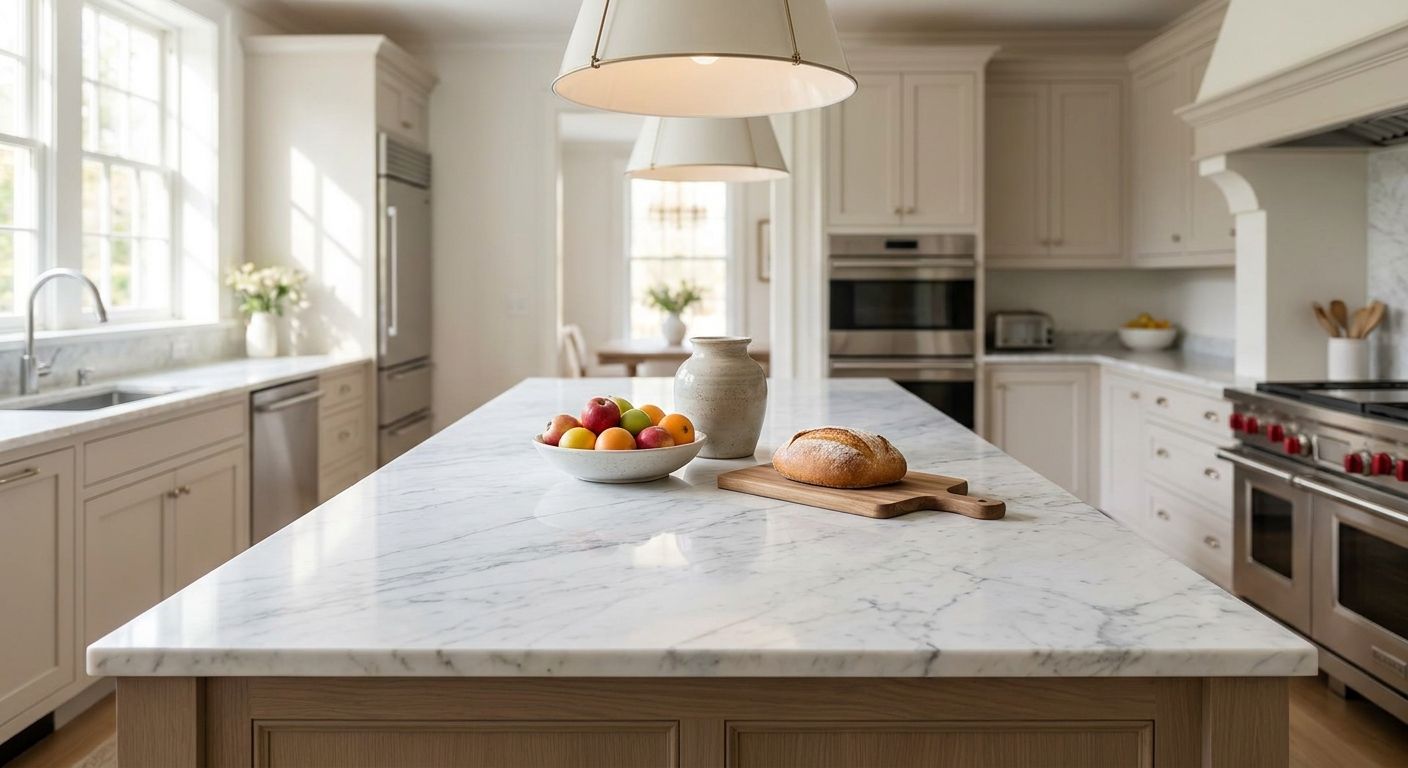
Marble countertops for kitchen islands turn a work surface into the room's centerpiece, but the same veining that makes marble beautiful also makes it the highest-maintenance stone Soares Stone fabricates in New England kitchens.
- Calacatta and Carrara stay the top marble countertops for kitchen islands in 2026 for statement pieces. Buy if you seal twice a year.
- Polished marble etches from lemon juice and wine within minutes on an island — honed finish hides it better. Consider honed first.
- Vermont Danby marble is the regional pick for New England kitchens sourced close to home. Consider for a local story.
- Quartz kitchen island countertops copy marble veining without the etching risk. Buy if the island sees daily cooking traffic.
- 3cm marble slabs support a 12-inch overhang unsupported; thinner slabs need corbels for bar seating.
Why this matters
An island is the one countertop everyone touches, sets a glass on, and cuts a lime for while nobody's looking. Marble handles that beautifully for about a decade if it's sealed on schedule, and poorly if it isn't. Homeowners who ask Soares Stone for marble islands in 2026 usually want the look of Carrara or Calacatta but underestimate the etching that comes with daily use — this guide sorts out which marble choices hold up and which ones look right in the showroom but fight you at home.
Who this is for
This guide is for homeowners renovating a kitchen who want the island to be the visual anchor of the room — the piece guests lean on during a party, not just a prep surface. It's built for people who already know marble stains and etch, and want to pick the variety, finish, and thickness that minimizes the damage rather than pretending it won't happen.
What to look for in marble countertops for kitchen islands
Veining pattern and slab matching
An island is usually one continuous slab or a bookmatched pair, so the veining has nowhere to hide behind cabinets or a backsplash. Ask to see the actual slab before fabrication — marble varies more block to block than any other stone Soares Stone cuts.
Honed vs polished finish
Polished marble shows every etch mark as a dull spot against the shine; honed marble starts matte, so acid etching blends in instead of standing out. For an island that gets used daily, honed is the practical call even though polished photographs better.
Edge profile and overhang support
Waterfall edges and eased edges read differently on marble because the veining has to line up down the side. A 3cm slab overhangs up to 12 inches unsupported for bar seating; beyond that, the fabricator adds corbels or a steel bracket underneath.
Sealing schedule and etch tolerance
Marble needs sealing on a schedule most granite and quartz owners never think about — typically every six to twelve months depending on use. If nobody in the house will commit to that, marble on the island is the wrong call regardless of how it looks in photos.
Slab thickness for island seating
Thicker slabs (3cm, roughly 1 1/4 inch) resist cracking under overhang stress better than 2cm slabs. An island with stools pulled up to it needs the thicker cut almost every time.
Cost signal versus lifespan
Calacatta costs meaningfully more per square foot than Carrara because of rarity and veining drama, but both wear at roughly the same rate. Paying more buys a better slab, not a tougher one.
Top picks for marble kitchen islands
Calacatta marble — the showstopper pick. Bold, widescale gold-and-gray veining that reads from across an open-concept kitchen; islands cut from a single Calacatta slab avoid awkward seams down the middle. It costs more than Carrara per square foot and shows etching on a polished finish faster than a busier-veined stone. Verdict: Buy if the island is a design centerpiece and someone will reseal it on schedule.
Carrara marble — the classic pick. Softer gray veining on a whiter base, less dramatic than Calacatta and more forgiving to slab-match across a long island. It's the marble most homeowners picture when they say "marble kitchen island," and it's priced more accessibly than Calacatta or Statuario. Verdict: Buy for a timeless look without the premium-stone price tag.
Vermont Danby marble — the New England pick. Quarried close to home, with a softer, more uniform vein pattern than Italian marbles. It's a strong regional story for a New England kitchen and holds up the same as other calcite marbles chemically — same sealing rules apply. Verdict: Consider if sourcing regionally matters to you as much as the veining pattern.
Honed white marble — the low-maintenance pick. A matte finish that hides etching, water spots, and light scratching far better than a polished slab. It won't have the mirror shine buyers expect from marble, and some homeowners find the softer look less dramatic on a large island. Verdict: Consider for a household that cooks daily and doesn't want to babysit the finish.
If marble feels too risky, the quartz kitchen island countertops option copies marble veining in an engineered surface that shrugs off citrus, wine, and daily knife traffic without sealing. It costs about the same as mid-range natural marble and skips the maintenance schedule entirely. Verdict: Buy if the island needs to survive a busy household with zero babying.
Another non-marble route worth a look: quartzite waterfall islands deliver a similar dramatic, continuous-vein look with a hardness closer to granite than marble. Verdict: Consider if you want the waterfall drama without marble's etch risk.
Get a marble island quote
Soares Stone measures, templates, and fabricates New England kitchen islands.
What to avoid
- Thin 2cm slabs on a seated overhang — they look fine at install and crack within a year or two under stool pressure without corbel support.
- High-gloss polished finish on a family island — it looks perfect in the showroom and shows the first lemon-juice etch within a week of move-in.
- Matching marble on the island to a busy quartz perimeter — the contrast reads as mismatched rather than intentional; pick one dominant stone story for the kitchen.
Verdict comparison
| Option | Look | Maintenance | Slab thickness | Verdict |
|---|---|---|---|---|
| Calacatta marble | Bold, dramatic veining | Seal every 6-12 months | 3cm recommended | Buy for statement islands |
| Carrara marble | Soft classic veining | Seal every 6-12 months | 3cm recommended | Buy for timeless look |
| Vermont Danby marble | Uniform, regional | Seal every 6-12 months | 3cm recommended | Consider for local sourcing |
| Honed white marble | Matte, forgiving | Seal every 6-12 months | 3cm recommended | Consider for daily cooks |
| Granite kitchen island countertops | Speckled, uniform | No etching, occasional sealing | 2cm or 3cm | Buy for low-maintenance durability |
For the full material trade-off between engineered and natural stone, the quartz vs. quartzite comparison breaks down hardness and cost side by side before you commit to marble.
FAQ
Is marble good for a kitchen island?
Marble works well on a kitchen island if it's sealed every 6-12 months and finished honed rather than polished. It stains and etches faster than granite or quartz, so it suits homeowners willing to maintain it.
Does marble stain easily on kitchen islands?
Yes, marble absorbs oil, wine, and citrus juice faster than granite or quartz because it's a softer, more porous stone. A fresh seal coat and quick wipe-ups keep most spills from setting in.
What is the best marble for a kitchen island?
Carrara and Calacatta marble are the most requested marble countertops for kitchen islands in 2026 for their veining and slab availability. Vermont Danby marble is the regional option for New England homeowners.
How much do marble countertops cost for a kitchen island?
Pricing varies by marble variety, slab size, and edge profile, with Calacatta running higher than Carrara per square foot. Request a quote for current 2026 pricing on the specific slab you want.
Is honed or polished marble better for a kitchen island?
Honed marble hides etching and water spots better than polished marble on a daily-use island. Polished marble looks glossier but shows acid damage as a dull mark almost immediately.
Can you use marble for a waterfall island?
Yes, marble can be cut for a waterfall edge, but the veining needs to line up down the side, which requires a larger slab. Quartzite waterfall islands are a common alternative when marble veining doesn't match cleanly.
How thick should marble be for an island overhang?
A 3cm marble slab supports up to a 12-inch unsupported overhang for bar seating. Beyond that, the installer adds corbels or a steel support bracket underneath.
Marble vs quartz for kitchen islands, which is better?
Quartz kitchen island countertops resist stains and etching better than marble because they're engineered rather than natural stone. Marble wins on natural veining depth; quartz wins on daily durability.
One last thing
Most homeowners who regret a marble island don't regret the stone — they regret the polished finish. Switching the same Carrara or Calacatta slab to a honed finish solves most of the etching complaints without giving up the veining that sold them on marble in the first place.