A wet bar countertop takes more abuse per square foot than almost any surface in the house — spilled wine, dripping ice buckets, citrus peels, and glass rings all day, every day. Granite countertops for wet bars hold up to that punishment if you pick the right slab and finish, and this guide tells you exactly which ones do.
- Granite countertops for wet bars need low porosity and a sealed finish — unsealed slabs stain within hours of a wine spill.
- Absolute Black granite is the safe pick for wet bars in 2026: near-zero visible etching and no sealing panic.
- Baltic Brown and Giallo Ornamental cost less but need resealing every 12-18 months near a sink.
- Skip polished light granite with high quartz content — it shows lime scale and water spots fast.
- A 2cm slab with a 10-12 inch overhang is the standard for stool seating at a home bar.
Why this matters
A kitchen counter gets wiped down after dinner. A wet bar counter sits wet — sweating glasses, melting ice, splashed mixers — for hours at a stretch during a party, and then again the next weekend. Granite handles that better than most surfaces because it's dense, heat-resistant, and doesn't scratch under bottle openers or knife nicks the way laminate does.
The mistake homeowners make is treating a wet bar slab selection the same way they'd pick a kitchen counter. The demands aren't identical. A wet bar sees more standing liquid, more acidic splashes from citrus and mixers, and often gets less daily attention than a kitchen island. Choose granite countertops for wet bars the way you'd choose a floor for a mudroom — for the abuse, not the aesthetics alone.
Who this is for
This guide is for homeowners finishing a basement bar, a butler's pantry, or a built-in bar nook off the kitchen, and for anyone comparing granite against quartz or marble for that specific spot. If you're also weighing options for a full kitchen renovation, the criteria below still apply, but the picks lean toward slabs that forgive spills over slabs that just look good in a showroom — similar reasoning to what you'd use for granite countertops for kitchen islands, where daily traffic matters as much as color.
What to look for in granite countertops for wet bars
Stain and etch resistance
Granite is naturally low-porosity, but porosity still varies by slab, and a wet bar is the one spot in the house where citrus, red wine, and bitters hit the surface daily. A properly sealed granite slab resists staining for years; an unsealed one can absorb a wine spill in under an hour. This is the single biggest factor for a wet bar in 2026 — more than color, more than pattern.
Scratch and heat resistance
Bottle caps, ice picks, and the occasional dropped glass are routine at a bar. Granite scores a 6-7 on the Mohs hardness scale, which means everyday bar tools won't mark it, and setting a warm mug or a bar torch tip down briefly won't scorch it the way it would a laminate or butcher-block top.
Edge profile and overhang for stools
If the wet bar doubles as seating, the overhang and edge profile matter more than they would in a kitchen. A 10-12 inch overhang gives knee room for stools, and an eased or bullnose edge profile prevents chipped elbows on a busy game night. A hard 90-degree edge looks sharp on paper but chips first under repeated stool traffic.
Color and pattern that hides water spots
Dark, uniform granite hides water rings and hard-water spotting far better than light, busy patterns. If the bar sits under a window or near a sink faucet, that matters daily, not occasionally. Movement in the stone — veining, speckling — also camouflages minor etching better than a flat, glossy monotone.
Sealing frequency
Most granite needs resealing every 1-2 years to keep its stain resistance current, and a wet bar accelerates that clock because it's wet more often than a kitchen counter. Ask specifically how often the slab you're considering needs resealing under bar conditions, not showroom conditions — the answer changes by granite type.
Get a granite quote for your bar
Soares Stone fabricates and installs custom granite countertops across New England.
Top picks for granite countertops for wet bars
Absolute Black — the safe pick. Near-solid black granite with minimal visible veining, so water spots and wine drips barely register between cleanings. It's one of the densest commercial granites available, which means low porosity and long stretches between resealing. Verdict: Buy if you want a bar top that looks clean on day 400, not just day one.
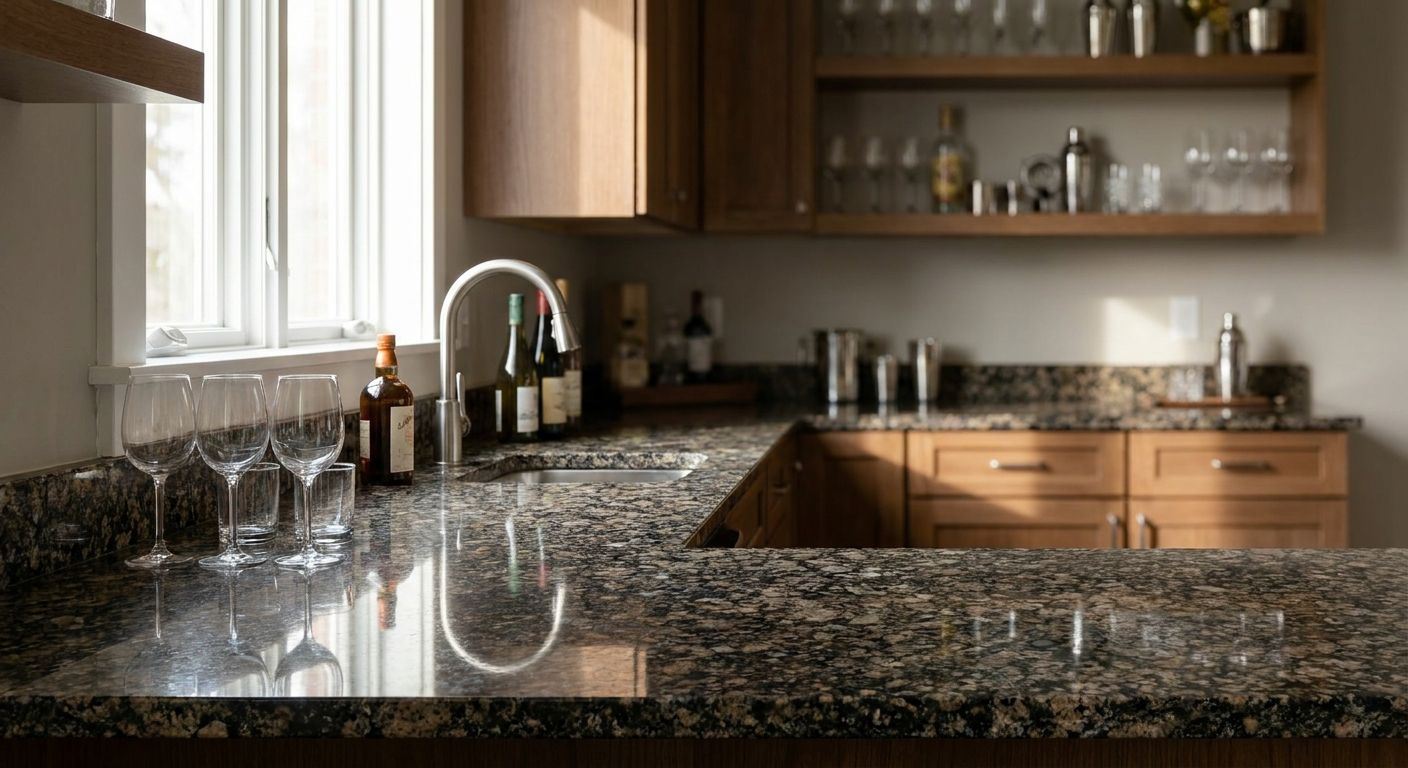
Baltic Brown — the budget pick. A speckled brown-and-black pattern that hides drips and crumbs well, at a lower per-square-foot cost than solid darker stones. It needs resealing on a tighter 12-18 month schedule near a sink or ice bin, so factor that into upkeep. Verdict: Consider if budget matters more than long stretches between maintenance.
Blue Pearl — the statement pick. A silvery-blue granite with a distinctive shimmer that reads as a design feature under bar lighting, not just a countertop. It's a harder, denser stone that holds up well to bottle traffic, but the higher cost per slab makes it a splurge choice. Verdict: Buy if the bar is a visual centerpiece of the room.
Giallo Ornamental — the warm pick. A gold-and-cream pattern with heavy veining that works well against wood cabinetry and warmer bar lighting. It's more porous than the darker options, so it needs closer sealing attention near standing water. Verdict: Consider, but seal it on schedule and it performs fine.
What to avoid
- Polished, light-colored granite with high quartz content. It looks bright in a showroom but shows lime scale and hard-water spotting within weeks near a bar sink.
- Unsealed or under-sealed slabs sold as "low-maintenance." Every granite slab needs periodic sealing at a wet bar; skipping it voids the stain resistance the stone is known for.
- Marble or a marble-look material for the working surface. Marble etches from citrus and alcohol almost on contact — fine for a bathroom vanity, a poor match for a working bar top. If you're torn between stone types generally, the comparison in how to choose between quartz and quartzite countertops walks through the same durability logic that applies here.
Verdict comparison
| Granite | Stain resistance | Resealing interval | Best for | Verdict |
|---|---|---|---|---|
| Absolute Black | Excellent | 2+ years | Daily-use bars | Buy |
| Baltic Brown | Good | 12-18 months | Budget builds | Consider |
| Blue Pearl | Very good | 2 years | Statement bars | Buy |
| Giallo Ornamental | Fair | 12-15 months | Warm-toned kitchens | Consider |
If the bar sits partly outdoors — a covered patio bar, a three-season porch — durability standards shift again, and it's worth comparing against options built for weather exposure like quartzite countertops for outdoor kitchens before committing to an indoor-rated slab.
FAQ
What's the best granite for a wet bar?
Absolute Black granite is the best all-around choice for a wet bar in 2026 because of its low porosity and minimal visible spotting. Blue Pearl is a strong second choice when you want more visual interest.
Is granite better than quartz for a wet bar?
Granite handles heat and scratches from bar tools slightly better than quartz, but quartz needs no sealing at all. Choose granite for a natural-stone look and quartz for lower long-term maintenance.
How often does granite need sealing at a wet bar?
Most granite countertops for wet bars need resealing every 12-24 months, faster than a kitchen counter because the surface stays wet more often. Denser stones like Absolute Black stretch closer to the 2-year mark.
Does granite stain from red wine?
Unsealed or under-sealed granite can stain from red wine within an hour of contact. Properly sealed granite resists staining as long as spills get wiped within a reasonable window.
What thickness of granite is best for a wet bar overhang?
A 2cm slab with a 10-12 inch overhang is standard for wet bars with stool seating. Thicker 3cm slabs handle longer overhangs without extra support brackets.
Can granite handle hot bar equipment like a warming tray?
Yes, granite resists heat well enough for brief contact with warm mugs or bar equipment. Prolonged direct heat from a hot pan or torch can still cause thermal stress over time.
Does dark granite hide water spots better than light granite?
Dark, uniform granite like Absolute Black hides water rings and hard-water spotting far better than light or highly polished stone. Pattern and movement in the stone also help camouflage minor etching.
One last thing
The detail most homeowners skip: matching the edge profile to how the bar gets used, not just how it looks in a photo. A hard 90-degree edge photographs cleanly, but it's the first thing to chip when a stool gets pushed back too fast on a busy night — an eased edge costs little extra and survives years longer under real bar traffic.