Outdoor kitchens in New England take a beating: freeze-thaw cycles, grill heat, salt air near the coast, and UV exposure that never lets up from May through September. The stone you pick has to survive all of it without cracking, fading, or staining, and picking wrong means a redo in three years instead of a countertop that lasts decades.
- Granite is the safest bet for the best stone for outdoor kitchen countertops in 2026 — dense, heat-resistant, and proven outdoors for decades. Buy.
- Quartzite beats granite on hardness and comes closer to marble's look; verify sealing needs before you commit. Buy.
- Engineered quartz is not built for direct sun and grill heat outdoors — its resin binder degrades and discolors. Skip.
- Soapstone and porcelain slab work in sheltered outdoor kitchens but need case-by-case evaluation before New England winters.
Why this matters
A countertop that works in a climate-controlled kitchen can fail outdoors within one New England winter. Water gets into porous stone, freezes, expands, and cracks the slab from the inside — a problem indoor countertops never face. Add direct grill heat, UV bleaching, and the freeze-thaw swing that hits the Northeast every winter, and the material decision matters more outdoors than it does anywhere else in the house.
Most homeowners default to whatever they used inside, then find out the hard way that resin-heavy engineered quartz was never rated for sun exposure. Getting this right the first time saves a full re-fabrication, not just a repair.
How this list was built
The ranking below weighs four factors that actually determine outdoor survival: water absorption rate, hardness on the Mohs scale, UV stability, and real-world New England installation history. Stones that score well indoors but fail on UV stability or water absorption get flagged even if they're popular for kitchen islands inside the house. Each pick includes a direct verdict — Buy, Consider, or Skip — so you're not left guessing.
The ranked list
1. Granite — the safe, proven pick
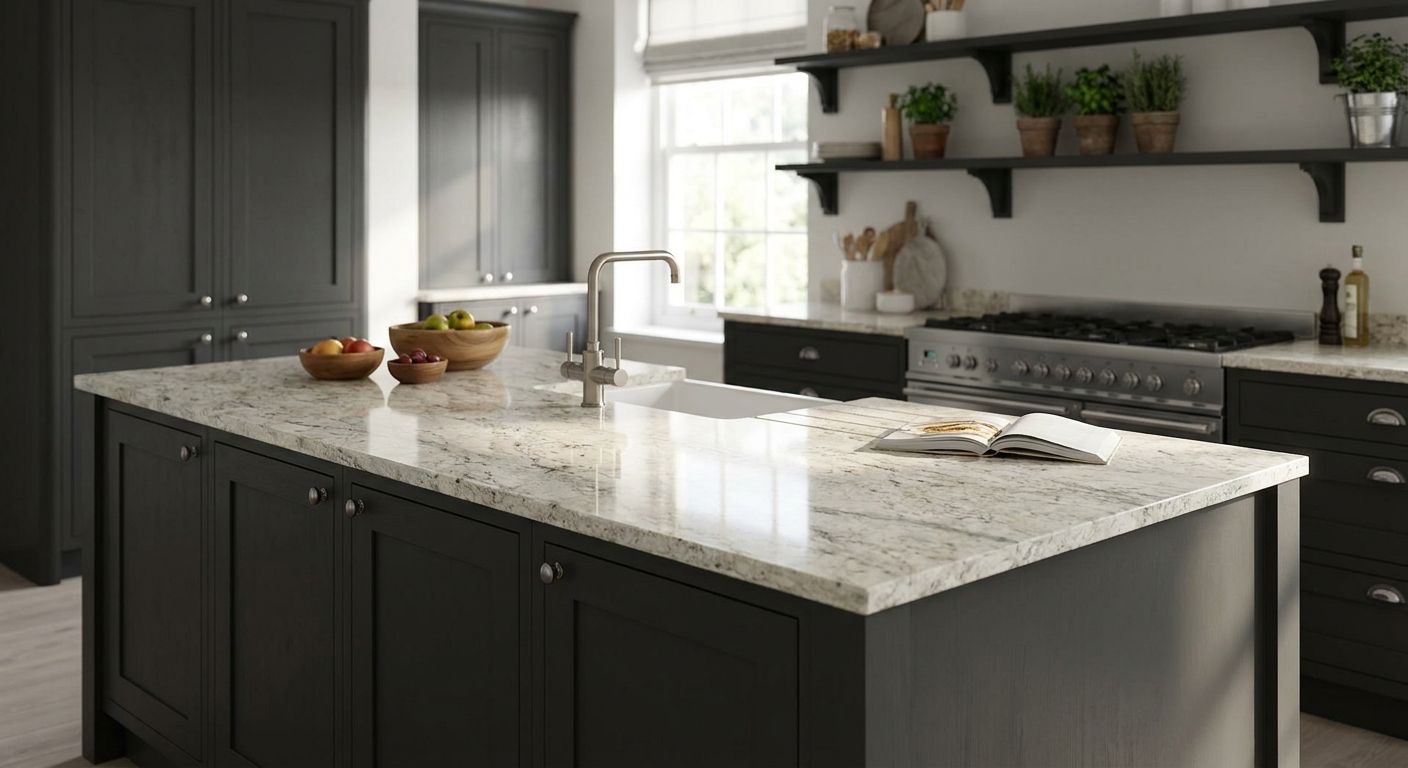
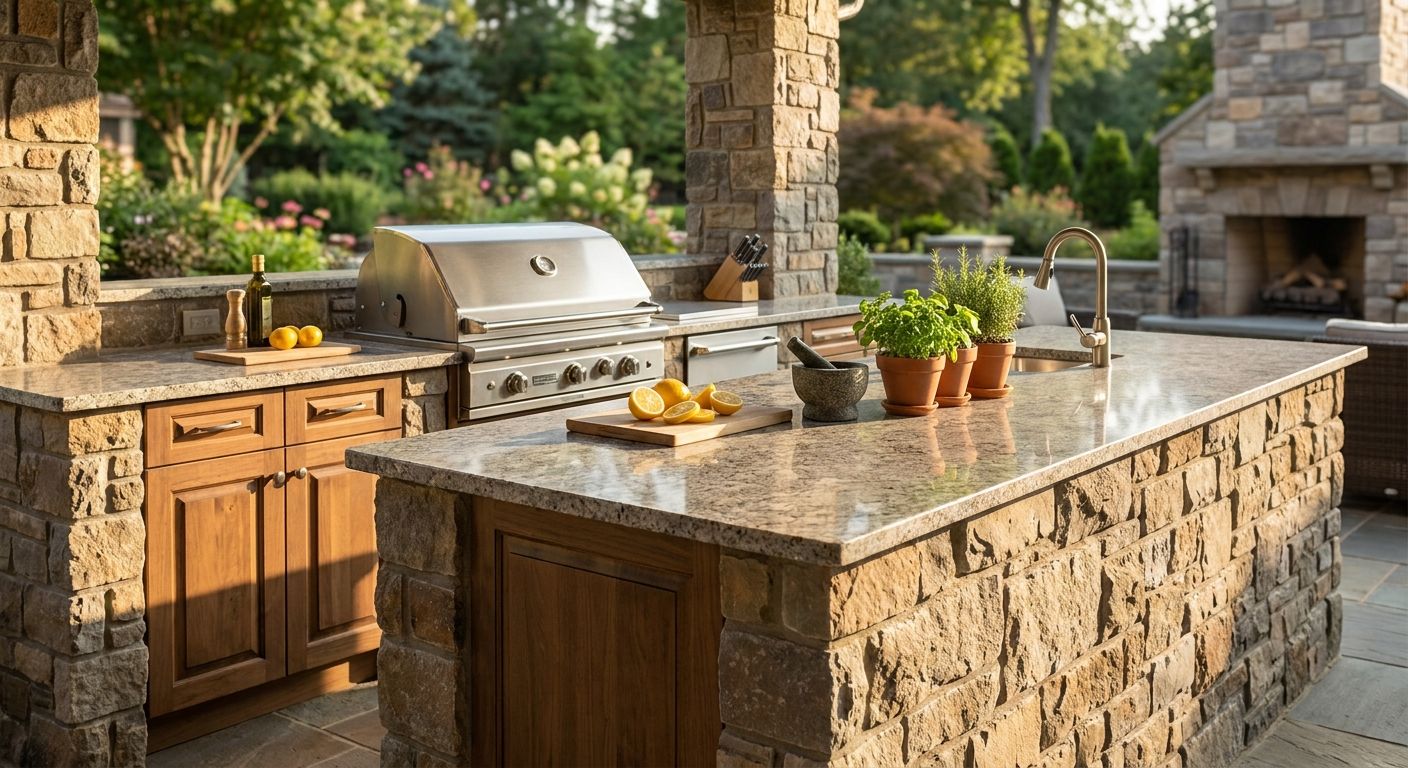
Granite has been the default choice for outdoor kitchens in the Northeast for decades, and the numbers explain why. It sits at 6.5-7 on the Mohs hardness scale and typically absorbs less than 0.5% water when properly sealed, which is exactly what you want against New England's freeze-thaw cycles.
Granite shrugs off direct grill heat without scorching, doesn't fade under UV the way engineered surfaces can, and comes in enough natural pattern variation that no two outdoor kitchens look identical. Sealing needs to happen roughly once a year outdoors versus every few years indoors, given the extra sun and moisture exposure. For homeowners who want one material and zero surprises, granite countertops for outdoor kitchens is the lowest-risk decision on this list. Buy.
2. Quartzite — the hardest natural option
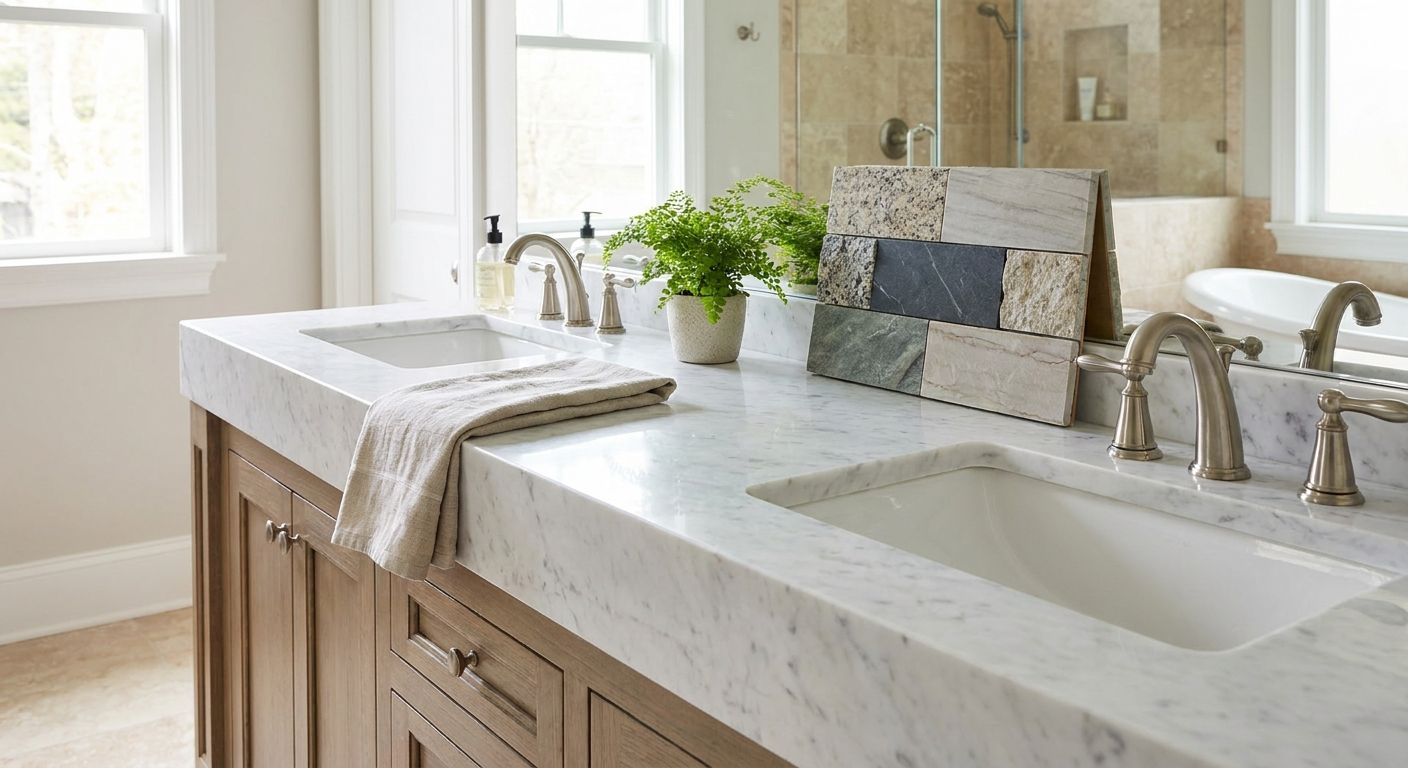
Quartzite edges out granite on raw hardness, landing at 7 on the Mohs scale — hard enough that it resists scratching from grill tools and outdoor cookware better than almost any other natural stone. It also delivers the marble-like veining a lot of homeowners want without marble's softness or staining risk.
The tradeoff is sourcing and cost variability: quartzite slabs vary more in quality between quarries than granite does, so verifying the specific slab's density and sealing needs before fabrication matters. For a New England outdoor kitchen where durability outranks budget, quartzite countertops for outdoor kitchens is the stronger long-term material. Buy.
3. Soapstone — the low-maintenance dark horse
Soapstone is nonporous, meaning it never needs sealing and won't absorb the grease and marinade spills that outdoor cooking generates. It's also one of the few stones that handles direct heat contact without cracking, which matters if a hot pan lands straight on the counter.
The catch is softness — soapstone sits lower on the hardness scale than granite or quartzite and will scratch and dent more easily under heavy outdoor use. It's a strong pick for a sheltered outdoor kitchen with light use, but a busy grilling station will show wear faster. Consider.
4. Porcelain slab — the modern alternative
Porcelain slab is manufactured, not quarried, which means it's engineered specifically for UV stability and near-zero water absorption — two things natural stone has to earn and porcelain is built with from the start. It resists staining from wine, oil, and sunscreen better than most natural stones.
What porcelain gives up is repairability: a chip or crack in a porcelain slab is harder to fix invisibly than the same damage in granite or quartzite, since the color often runs only through a thin surface layer on some products. For a contemporary outdoor kitchen where UV exposure is heavy, it's worth a look. Consider.
5. Engineered quartz — skip it outdoors
Engineered quartz dominates indoor kitchen countertops for good reason — it's nonporous, consistent, and low-maintenance. Outdoors, that same resin binder that makes quartz easy to live with indoors becomes its weakness: UV exposure breaks down the resin over time, causing fading, discoloration, and in some cases warping near direct heat sources like grills.
Manufacturers commonly exclude direct outdoor sun exposure from their care guidance for exactly this reason. If you're deciding between engineered and natural stone for any application, the breakdown on how to choose between quartz and quartzite countertops walks through where each material actually belongs. For outdoor kitchens specifically, quartz is a Skip.
“A countertop that survives a New England kitchen indoors will not automatically survive a New England summer outdoors.”
Comparison table
| Stone | Hardness (Mohs) | Water absorption | Heat tolerance | Verdict |
|---|---|---|---|---|
| Granite | 6.5-7 | Under 0.5% sealed | High | Buy |
| Quartzite | 7 | Very low | High | Buy |
| Soapstone | 3-4 | Nonporous | Very high | Consider |
| Porcelain slab | 6-7 | Near zero | High | Consider |
| Engineered quartz | 7 | Nonporous | Low (resin degrades) | Skip |
Heat resistance matters just as much next to the grill as at the fabrication stage — the same reasoning applies indoors, and the best heat-resistant countertops for kitchens breakdown covers which materials hold up closest to a range or grill head.
Where to source it
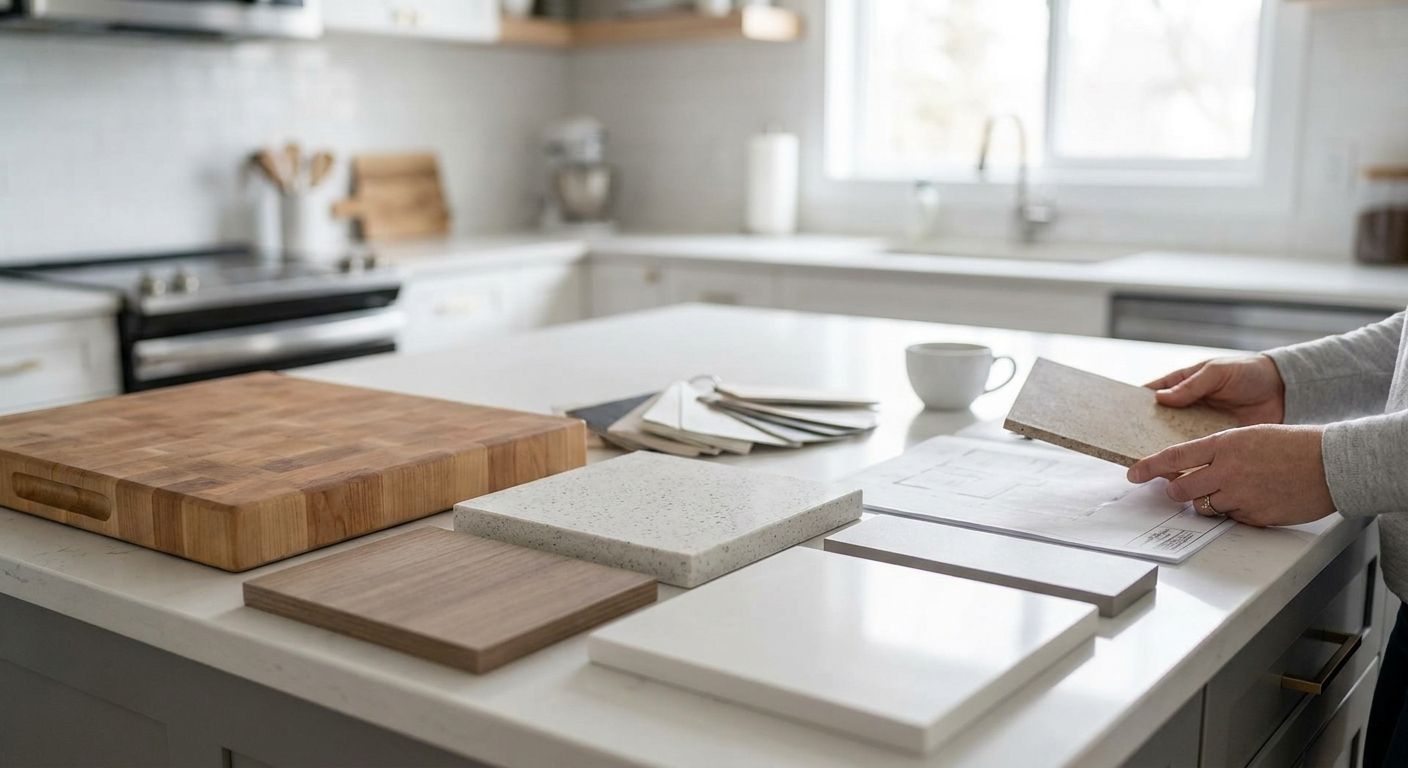
- Work with a fabricator who templates on-site. Outdoor kitchen layouts rarely match standard indoor dimensions, and a template pulled from the actual structure avoids gaps and seam mismatches.
- Ask what sealer is used and how often it needs reapplication outdoors. Outdoor sealing schedules run more frequently than indoor ones because of added sun and moisture exposure — get this in writing before installation.
- Confirm the slab is rated for exterior use, not just "outdoor-friendly" marketing language. Some engineered surfaces get sold for patios without disclosing UV limitations; ask the fabricator directly and get a straight answer.
Get a quote for your outdoor kitchen
Free estimate on granite, quartzite, or custom stone for outdoor installs.
FAQ
What is the best stone for outdoor kitchen countertops in 2026?
Granite and quartzite are the top choices for outdoor kitchen countertops in 2026 because of their low water absorption and high heat tolerance. Both resist New England's freeze-thaw cycles better than engineered surfaces.
Is quartz safe for outdoor kitchens?
Engineered quartz is not recommended for direct outdoor sun exposure because its resin binder can fade and discolor over time. Granite or quartzite are safer choices for uncovered outdoor kitchens.
Does granite crack in cold New England winters?
Properly sealed granite with low water absorption resists freeze-thaw cracking through New England winters. Unsealed or poorly fabricated slabs are far more vulnerable to moisture getting in and expanding when it freezes.
How often does outdoor stone need sealing?
Outdoor granite and quartzite typically need sealing about once a year, more often than the same materials indoors. Sun and moisture exposure both accelerate how fast sealant wears down outside.
Is quartzite better than granite for outdoor kitchens?
Quartzite is harder than granite at roughly 7 on the Mohs scale versus granite's 6.5-7, giving it a slight edge on scratch resistance. Both perform well outdoors, so the choice often comes down to look and slab availability.
Can soapstone handle direct grill heat?
Soapstone handles direct heat contact better than most stones and never needs sealing, but it is softer and scratches more easily under heavy outdoor use. It suits sheltered, lighter-use outdoor kitchens better than a busy grilling station.
What stone should I avoid for an outdoor kitchen?
Avoid standard engineered quartz for uncovered outdoor kitchens since its resin content is not built for UV exposure. Marble is also a weaker choice outdoors due to staining and acid sensitivity from food and drink spills.
Does outdoor countertop stone cost more than indoor stone?
Pricing depends on the specific slab, thickness, and fabrication complexity rather than indoor versus outdoor use alone. Get a direct quote from a fabricator for the exact dimensions and material you're considering.
One last thing
The detail most homeowners miss: it's not just the stone that fails outdoors, it's the edge profile and seam sealant around it. A granite slab rated for outdoor use can still let water in at a poorly sealed seam, and that's where freeze cracking actually starts in New England installations — not in the middle of the slab.