New England winters put every countertop material through a real-world stress test: freeze-thaw cycling at exterior doors, dry forced-air heat indoors, and road salt tracked across mudroom benches from November through April. Granite and quartzite come out on top for durability, while marble and engineered quartz each carry a specific winter weakness worth knowing before you sign a fabrication contract.
- Granite is the best countertop material for New England winters for mudrooms and outdoor kitchens — buy it.
- Quartzite matches granite's freeze-thaw resistance with marble-like veining — buy it for statement islands.
- Engineered quartz performs well indoors but its resin binder is not built for exterior cold — hold it for interior kitchens only.
- Marble etches under road-salt runoff at entries — skip it near exterior doors, consider it for interior islands.
- Soapstone is a New England heritage pick for wood-stove hearths, but it's too soft for high-traffic prep counters.
Why New England Winters Wreck the Wrong Countertop
A slab that looks identical to granite in a showroom can behave completely differently once it sits through a January freeze-thaw cycle at an exterior door. Water that soaks into a porous stone expands as it freezes, and that expansion is what cracks a slab from the inside out over a season or two. Granite outdoor kitchen counters resist this because the stone barely absorbs water in the first place.
De-icing salt is the other threat nobody budgets for. Calcium chloride and magnesium chloride tracked in on boots are mildly acidic, and acid-sensitive stone reacts to it fast. Add New England's swing from sub-zero January mornings to humid July afternoons, and you've got a climate that punishes the wrong material choice within a single winter, not over a decade.
How This Ranking Was Built
This list ranks countertop materials against four winter-specific factors: freeze-thaw resistance (porosity and how the stone handles repeated cold-to-thaw cycling), reaction to de-icing salt and sand, thermal shock tolerance near wood stoves and gas fireplaces, and how much upkeep the surface demands once heating season starts drying out the air. Every material below is one Soares Stone fabricates and installs across New England homes in 2026, and the verdicts reflect how each one actually holds up in this climate, not a generic national buying guide.
The Ranked List
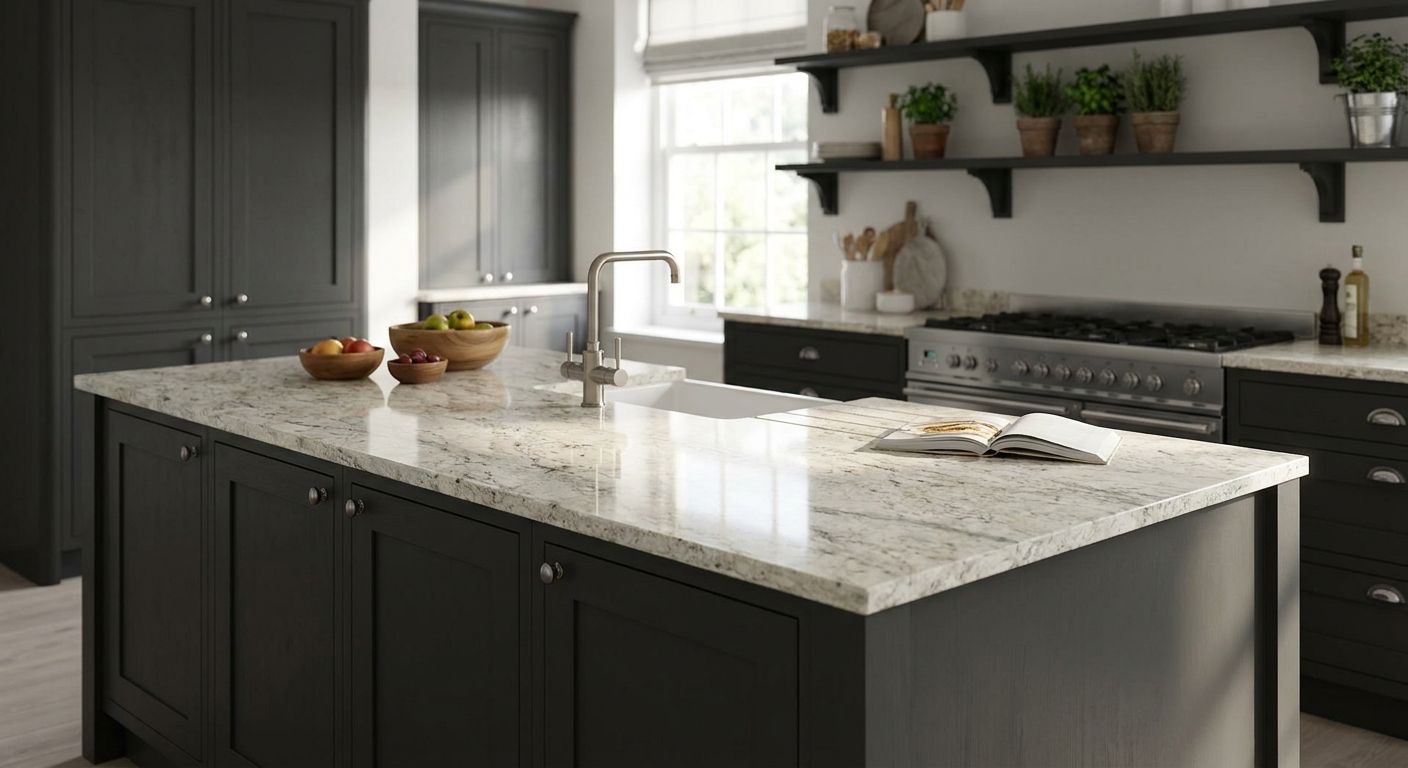
1. Granite — The All-Weather Workhorse
Granite has held the top spot for New England exterior and entryway installs for years, and 2026 hasn't changed that. Its water absorption rate sits under 0.4%, which keeps slush and road salt from soaking into the stone and freezing inside it. It also shrugs off thermal shock from a hot pan set down after shoveling the driveway.
Granite handles direct exposure at mudroom benches and outdoor kitchen counters without the etching risk that plagues softer stone. Verdict: Buy — it's the safest single choice for any surface that sees cold air, salt, or both.
2. Quartzite — The Wildcard With Granite's Toughness
Quartzite reads like marble, with soft veining and light-catching movement, but it performs like granite once winter hits. Its Mohs hardness of 7 means ice scrapers, boot grit, and rock salt won't scratch the surface, and its low porosity handles freeze-thaw cycling the same way granite does.
If you're torn between the two, the decision usually comes down to slab pattern and budget rather than durability — see how to choose between quartz and quartzite countertops for the full breakdown. Verdict: Buy for anyone who wants marble's look without marble's winter risk.
3. Engineered Quartz — The Low-Maintenance Pick, Indoors Only
Engineered quartz is roughly 90% crushed natural quartz bound with resin, and that resin is exactly where the winter problem starts. Resin isn't built for sustained sub-freezing exposure, which is why most manufacturers restrict full warranty coverage to interior installations.
Inside a heated kitchen, quartz is one of the easiest surfaces to live with — no sealing, minimal staining, consistent color. For a full breakdown of what that looks like day to day, check the best low-maintenance countertops for busy families. Verdict: Hold for interior kitchens, Skip for unheated mudrooms, three-season porches, or any exterior application.
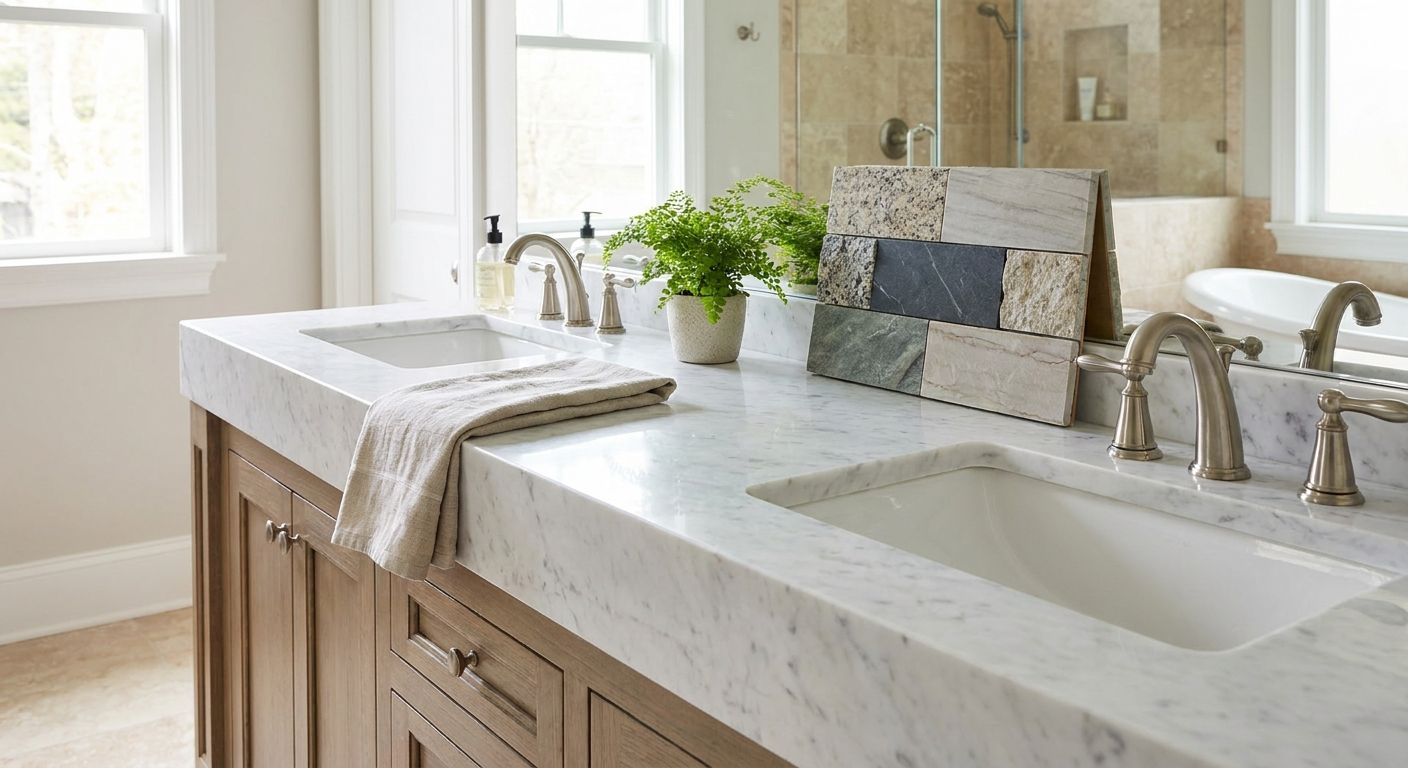
4. Marble — The Risky Pick Near Salt and Slush
Marble is calcite-based, and calcite reacts to acid. Every time someone walks in from a salted driveway and de-icer residue meets an unsealed marble surface, the stone etches. That's a chemical reaction, not a temperature problem, and resealing only slows it down.
Kept away from exterior doors, marble is still a striking choice for a kitchen island — see how it's used in marble countertops for kitchen islands. Verdict: Skip for mudrooms, entry counters, and anywhere boots track in de-icer. Consider for interior islands set back from exterior traffic.
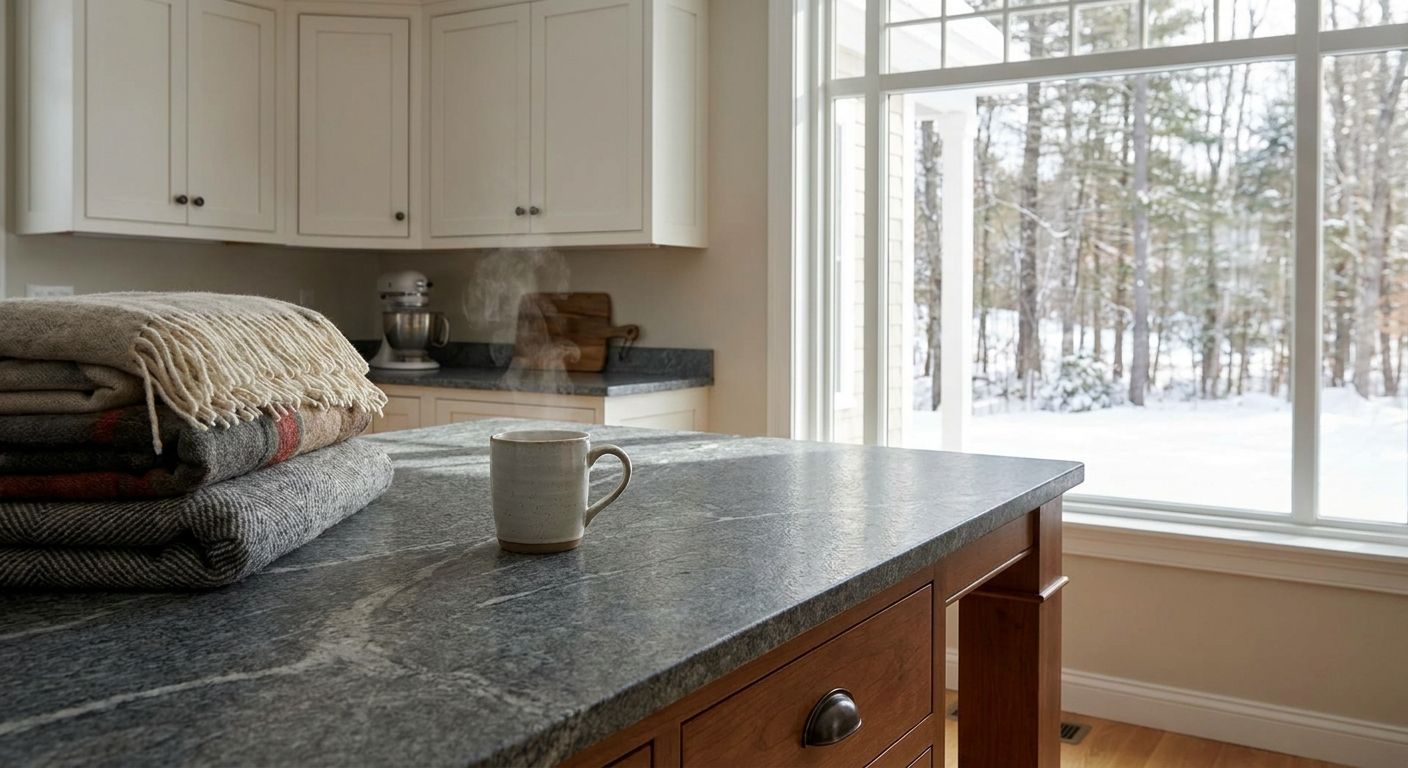
5. Soapstone — The New England Heritage Pick
Soapstone has a long history in New England mills, farmhouses, and old sinks, and it earned that reputation honestly: it's naturally heat resistant next to wood stoves and won't crack from thermal shock the way some engineered surfaces can. It also doesn't need sealing to resist moisture.
The tradeoff is hardness — soapstone is noticeably softer than granite or quartzite, so it scratches and dents more easily under heavy daily prep work. Verdict: Consider for a wood-stove hearth surround or a low-traffic wet bar, not for a primary kitchen prep counter.
Comparison Table
| Material | Freeze-Thaw Resistance | Maintenance | Best New England Use | Verdict |
|---|---|---|---|---|
| Granite | High | Low | Outdoor kitchens, mudrooms | Buy |
| Quartzite | High | Low | Statement islands, fireplace surrounds | Buy |
| Engineered Quartz | Low outdoors | Very low indoors | Interior kitchens only | Hold |
| Marble | Low near salt | Moderate to high | Interior islands away from entries | Skip / Consider |
| Soapstone | High | Moderate | Wood-stove hearths, bars | Consider |
Where to Buy Stone for a New England Winter
- Work with a fabricator that runs a local slab yard and templating crew, not a broker shipping material sight-unseen — seam and edge decisions matter more when a counter faces real winter exposure.
- Confirm the installer designs the substructure for freeze-thaw movement on any outdoor kitchen counter, not just the slab itself. A rigid mount on a surface that expands and contracts across a 60-plus-degree seasonal swing will crack eventually.
- Ask exactly which edge profile and seam plan is proposed for exterior counters, and get it in writing before fabrication starts.
Get a stone consultation before the ground freezes
Compare granite, quartzite, and quartz for your kitchen or outdoor space.
FAQ
What's the best countertop material for New England winters?
Granite and quartzite are the best countertop materials for New England winters because both absorb almost no water and resist freeze-thaw cracking. Both hold up outdoors and near exterior doors without sealing headaches.
Is quartz worse than granite in cold climates?
Engineered quartz performs fine indoors but is not rated for exterior cold because its resin binder can't handle sustained sub-freezing exposure. Keep quartz to interior kitchens and use granite or quartzite for anything exposed to winter weather.
Does marble crack in winter?
Marble doesn't typically crack from cold alone, but it etches when de-icing salt tracked in on boots reacts with the stone's calcite base. The damage shows up as dull, cloudy spots near entry points, not cracks.
Can you install granite countertops in an outdoor kitchen in New England?
Yes, granite is one of the top choices for New England outdoor kitchens because its low porosity handles repeated freeze-thaw cycling without cracking. It also resists staining from grill grease and salt spray.
Is soapstone good for a wood-burning fireplace hearth?
Yes, soapstone is a traditional New England choice for fireplace hearths because it's naturally heat resistant and doesn't crack from thermal shock. It's softer than granite or quartzite, so it's better suited to hearths than high-traffic prep counters.
Does quartzite need sealing to survive winter?
Quartzite benefits from periodic sealing, but its natural density already gives it strong freeze-thaw resistance even before sealing. Most New England installs get resealed every year or two depending on exposure.
What should I avoid using near a mudroom entry in winter?
Avoid marble and other calcite-based stone near mudroom entries because de-icing salt residue etches the surface within a season of regular exposure. Granite or quartzite handle the same traffic without that risk.
One Last Thing
The counter most likely to fail first in a New England winter isn't the one outdoors — it's the mudroom bench where boots drip salted slush every single day. That's precisely where marble and other calcite-based stone dull fastest, while granite sitting ten feet away in the same house shows nothing after the same winter.