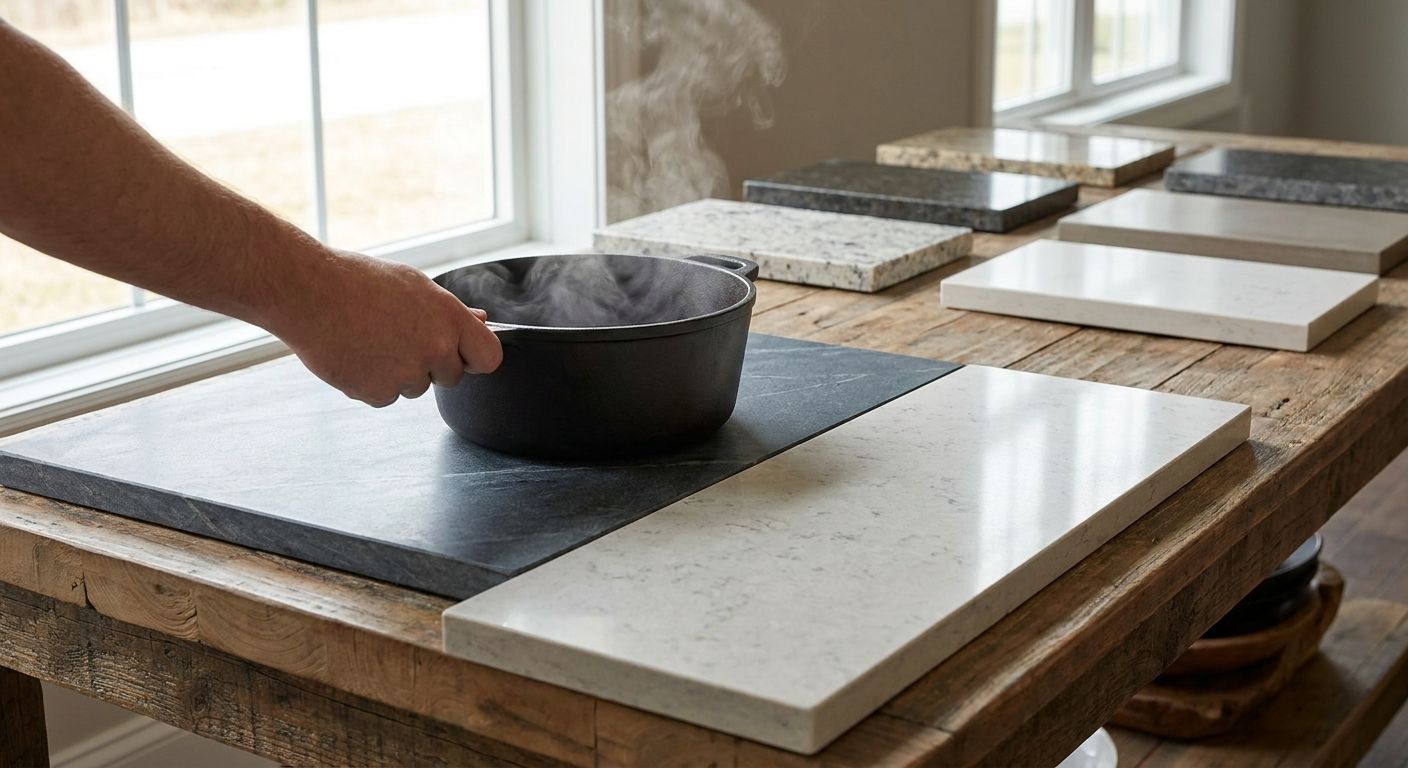
Granite and quartzite handle direct heat from pots and pans without damage; engineered quartz and butcher block do not, no matter what the showroom sample suggests.
- Quartzite and granite are the best heat resistant countertops for kitchens in 2026 - both tolerate direct pan contact. Buy.
- Engineered quartz cracks or discolors near sustained heat above roughly 150°F - keep trivets on hand. Consider with caution.
- Marble resists heat well but etches from acidic spills faster than granite or quartzite. Hold for busy cooking zones.
- Soapstone handles heat like a cast-iron pan but scratches easily - a solid pick for a secondary prep zone.
- Butcher block and laminate scorch and warp under hot pans - skip them near the range.
Why this matters
A countertop next to a range or a built-in cooktop takes more direct heat abuse than almost any other surface in a New England home. Set a cast-iron skillet down without thinking, and the wrong material shows a scorch mark, a hairline crack, or a permanent dull ring within seconds.
The material you pick determines whether you need a trivet within reach at all times or whether you can set a pan down straight off the burner. That distinction matters more in 2026 than it used to, since more kitchens now run induction and gas ranges side by side, and induction pans come off the burner hotter than most people expect.
How this list was ranked
This ranking weighs three things: how the material performs against direct and sustained heat, how it holds up under daily kitchen use in a New England household, and how much babysitting it needs (trivets, sealant, careful cleanup). Mohs hardness and published thermal-shock behavior for each stone type back the heat-resistance calls. Maintenance and durability notes reflect how these materials actually behave in kitchens over years of use, not a lab test.
Engineered quartz sits lower on this list not because it performs badly overall, but because heat is specifically its weak point - the resin binder that makes it stain-resistant is the same binder that reacts badly to a hot pan.
The ranked list
1. Quartzite - the natural heavyweight
Quartzite scores a 7 on the Mohs hardness scale, the same as quartz crystal itself, and it starts life as sandstone fused under heat and pressure deep underground. That origin story is exactly why it shrugs off a hot Dutch oven straight off the stove.
It handles direct heat better than almost any other kitchen surface available in 2026, resists scratching from knives and cast iron, and comes in pattern variety that rivals marble. The tradeoff is weight and cost - it needs a strong cabinet base and professional templating.
For busy New England kitchens where pots move fast between burner and counter, quartzite countertops for busy family kitchens is the safest bet on this entire list. Buy.
2. Granite - the classic workhorse
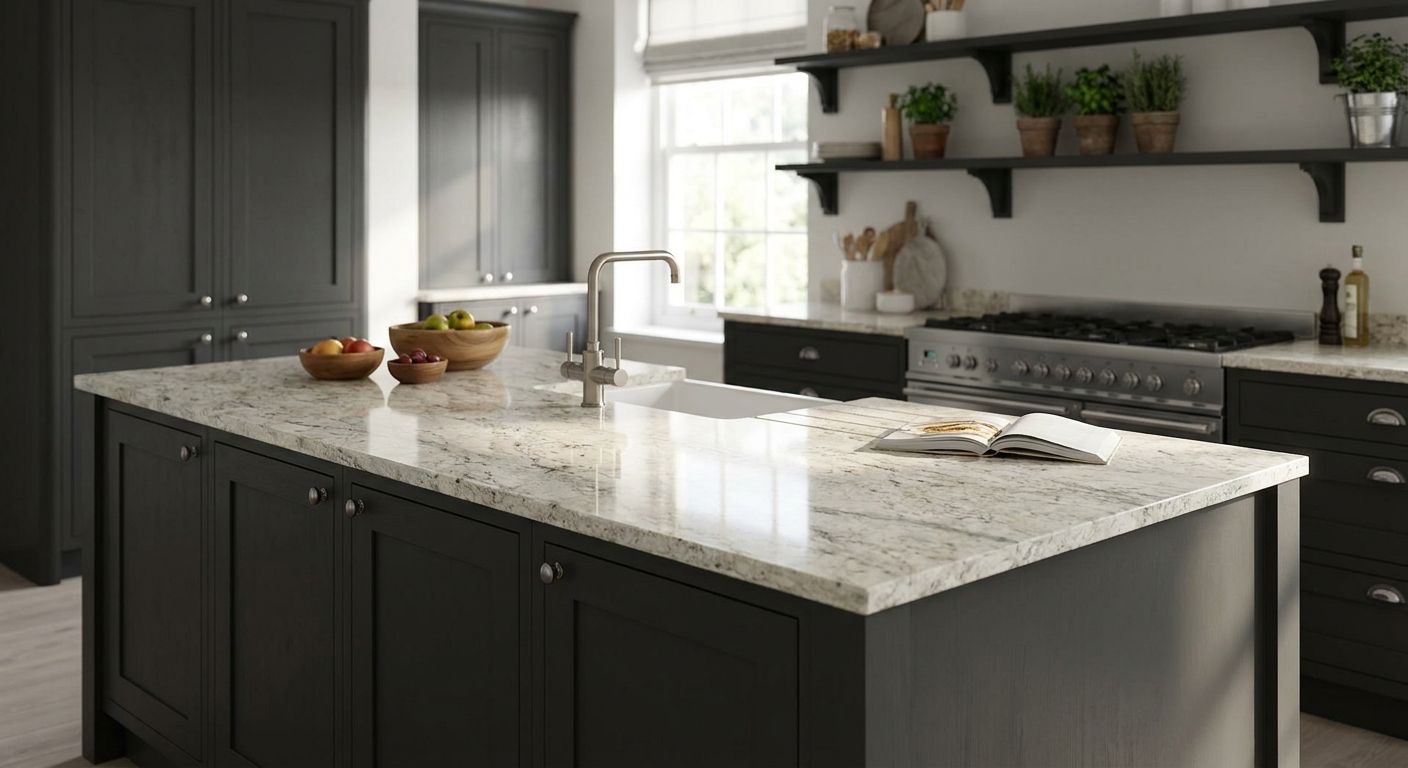
Granite runs 6 to 6.5 on the Mohs scale and has been the default heat-resistant countertop in American kitchens for decades - it earned that reputation because it deserves it. A pan straight from a 500°F oven can sit on granite without leaving a mark.
It costs less than quartzite in most cases, comes in a wide range of colors and finishes, and needs only periodic resealing to stay stain-resistant. It is slightly more porous than quartzite, so spills near the heat zone should still get wiped promptly.
For an island that doubles as a landing zone for hot cookware, granite countertops for kitchen islands is the practical, budget-conscious choice for 2026 remodels. Buy.
3. Soapstone - the old-world sleeper
Soapstone has heated stoves and hearths built into it for centuries - literally, since it was the material of choice for wood stoves before modern ranges existed. It handles direct heat as well as cast iron and only gets richer in color with age and oil treatments.
Its weak point is hardness: soapstone sits around 2.5 to 3.5 on the Mohs scale, so it scratches more easily than granite or quartzite and needs mineral oil upkeep to keep its patina even. That makes it a strong pick for a secondary prep counter near a range, less ideal as the only surface in a high-traffic kitchen.
Consider it for a smaller heat-adjacent zone rather than the whole kitchen.
4. Marble - the beautiful compromise
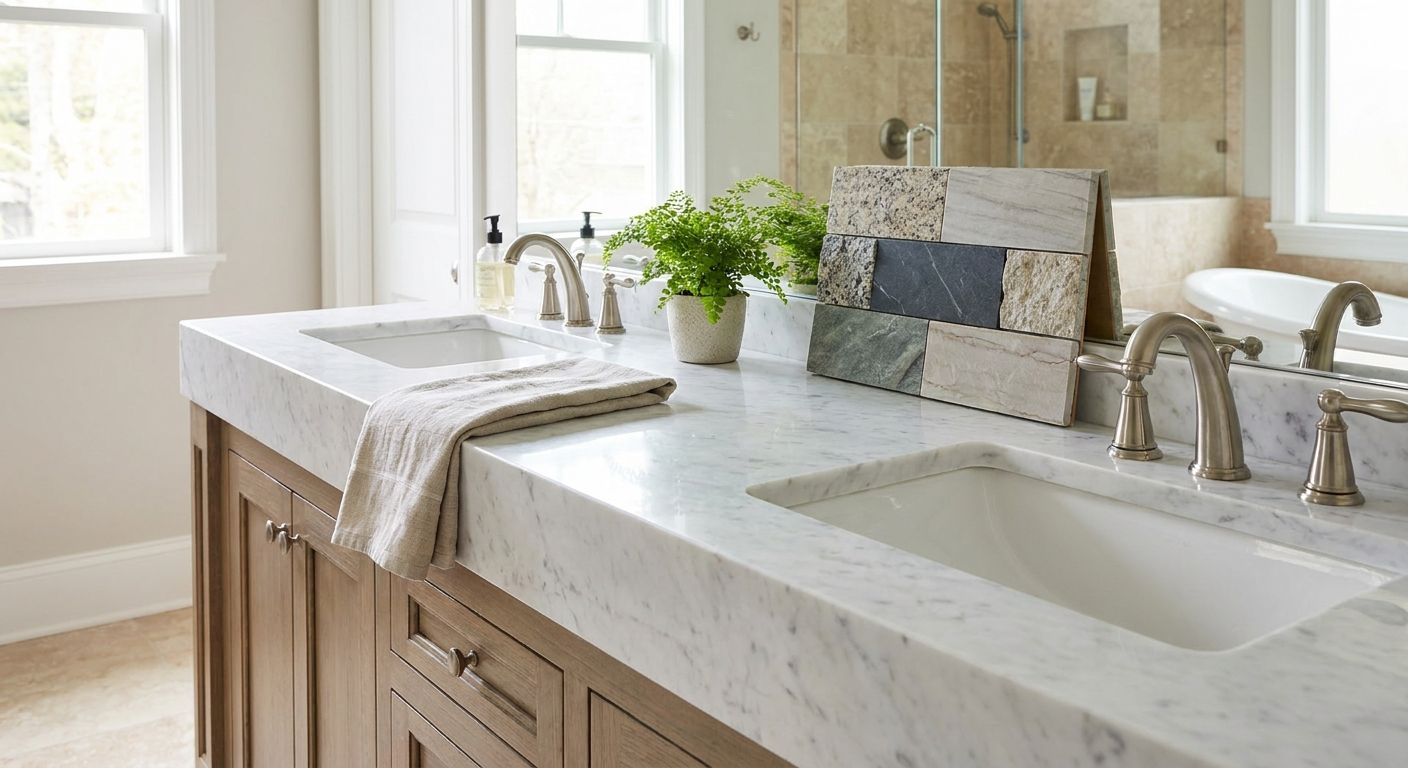
Marble handles heat nearly as well as granite - it is calcite-based stone that has survived open hearths in Italian kitchens for generations. The catch has nothing to do with temperature and everything to do with chemistry: lemon juice, wine, and vinegar etch marble's surface in seconds if left standing.
That makes marble a strong performer for heat but a demanding one for daily cooking abuse. It suits a kitchen island used for presentation and baking more than a stovetop-adjacent prep zone.
For homeowners set on the look, marble countertops for kitchen islands works well positioned away from the primary cooking zone. Hold for anywhere near the range; Buy for an island a few feet away.
5. Engineered quartz - the everyday performer with one weak spot
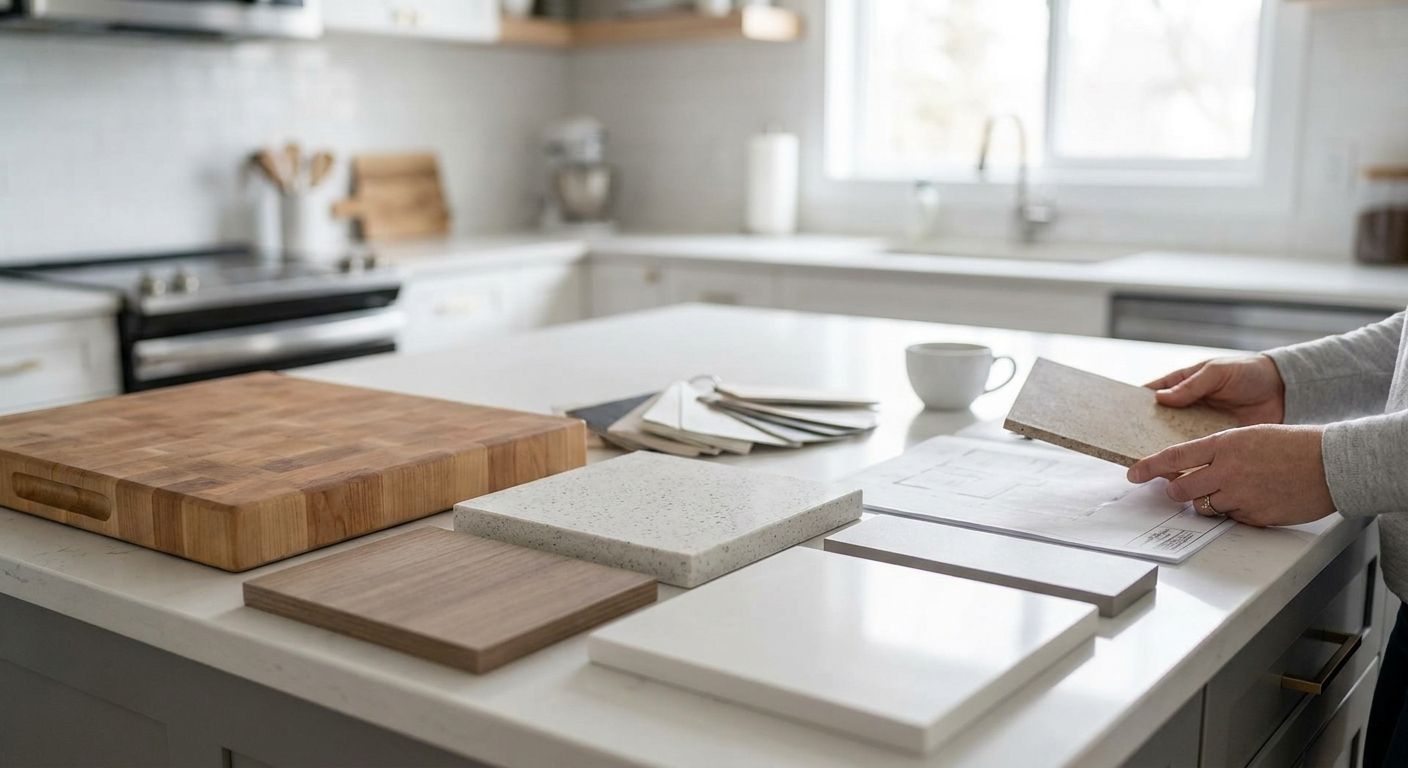
Engineered quartz is roughly 90-93% ground quartz crystal bound with polymer resin, which is why it resists stains and never needs sealing. That same resin is thermoplastic - most manufacturers publish care guidance advising against placing pans straight off the stove or oven directly on the surface, since sustained heat around 150°F and above can discolor or crack the binder.
It still outperforms laminate and wood by a wide margin and remains one of the most popular kitchen island materials sold in 2026. It just needs a trivet habit, which is a fair trade for homeowners who prioritize low maintenance over heat tolerance.
Compare it side by side with quartzite before deciding - the guide to choosing between quartz and quartzite countertops breaks down exactly where each one wins. Consider, with a trivet rule enforced from day one.
6. Butcher block and laminate - the ones to walk away from
Neither of these belongs within arm's reach of a hot pan. Butcher block scorches and can char at the edges from a hot skillet, and laminate's plastic surface can bubble, discolor, or delaminate from sustained heat in a single afternoon.
Both have their place elsewhere in a kitchen - a butcher block island for chopping, laminate for a budget secondary counter - but neither should sit next to the range. Skip for any heat-adjacent surface.
“Quartz is heat resistant until it isn't - one hot pan left too long is all it takes to crack the resin.”
Comparison table
| Material | Heat resistance | Mohs hardness | Upkeep | Verdict |
|---|---|---|---|---|
| Quartzite | Excellent | 7 | Periodic sealing | Buy |
| Granite | Excellent | 6-6.5 | Periodic sealing | Buy |
| Soapstone | Excellent | 2.5-3.5 | Regular oiling | Consider |
| Marble | Very good | 3-4 | Frequent sealing, avoid acids | Hold near range |
| Engineered quartz | Fair (needs trivets) | ~7 (resin-bound) | No sealing | Consider |
| Butcher block / laminate | Poor | N/A | Frequent | Skip |
Get a free estimate on your countertops
Soares Stone templates, fabricates, and installs across New England.
Where to buy
- Work with a fabricator who templates on-site rather than shipping a slab sight-unseen - seam placement near a range matters as much as the material itself.
- Ask specifically about heat behavior for your chosen material before signing off on a slab, since finish and sealant choices can shift how a stone reacts to daily heat exposure.
- Avoid remnant pieces for the zone directly beside your cooktop - remnants are fine for a powder room vanity, but the highest-heat-exposure section of your kitchen deserves a full, properly supported slab.
Soares Stone fabricates and installs granite, quartzite, marble, and quartz across New England kitchens, and walks homeowners through exactly which material fits a specific layout before any stone gets cut.
FAQ
What's the best heat resistant countertop for kitchens in 2026?
Quartzite and granite are the best heat resistant countertops for kitchens in 2026 because both tolerate direct pan contact without cracking or discoloring. Quartzite edges out granite slightly on hardness, but either handles daily cooking heat well.
Is granite or quartzite more heat resistant?
Both resist heat well, but quartzite is technically harder at 7 on the Mohs scale versus granite's 6 to 6.5. In practice, both stones handle a hot pan straight off the stove without visible damage.
Can you put a hot pan directly on quartz countertops?
No - most engineered quartz manufacturers advise against setting pans hotter than roughly 150°F directly on the surface. The resin binder in quartz can discolor or crack under sustained heat, so a trivet is the safer habit.
Is marble heat resistant enough for a kitchen island?
Marble tolerates heat nearly as well as granite, but it etches quickly from acidic spills like lemon juice or wine. It works best on an island used for baking and presentation, away from the direct heat of a cooktop.
Does soapstone crack from heat?
Soapstone handles direct heat as well as cast iron and was historically used in wood-stove construction. Its main weakness is scratching, not heat damage, since it sits low on the Mohs hardness scale.
How much heat can granite countertops handle?
Granite tolerates a pan straight from a hot oven or stovetop without scorching or cracking under normal kitchen use. It has been the standard heat-resistant countertop choice in American kitchens for decades.
Are butcher block counters heat resistant?
No - butcher block can scorch or char at the edges from a hot skillet within minutes. It works fine for chopping and prep but should never sit next to a range.
One last thing
The biggest mistake homeowners make in 2026 isn't picking the wrong stone - it's picking the right stone and putting it in the wrong spot. Quartzite next to the range makes sense; quartzite on a far-away island where you never set hot pans down is money spent on a feature you won't use. Match the material to the exact zone that takes the abuse, and let a lower-maintenance option cover the rest of the kitchen.