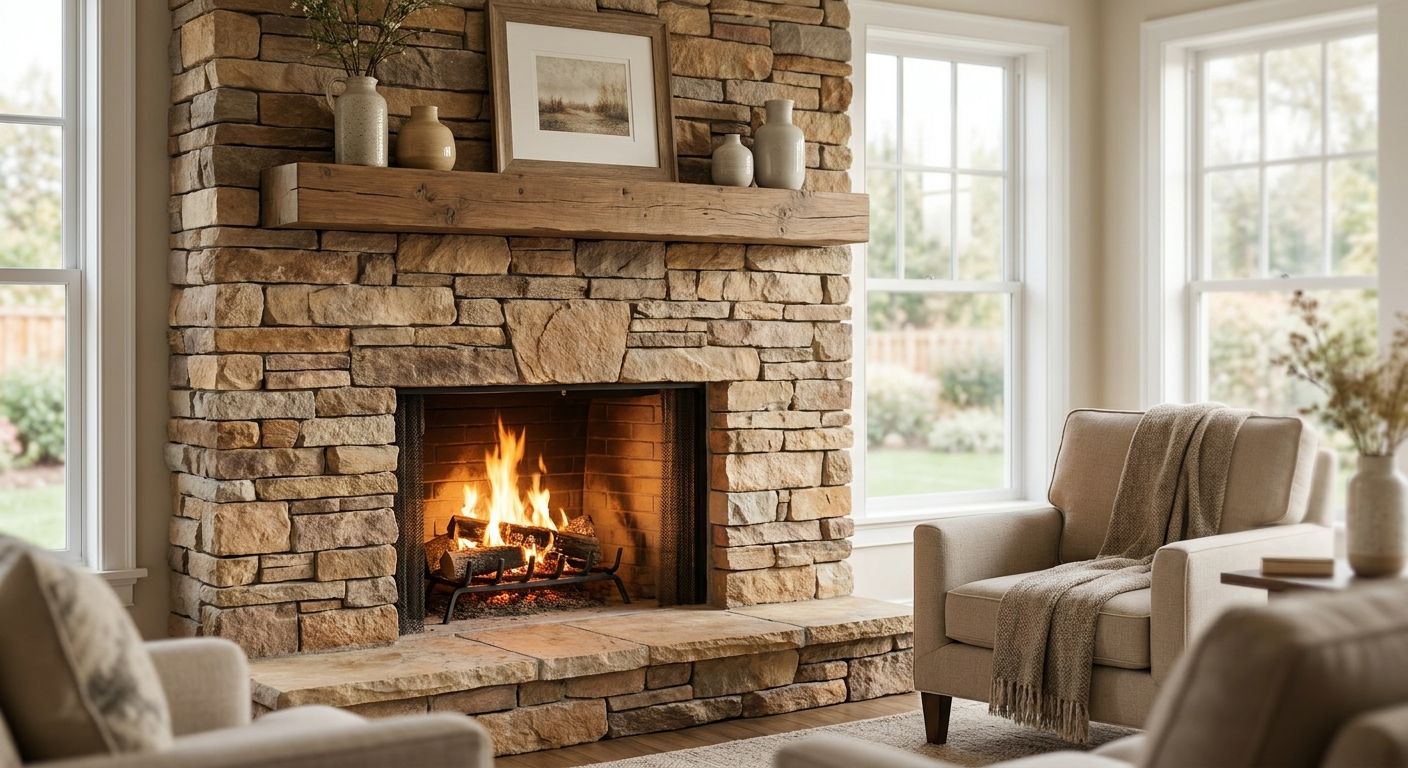
Picking the best stone for fireplace surrounds means balancing three things most homeowners get wrong on the first try: heat tolerance, hardness, and how the stone behaves next to an open flame or a gas insert over 10-plus years.
- Granite wins for wood-burning fireplaces in 2026 -- Mohs 6-7 hardness handles radiant heat without cracking. Buy.
- Marble is the classic pick for formal living rooms but etches from ash acidity over time. Consider.
- Quartzite handles gas fireplace surrounds well since it tolerates sustained heat better than engineered quartz. Buy.
- Engineered quartz is the one stone to skip within 6 inches of a firebox opening -- resin binders discolor above roughly 150°F.
Why this matters
A fireplace surround sits closer to sustained heat than any countertop in the house, and that changes the material math. NFPA 211, the national fire code covering chimneys and solid-fuel appliances, requires noncombustible material to extend at least 6 inches from each side of a firebox opening and 12 inches above it -- and "noncombustible" doesn't mean every stone reacts to heat the same way.
Granite and quartzite are quartz-based natural stones (Mohs 6-7) that shrug off radiant heat cycling for decades. Marble is softer (Mohs 3-4) and looks the part in a formal room but etches when ash or soot contacts it. Engineered quartz, despite dominating kitchen counters in 2026, contains resin binders that most manufacturers cap around 150°F of sustained surface exposure -- a real limitation directly next to a firebox. Getting this wrong means a surround that looks great in year one and cracks, discolors, or hazes by year five.
How this list is ranked
This ranking weighs four factors specific to fireplace applications: documented heat tolerance of the material category, hardness on the Mohs scale, long-term maintenance burden next to ash and soot, and fit with New England's mix of wood-burning and gas-insert fireplaces in 2026 renovations. Engineered materials are scored against their published heat-exposure limits, not against countertop performance, since a surround sees sustained radiant heat that a kitchen island never does.
The ranked list: best stone for fireplace surrounds in 2026
1. Granite -- the workhorse
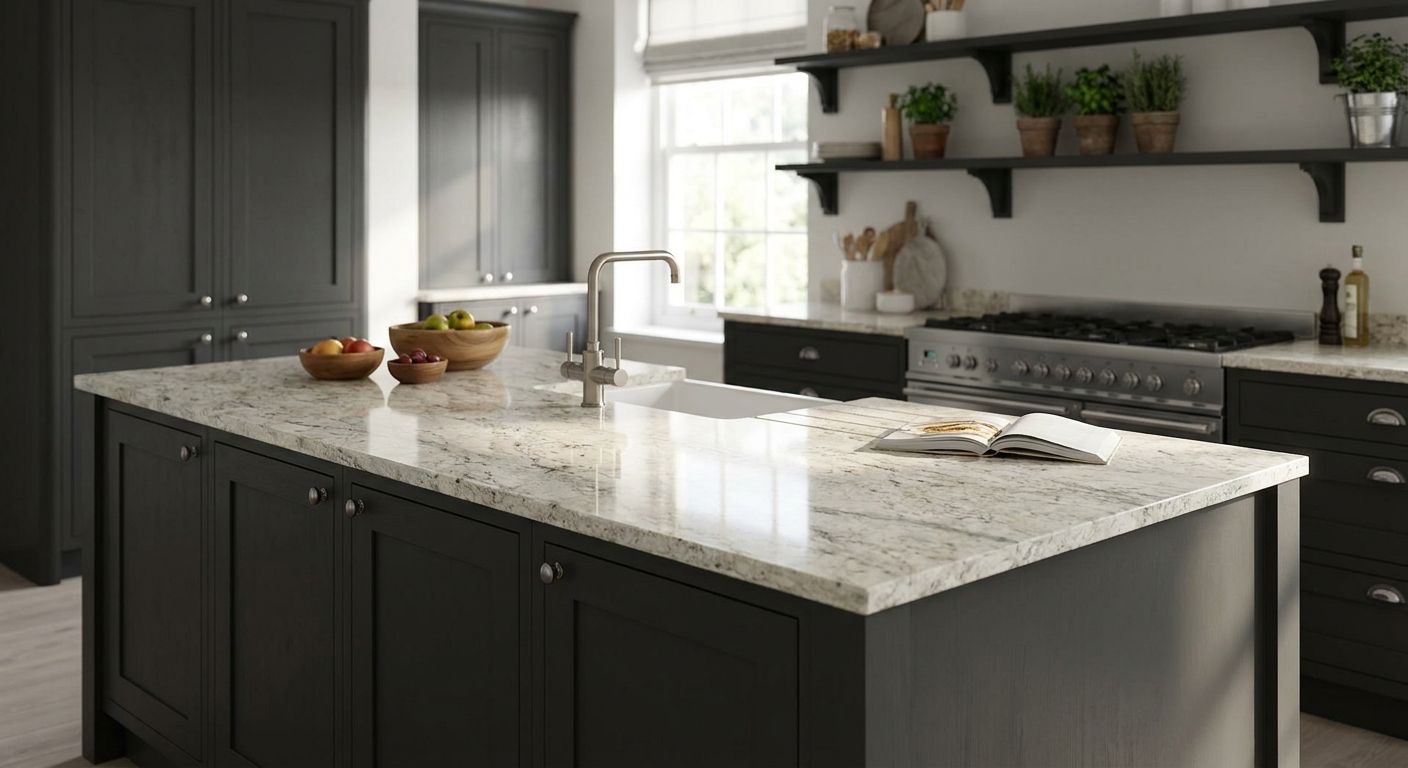
Granite scores 6-7 on the Mohs hardness scale, making it the most heat-stable natural stone commonly fabricated for surrounds. It handles the radiant cycling from a wood-burning insert without micro-cracking, and it resists staining from soot better than marble.
Homeowners in older New England colonials gravitate to granite because it matches the exterior stonework of the house without the upkeep marble demands. Granite fireplace surrounds built for this climate hold their finish through decades of seasonal heating cycles.
Verdict: Buy for wood-burning fireplaces where durability matters more than a soft, veined look.
2. Marble -- the classic
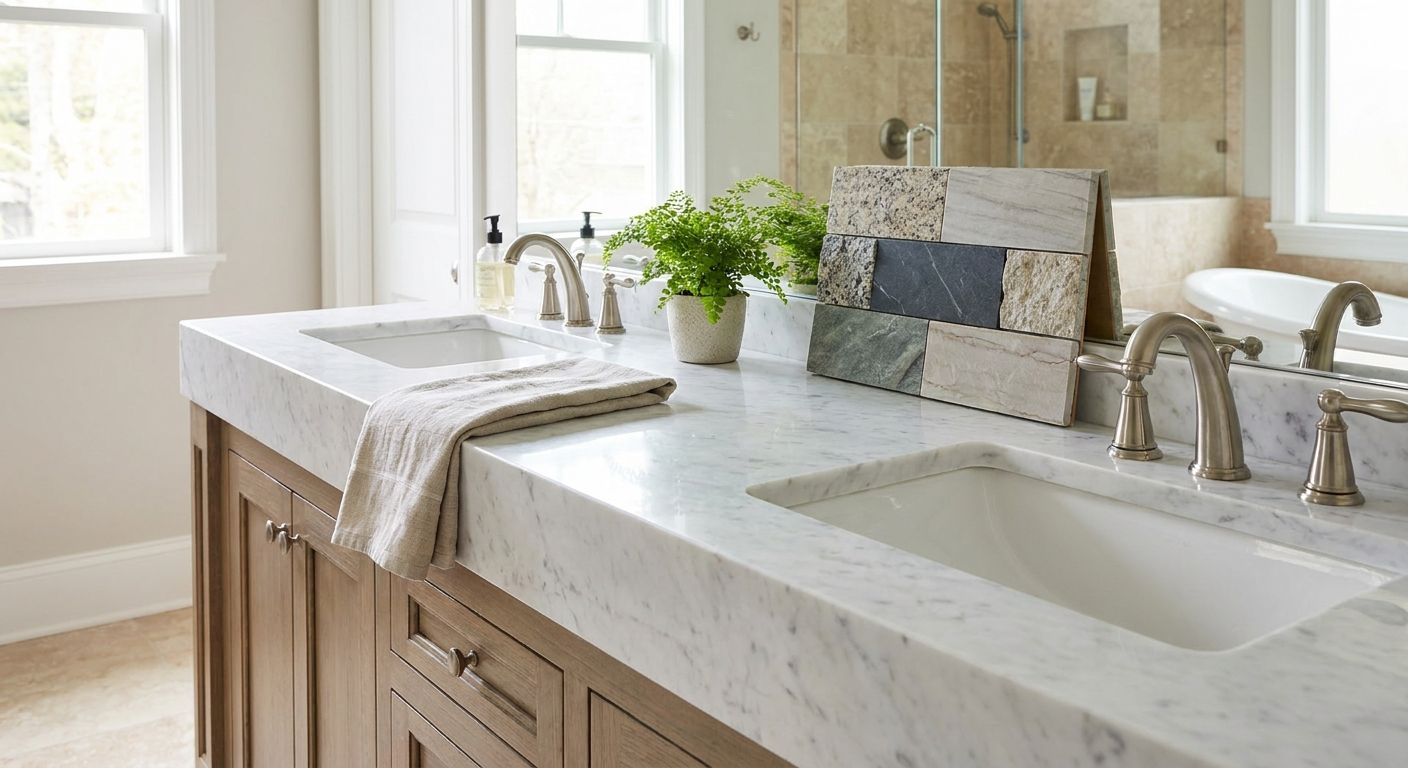
Marble is still the surround most people picture when they think "fireplace mantel." Honed Carrara or Danby marble brings the veining that makes a living room photograph well, and it holds up fine against ambient heat several feet from the firebox.
The catch: marble sits at Mohs 3-4, soft enough that ash acidity etches the polish over years of use if it's not sealed and maintained. Marble surrounds for fireplace hearths work best when the design keeps a buffer zone between the polished face and direct soot contact.
Verdict: Consider for formal rooms where the look outweighs the maintenance; Skip if the household won't reseal it every 12-18 months.
3. Quartzite -- the heat-resistant heavyweight
Quartzite is natural, quartz-based stone -- not to be confused with engineered quartz -- and it lands at Mohs 7, as hard as granite with a more crystalline, marble-like face. That hardness plus mineral composition means it tolerates sustained heat from gas inserts noticeably better than resin-based surfaces.
For homes converting to gas fireplaces in 2026, quartzite paired with a custom stone hearth for gas fireplaces gives a low-maintenance surface that won't discolor from the steadier, lower-flicker heat gas units produce.
Verdict: Buy for gas fireplace surrounds and busy households that don't want to reseal a soft stone every year.
4. Engineered quartz -- the one to watch near the firebox
Engineered quartz dominates kitchen counters because it's non-porous and consistent in pattern, but it's a resin-bound product, and most manufacturers cap safe sustained heat exposure around 150°F. A firebox opening runs hotter than that at the surface during active use, which is exactly why code requires that 6-inch noncombustible clearance.
If you're deciding between quartz and quartzite for anything touching a fireplace, the heat ceiling is the deciding factor, not pattern consistency.
Verdict: Skip within 6 inches of the firebox opening; Consider only for an extended hearth surface well outside the code clearance zone.
5. Soapstone -- the old New England pick
Soapstone has heated New England homes for centuries -- it's the stone lining traditional wood stoves because it absorbs and radiates heat evenly instead of cracking under thermal shock. It's soft (Mohs 2-3), so it scratches easily, but a mineral-oil finish hides most of that and deepens the patina over time.
Verdict: Consider for farmhouse or rustic-style fireplaces where a matte, dark surface fits the aesthetic and occasional oiling isn't a dealbreaker.
6. Slate -- the budget-conscious option
Slate brings natural heat resistance and a textured, cleft or honed face that suits craftsman and mid-century homes. It's more porous than granite or quartzite, so it needs sealing, but it costs less to source in most regions and installs in smaller-format tile or slab pieces.
Verdict: Consider for craftsman-style renovations on a tighter budget; Skip if you want a single seamless slab face.
Comparison table
| Stone | Mohs hardness | Heat tolerance | Maintenance | Best for |
|---|---|---|---|---|
| Granite | 6-7 | High -- stable under radiant cycling | Low | Wood-burning fireplaces |
| Marble | 3-4 | Moderate at a distance | Higher -- reseal annually | Formal living rooms |
| Quartzite | 7 | High -- best near gas inserts | Low | Gas fireplace surrounds |
| Engineered quartz | 6-7 (resin-bound) | Capped near 150°F | Low | Extended hearth, not the firebox face |
| Soapstone | 2-3 | High -- historically used in wood stoves | Moderate -- periodic oiling | Rustic/farmhouse surrounds |
| Slate | 4-5 | High | Moderate -- needs sealing | Craftsman-style, budget builds |
Get a fireplace surround quote
Talk through granite, marble, or quartzite options for your surround.
Where to buy
- Work with a fabricator who templates on-site, not a big-box slab counter -- fireplace surrounds involve angled returns and hearth extensions that off-the-shelf remnants rarely fit.
- Confirm the installer knows NFPA 211 clearance requirements before slabs get cut; a surround that violates the 6-inch/12-inch clearance rule can fail a home inspection or insurance review.
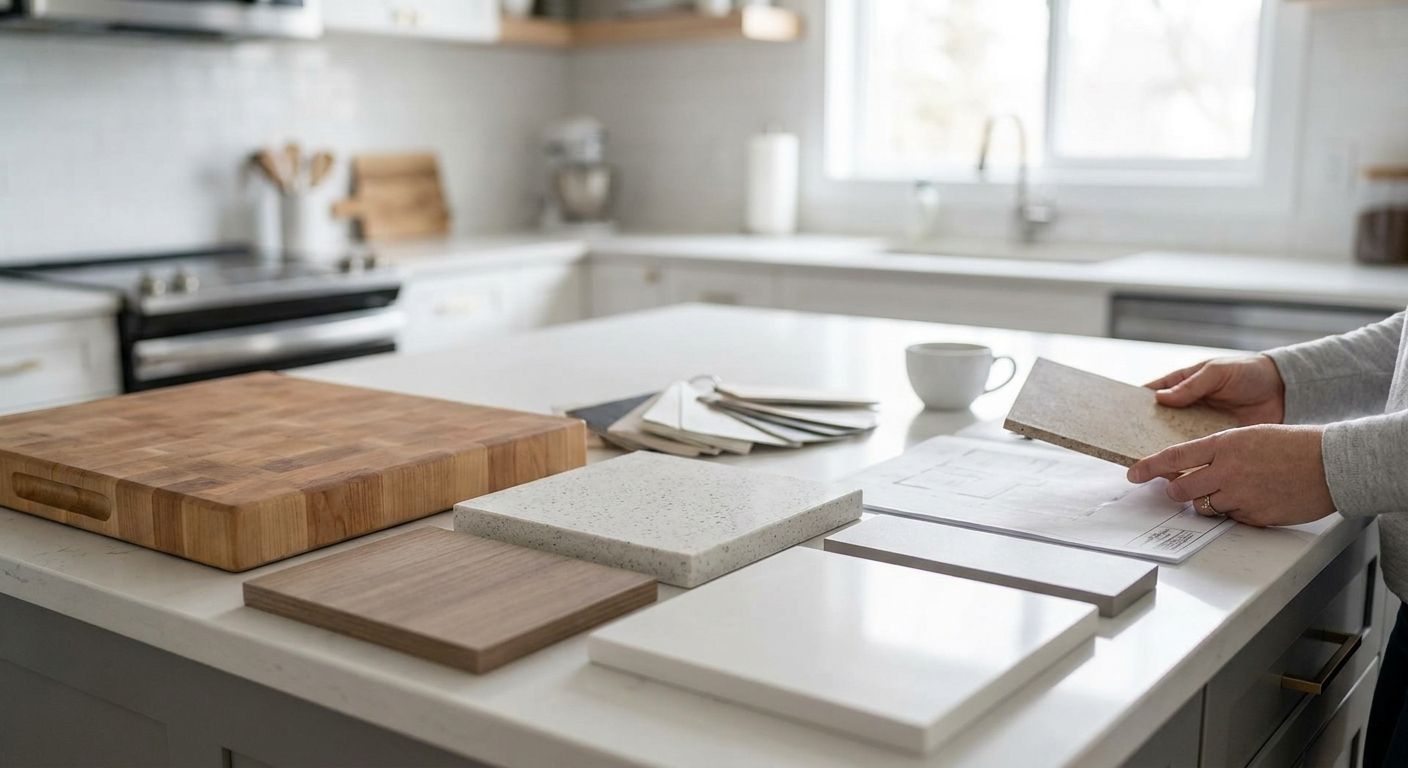
- Ask to see the actual slab, not just a sample chip, especially for marble and quartzite where veining varies dramatically between blocks.
FAQ
What is the best stone for fireplace surrounds in 2026?
Granite is the best all-around stone for fireplace surrounds in 2026 because its Mohs 6-7 hardness handles radiant heat from wood-burning inserts without cracking. Quartzite is the better pick specifically for gas fireplace surrounds.
Is quartz safe near a fireplace?
Engineered quartz is safe for an extended hearth area but not within 6 inches of a firebox opening, since most manufacturers cap sustained heat exposure around 150°F. Natural quartzite doesn't carry that limitation and tolerates fireplace heat better.
Does marble crack from fireplace heat?
Marble rarely cracks from fireplace heat when it's set outside the direct firebox clearance zone, but it does etch from ash acidity over years of use. Sealing it every 12-18 months slows that etching significantly.
What clearance does code require around a fireplace surround?
NFPA 211 requires noncombustible material to extend at least 6 inches from each side of the firebox opening and 12 inches above it. Stone surrounds satisfy the noncombustible requirement, but placement still needs to respect those minimums.
Is granite or quartzite better for a fireplace surround?
Granite and quartzite both score 6-7 on the Mohs hardness scale and tolerate fireplace heat well, so the choice usually comes down to look. Quartzite gives a more marble-like, crystalline face, while granite offers more consistent speckled patterns.
How much maintenance does a stone fireplace surround need?
Granite and quartzite need almost no maintenance beyond occasional resealing every few years. Marble and slate need more frequent sealing -- roughly annually -- to resist etching and staining near ash and soot.
Can you use soapstone for a modern fireplace surround?
Soapstone works for modern surrounds when the design calls for a matte, dark monolithic look, and it has centuries of use in wood stove applications for heat resistance. It's softer than granite, so it scratches more easily, and most owners maintain it with periodic mineral oil.
Does a fireplace surround need a different stone than the hearth?
The surround and hearth can use the same stone slab for a seamless look, but the hearth floor sees more direct ember contact and abrasion. Granite and quartzite handle both roles well; softer stones like marble are better limited to the vertical surround face.
One last thing
The stone that fails first on a fireplace surround almost never fails from heat -- it fails from moisture trapped behind an unsealed edge where the slab meets the firebox frame, especially on marble and slate installs. Ask your fabricator to seal every cut edge before install, not just the visible face, and that single step outlasts most of the material debates above.