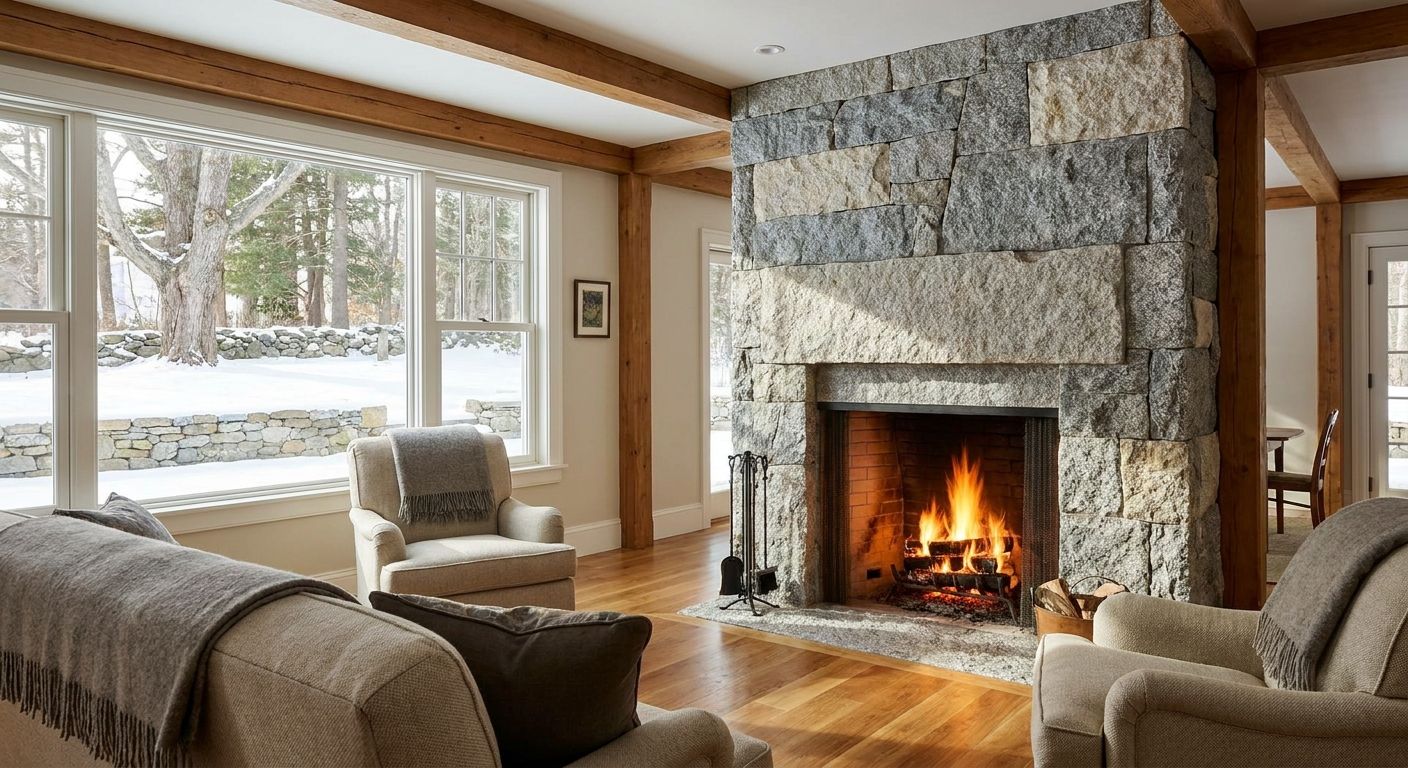
Granite fireplace surrounds turn a wood-burning or gas fireplace into the anchor of a New England living room, standing up to soot, heat, and decades of freeze-thaw winters without cracking the way painted mantels and tile surrounds eventually do.
- Classic Black granite is the safe pick for granite fireplace surrounds in New England homes -- buy it for wood-burning fireboxes.
- Leathered granite finishes hide soot and ash better than polished slabs -- consider for high-traffic family rooms.
- Marble surrounds look striking but etch and discolor near open flame -- skip marble for active wood-burning fireplaces.
- Local fabrication avoids the slab damage that hits stone shipped through New England winters before installation.
Why this matters
Granite runs 6 to 7 on the Mohs hardness scale, which is why it shrugs off the direct heat of a firebox in ways engineered quartz and painted wood cannot. New England homes burn wood or gas five to six months a year, and a surround that discolors or hairline-cracks after one winter of daily fires is a renovation you'll redo by 2028.
A granite fireplace surround also does double duty on resale. Buyers touring a Cape or a colonial in Massachusetts, Connecticut, or New Hampshire read a stone surround as a finished room, not a project. Soares Stone fabricates and installs granite fireplace surrounds across New England, and the material choice matters more here than in warmer climates because slabs sit through freeze-thaw cycles both before and after install if the job isn't sequenced right. Check Soares Stone for how installs get scheduled around New England weather.
Who this is for
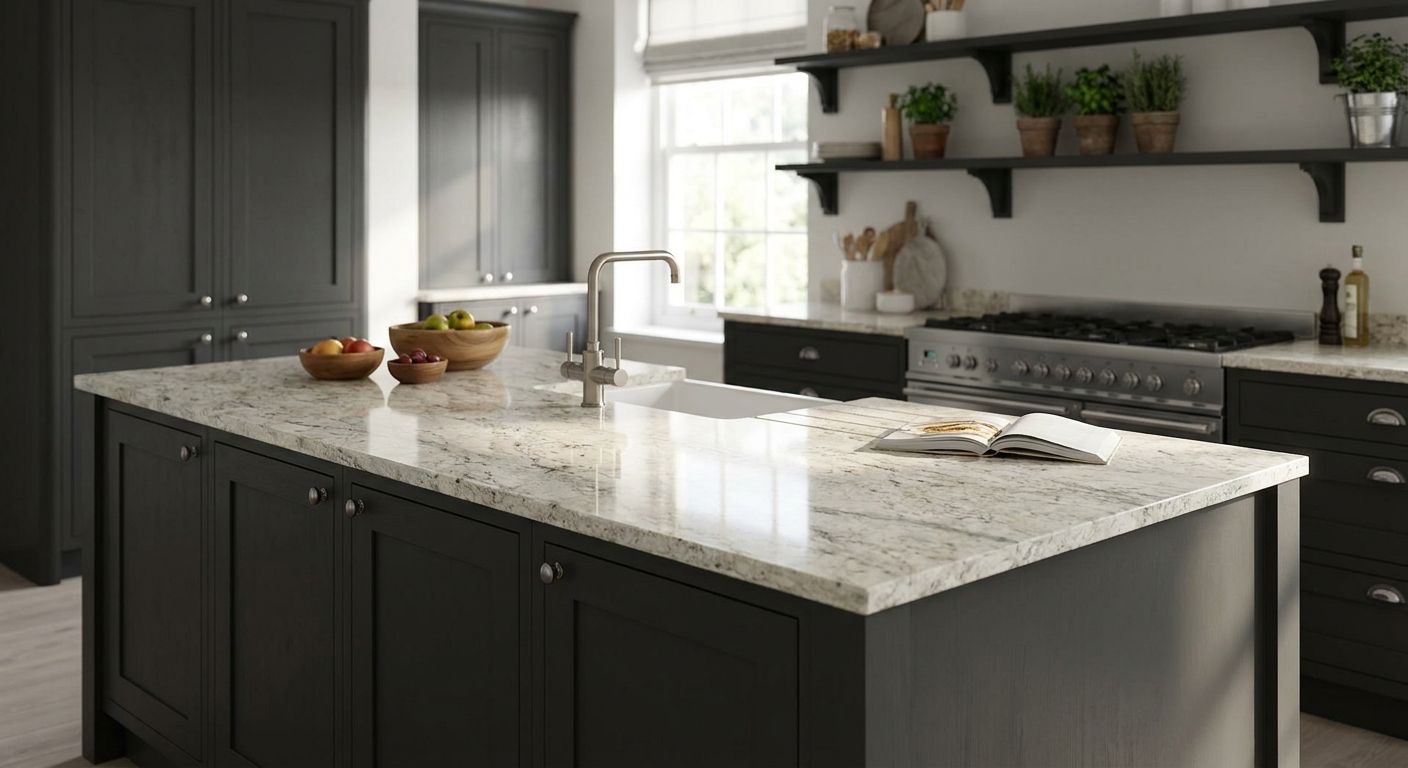
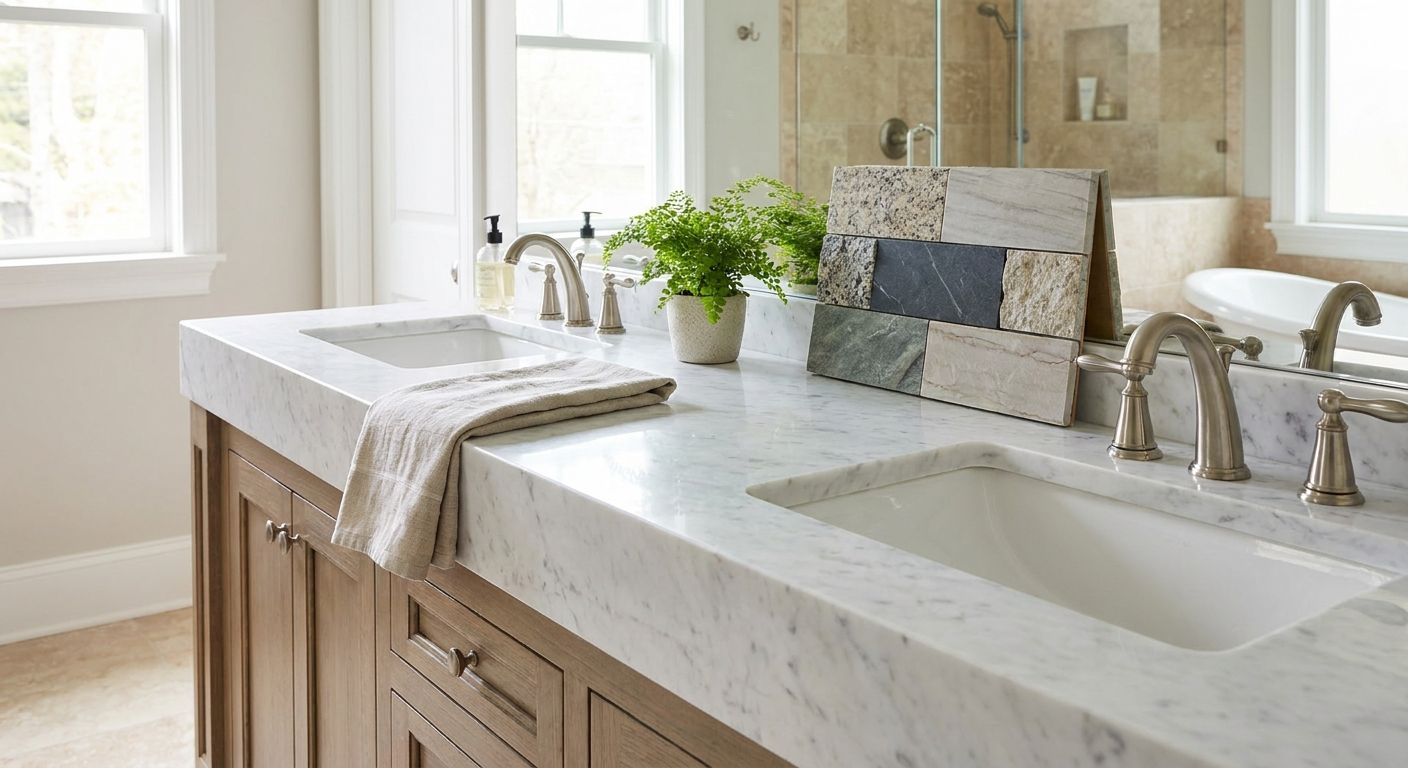
This guide is for homeowners renovating a living room, den, or finished basement in a New England home built before 1980, where the existing fireplace surround is brick, painted drywall, or dated tile and the fireplace itself is either wood-burning or a gas insert. It's also for anyone building new construction who wants the surround to read as intentional rather than an afterthought next to a granite kitchen island or bathroom vanity elsewhere in the house.
What to look for in granite fireplace surrounds
Heat and thermal shock resistance
Granite handles direct radiant heat from a firebox far better than marble, which is calcium-based and prone to discoloring or crazing near sustained high temperatures. For a wood-burning fireplace used several nights a week through a New England winter, this isn't cosmetic — it's the difference between a surround that lasts 20 years and one that needs replacing in five.
Slab thickness and seam placement
A 3cm slab is standard for fireplace surrounds and holds up to the thermal cycling of daily fires better than thinner cuts. Seams should land outside the direct heat zone around the firebox opening, not across the face where expansion and contraction stress the joint every heating season.
Color and pattern fit for New England architecture
Colonial and farmhouse homes common across Massachusetts and Connecticut generally read better with warmer, low-contrast granites — think Giallo Ornamental or Baltic Brown — while contemporary builds and renovated capes can carry higher-contrast patterns like Black Galaxy or Blue Pearl. Match the surround to the home's era, not just to a Pinterest board.
Finish and safety
Polished granite shows fingerprints, ash smudges, and soot streaks more than a honed or leathered finish. For a fireplace that gets daily use, a honed or leathered surface hides the grime between cleanings and still delivers the same heat resistance.
Local fabrication and lead time
Slabs sourced and fabricated locally avoid the temperature swings that damage stone shipped through New England winters in unheated trucks. Ask any fabricator how templates and install dates get sequenced around cold snaps — freeze damage to a slab before it's even installed is a preventable, avoidable cost.
Maintenance and sealing
Granite needs sealing roughly once a year to resist soot absorption near the firebox opening. Skip this and a light-colored granite will show gray staining around the heat source within two or three heating seasons.
Top picks for New England fireplace surrounds
Classic Black granite — the safe pick. Uniform, near-black color with minimal veining, so soot and ash don't show between cleanings. Handles direct firebox heat without visible thermal stress after repeated winters of daily use. Verdict: Buy.
Giallo Ornamental — the farmhouse pick. Warm gold-and-cream veining that reads right in a pre-1960 colonial or Cape with wood trim and exposed beams. Pairs naturally with a matching granite kitchen island if the kitchen and living room share sightlines. Verdict: Buy.
Leathered Black Pearl — the modern pick. Textured, low-sheen finish that hides fingerprints and soot far better than polished granite in a high-traffic family room. Slightly more upkeep on sealing since the textured surface has more surface area to protect. Verdict: Consider.
Marble surround — the wildcard. Striking veining and a lighter palette that some homeowners want for the mantel wall, but marble's lower hardness means it etches and can discolor near an active wood-burning firebox faster than granite does. Compare it against the granite options directly on the marble surrounds for fireplace hearths page before committing — it's a better fit for a gas insert with a glass front than an open wood fire. Verdict: Consider for gas-only, Skip for wood-burning.
Exotic Blue Bahia — the statement pick. High-contrast blue-and-black veining that works as a focal point in a great room but costs noticeably more per slab than domestic granites like Baltic Brown. Good for a one-fireplace renovation where budget isn't the deciding factor. Verdict: Consider.
Get a granite surround quote
Free estimates for fireplace surrounds across New England.
What to avoid
- Polished white marble on an active wood-burning firebox. It looks bright in showroom photos but shows heat staining and etching within a season or two of regular fires.
- Engineered quartz surrounds. The resin binder in quartz softens and can discolor under sustained radiant heat — it's built for kitchen counters, not firebox surrounds.
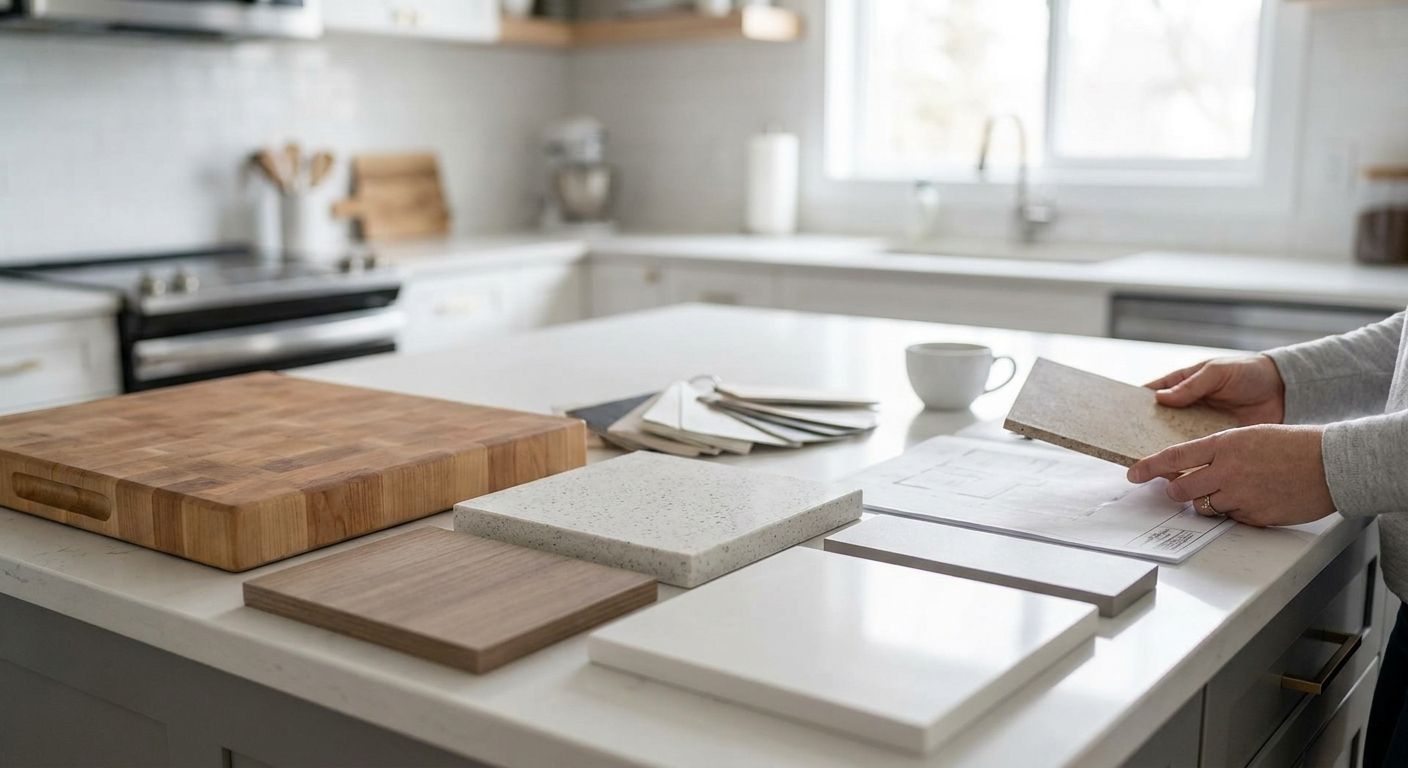
- Mismatched finish across the house. A polished granite fireplace next to a honed kitchen island or a leathered bathroom vanity reads as disconnected, not intentional. If you're weighing quartz versus quartzite elsewhere in the home, the quartz vs quartzite comparison guide is worth a look before finalizing the surround.
Verdict comparison
| Material | Heat resistance | Best home style | 2026 verdict |
|---|---|---|---|
| Classic Black granite | High | Any | Buy |
| Giallo Ornamental granite | High | Colonial, farmhouse | Buy |
| Leathered Black Pearl | High | Modern, high-traffic | Consider |
| Marble | Moderate | Gas insert only | Consider/Skip |
| Blue Bahia granite | High | Statement great room | Consider |
| Engineered quartz | Low | Not recommended near firebox | Skip |
FAQ
What's the best granite for a fireplace surround in New England?
Classic Black granite is the most reliable choice for New England fireplace surrounds because it resists thermal staining and hides soot between cleanings. Homeowners matching a colonial or farmhouse look often choose Giallo Ornamental instead for its warmer tone.
Is granite better than marble for a fireplace surround?
Granite outperforms marble around an active wood-burning firebox because it resists heat-related etching and discoloration better. Marble works fine on a gas insert with a glass front but isn't the first choice for open flame in a New England living room.
How much heat can a granite fireplace surround handle?
Granite rated 6 to 7 on the Mohs hardness scale withstands the sustained radiant heat of a standard wood-burning or gas firebox without cracking or discoloring. Direct, prolonged contact with flame is still handled by firebrick inside the firebox, not the surround itself.
Does a granite fireplace surround need sealing?
Yes, granite fireplace surrounds need sealing about once a year to resist soot and ash absorption near the firebox opening. Skipping sealing shows up as gray staining on lighter granites within two to three heating seasons.
Can I match my fireplace surround to my kitchen countertops?
Yes, matching or coordinating the fireplace surround to a granite kitchen island or bathroom vanity creates a consistent look through the home. Pick the same finish -- polished, honed, or leathered -- across both spaces so the stone reads as one design decision, not two.
What finish is best for a fireplace surround that gets daily use?
A honed or leathered finish hides fingerprints, ash smudges, and soot better than polished granite on a fireplace used daily through a New England winter. Polished granite still resists heat the same way, it just shows grime faster between cleanings.
How long does a granite fireplace surround last?
A properly sealed granite fireplace surround lasts 20 years or more with normal wood-burning or gas use. The limiting factor is usually sealing neglect or seam placement too close to the firebox opening, not the granite itself.
One last thing
The detail most homeowners skip: seam placement matters more than color choice for a fireplace surround. A granite fireplace surround with a seam running directly above the firebox opening will show stress lines within a few New England winters of thermal cycling, regardless of how well the slab itself resists heat — get the fabricator to walk you through seam layout before the slab gets cut in 2026.