Busy households need countertops that survive spilled juice, dropped cast iron, and zero weekend sealing sessions - here's which stone and quartz surfaces actually deliver that in 2026.
- Quartz is the best low maintenance countertop for busy families in 2026 because it never needs sealing. Buy.
- Quartzite matches quartz on hardness with a natural stone look but still needs annual sealing. Buy for design-first kitchens.
- Granite fits tighter budgets but needs resealing every 1-2 years to stay stain-resistant. Consider.
- Marble etches from lemon juice and tomato sauce within minutes - Skip it for kitchens with young kids.
Why this matters
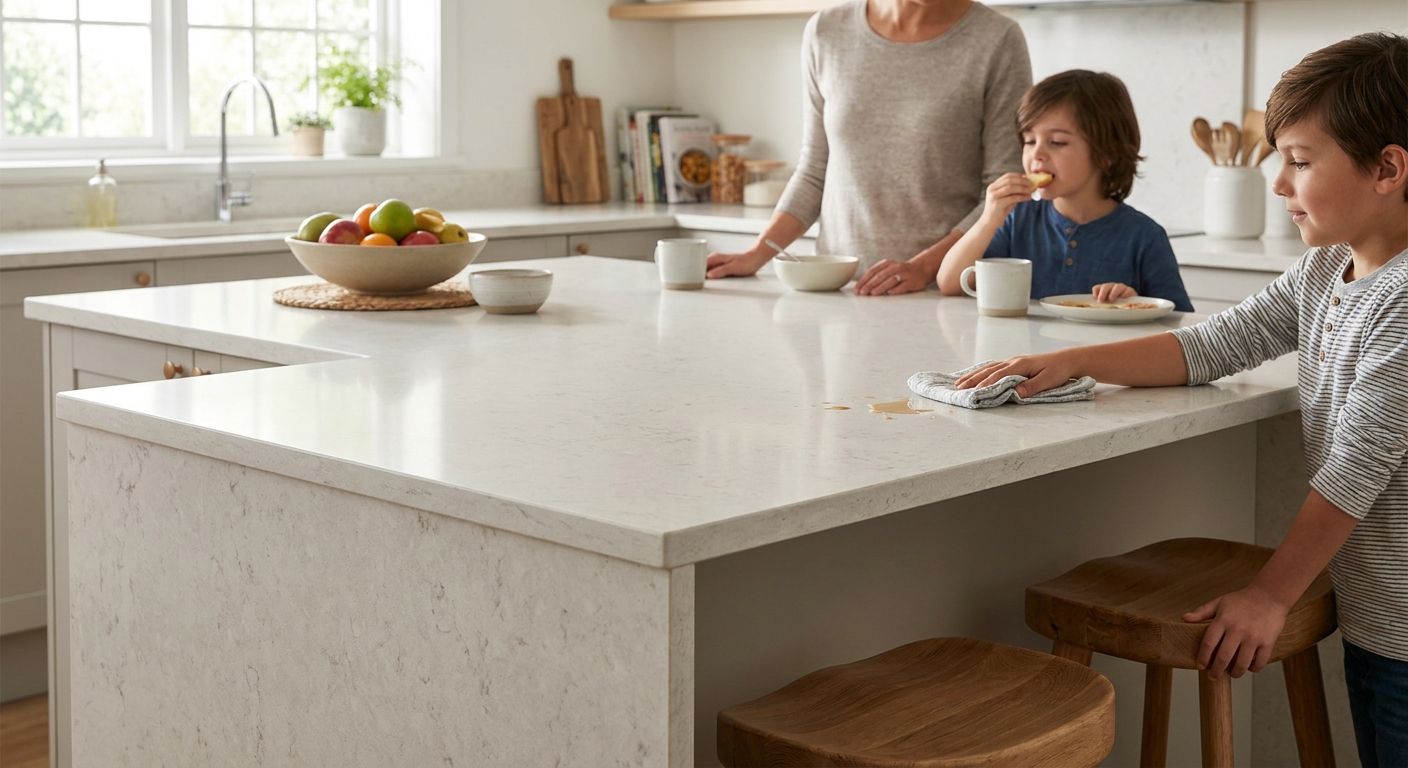
A family kitchen counter gets hit with spilled orange juice before school, a hot pan off the stove at 6pm, and a science-fair glue project on a Sunday - none of that is a fair test for a surface that also needs a sealing appointment twice a year. Sealing is the maintenance step most homeowners skip, and skipping it on the wrong material is exactly how staining and etching happen.
Soares Stone fabricates and installs quartzite countertops built for busy family kitchens across New England, and the material choice matters more than the color or edge profile most people obsess over first. Get the base material wrong and no amount of careful cleaning saves the counter in year two.
How this list was ranked
Each material below is ranked on four factors that actually affect a family's weekly routine: how often it needs sealing, how it holds up against acidic spills (juice, wine, tomato sauce, lemon), how it tolerates direct heat from pans and slow cookers, and how forgiving it is toward everyday scratches from knives and appliances. These are the same properties Soares Stone walks clients through during in-home consultations for kitchen, bathroom, and fireplace surfaces in 2026. Cost is noted only in relative terms - exact pricing depends on slab, edge work, and square footage, so get a quote for your specific kitchen rather than relying on a generic number.
The ranked list
1. Quartzite - the family-tested pick
Quartzite is natural stone that scores around Mohs 7 on hardness, putting it in the same league as engineered quartz for scratch resistance. It handles hot pans better than quartz because it has no resin binder to scorch, and its natural veining reads as a premium material rather than an obvious lab-made slab. The tradeoff: it still needs sealing about once a year, because it's a porous natural stone even at that hardness.
Verdict: Buy for families who want the look of marble without marble's stain problems.
2. Quartz - the zero-sealing default
Quartz is engineered from crushed stone bound with resin, which makes it non-porous straight out of the fabrication shop. No sealing, ever, and no staining from coffee, wine, or berry juice sitting on the surface overnight. The one weak spot is heat - direct contact with a pan above roughly 300°F can scorch the resin, so a trivet stays mandatory. Soares Stone installs quartz countertops for kitchen islands as the most common request from families who want the counter to disappear from the weekend to-do list entirely.
Verdict: Buy - this is the material to default to unless a specific room calls for something else.
3. Granite - the budget workhorse
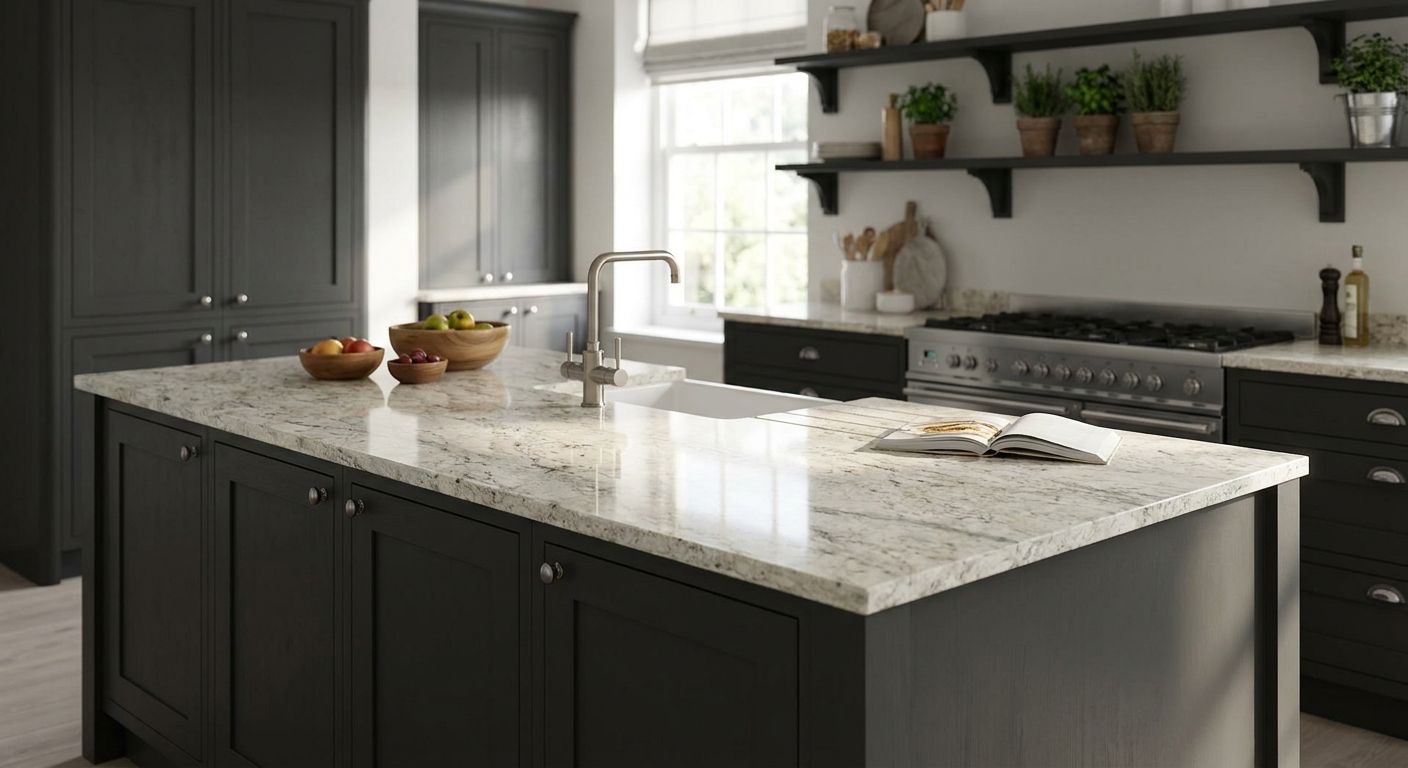
Granite tolerates heat better than quartz and scratches less easily than marble, landing around Mohs 6 to 6.5. It needs resealing every 1 to 2 years to keep its stain resistance, which is more upkeep than quartz but far less than marble. Soares Stone fabricates granite countertops for kitchen islands for families who want real stone at a lower price point than quartzite.
Verdict: Consider if the resealing reminder actually makes it onto a calendar.
4. Quartz for small kitchens - the tight-footprint pick
Smaller New England kitchens often run one continuous slab with fewer seams, and quartz's non-porous surface holds up to daily traffic without the visual noise of heavy veining. It's the same material as the island pick above, just sized and fabricated for compact layouts where every inch of counter gets used. Soares Stone runs this exact configuration through its quartz countertops for small kitchens installs across smaller New England homes.
Verdict: Buy for galley kitchens and condo renovations where counter space is already tight.
5. Marble - the risky classic
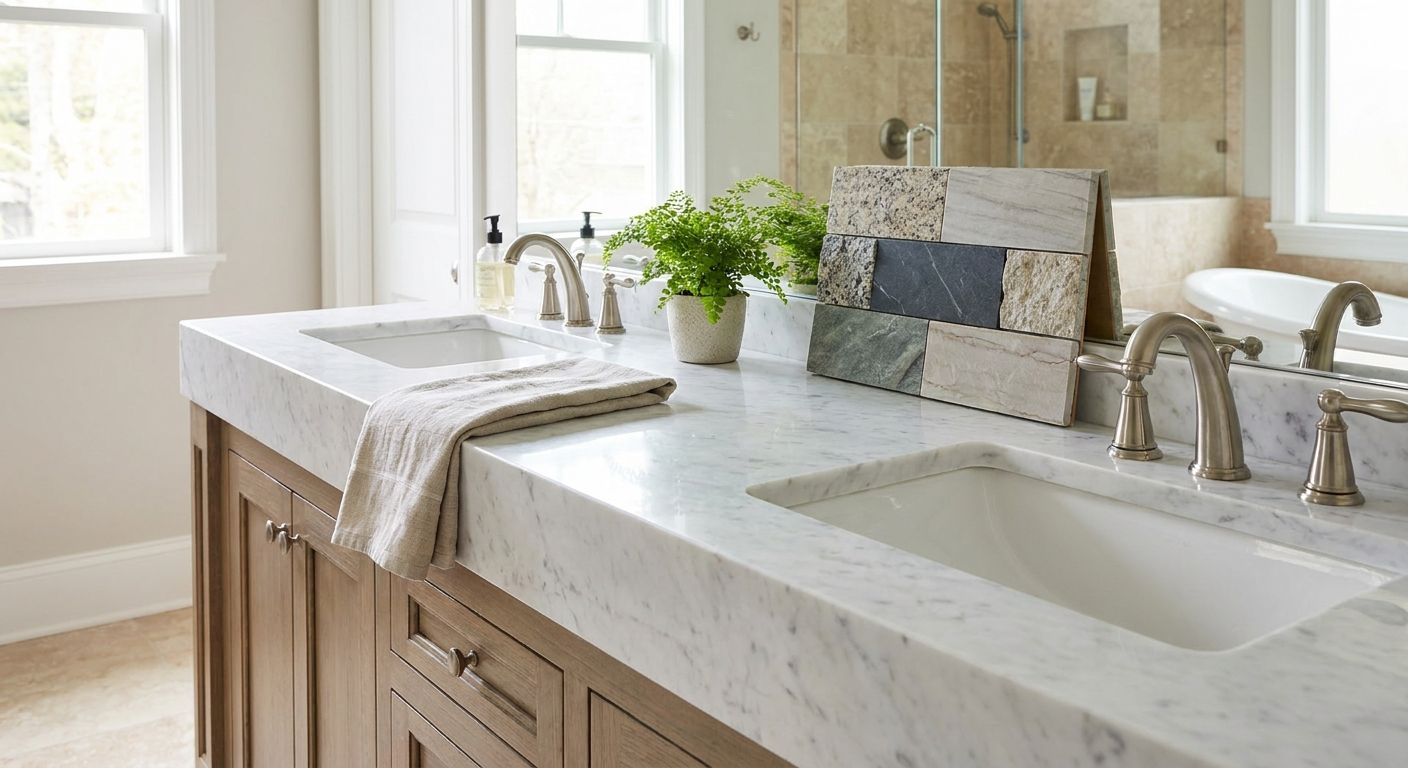
Marble sits at Mohs 3 to 4, soft enough that a dropped cast-iron pan or a knife dragged across the surface leaves a mark. Worse for a family kitchen: acidic liquids like lemon juice, vinegar, and tomato sauce etch the surface within minutes if left standing, and no amount of sealing fully prevents it. Marble still earns a place in low-traffic zones - a powder room vanity or a fireplace surround - just not on the counter where breakfast happens.
Verdict: Skip for kitchen work surfaces in a house with young kids.
6. Quartz for laundry rooms - the bonus multi-room pick
Families extending the same low-maintenance logic beyond the kitchen often fold laundry on a counter that takes detergent spills, wet clothes, and the occasional dropped bleach bottle. Quartz resists staining from detergent and moisture the same way it resists kitchen spills, which is why it shows up as a repeat request for laundry room folding counters.
Verdict: Buy if the laundry room counter gets real daily use.
Comparison table
| Material | Sealing Needed | Hardness (Mohs) | Stain Risk | Best For | Verdict |
|---|---|---|---|---|---|
| Quartz | None | ~7 | Very low | Islands, small kitchens, laundry rooms | Buy |
| Quartzite | Annual | ~7 | Low | Design-first family kitchens | Buy |
| Granite | Every 1-2 years | 6-6.5 | Moderate | Budget-conscious families | Consider |
| Marble | Every 6-12 months | 3-4 | High (etches) | Low-traffic accent areas only | Skip |
Where to buy
- Work with a fabricator who installs locally rather than one that only sells slabs sight-unseen - seam quality on an island or peninsula depends on the installer, not just the material.
- See the actual slab before fabrication, not a sample chip. Natural stone veining varies slab to slab, and quartz color batches can shift subtly between production runs.
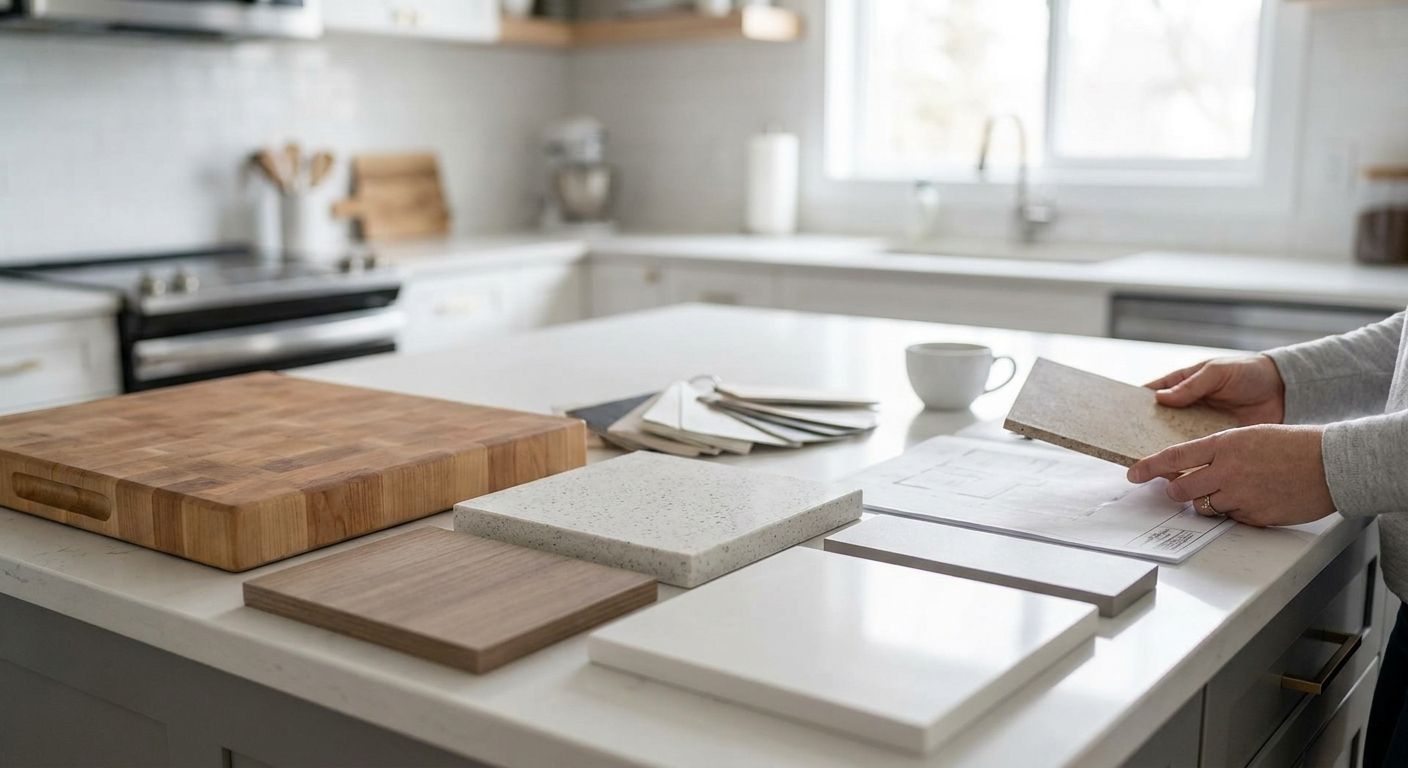
- Ask directly what sealing schedule the installer recommends for the specific material you're buying - a granite or quartzite quote should come with a maintenance conversation attached, not just a square-footage price.
Get a Free Countertop Estimate
Free in-home consultation for kitchen and bath countertops across New England.
FAQ
What is the best low maintenance countertop for busy families in 2026?
Quartz is the best low maintenance countertop for busy families in 2026 because it never needs sealing and resists staining from juice, coffee, and wine. Quartzite is the closest natural-stone alternative but still needs annual sealing.
Is granite low maintenance?
Granite needs resealing every 1 to 2 years to stay stain-resistant, which puts it in the middle of the maintenance scale between quartz and marble. It tolerates heat well, which offsets the sealing requirement for many families.
Does quartzite need sealing?
Yes, quartzite needs sealing about once a year despite scoring around Mohs 7 on hardness, because it's a natural stone with microscopic pores. Skipping that annual seal increases the risk of staining from oil and acidic spills.
Is marble a good choice for a family kitchen?
Marble is a risky choice for a family kitchen counter because it etches when acidic liquids like lemon juice or tomato sauce sit on the surface. It works better in low-traffic areas like a powder room vanity or fireplace surround.
Can quartz go outdoors?
Quartz is not recommended outdoors because UV exposure can fade or discolor the resin binder over time. Granite and quartzite hold up to direct sun better for outdoor kitchen counters.
What's the difference between quartz and quartzite?
Quartz is engineered from crushed stone and resin in a factory, while quartzite is a natural metamorphic stone quarried from the ground. They look similar at a glance but quartzite needs sealing and quartz does not.
Can I put a hot pan directly on quartz?
No - quartz's resin binder can scorch or discolor under direct heat above roughly 300°F, so a trivet is always recommended. Granite and quartzite tolerate direct heat from pans better than quartz.
Is granite outdated for kitchens in 2026?
No, granite remains a durable, budget-friendly option in 2026 for families who don't mind resealing it every 1 to 2 years. It's still one of the more heat-tolerant natural stone choices on the market.
One last thing
Quartz and quartzite slabs can look nearly identical stacked side by side in a fabrication yard, and the tell isn't color or veining - it's a water drop test. A drop that beads on the surface is likely a sealed natural stone; one that soaks in slightly within a minute needs sealing now, not next year. Ask to see that test before you sign off on a slab in 2026, because the label on the sample board isn't always the full story.