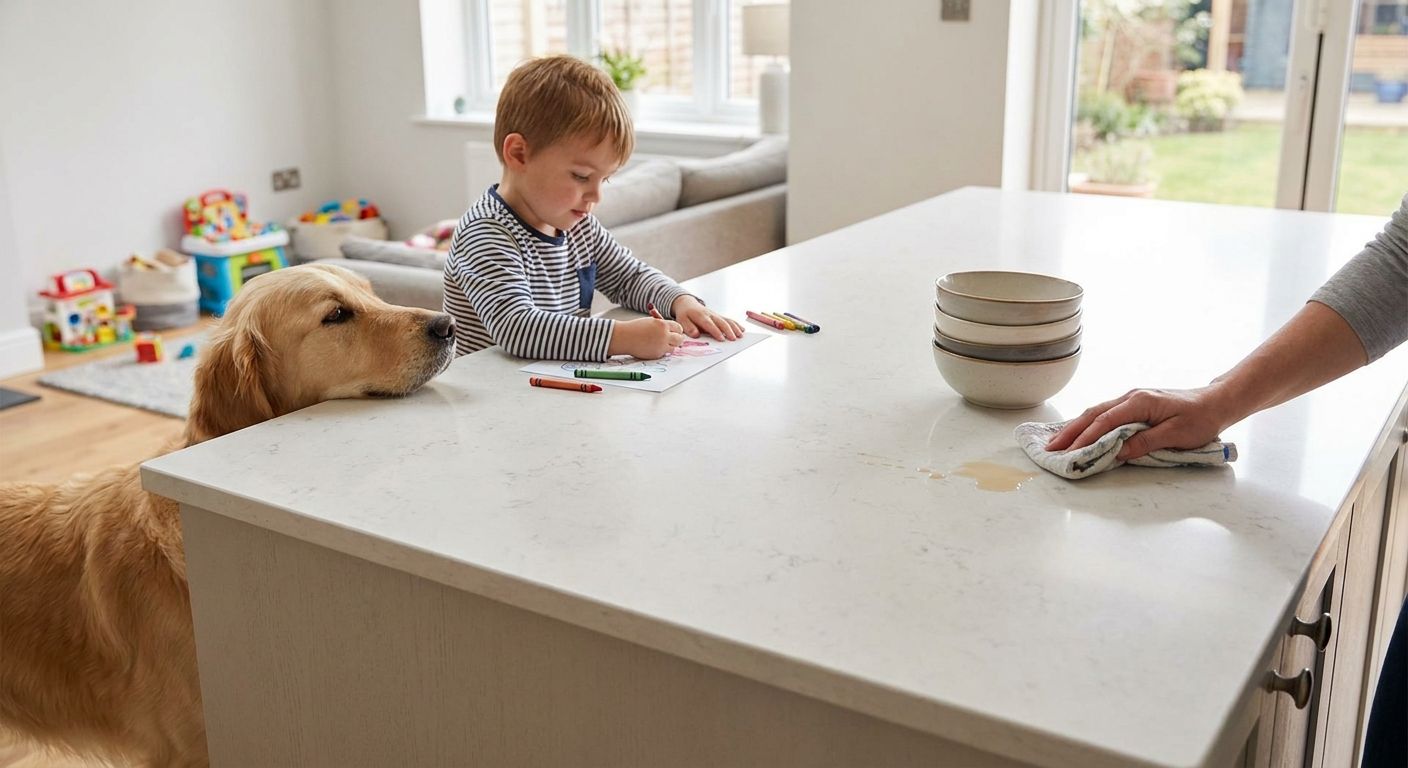
Kids leave grape juice rings, dogs jump up with muddy paws, and nobody in a busy household is coating a countertop in sealer twice a year — the material you pick for a family kitchen in 2026 has to survive real life, not a showroom demo.
- Quartz is the top pick for best countertops for homes with kids and pets in 2026 — no sealing, no etching, wipes clean. Buy.
- Quartzite matches quartz on hardness with a natural stone look. Buy if you want the real-stone appeal without the upkeep.
- Granite still holds up on a budget but needs resealing every 1-2 years. Buy with that caveat.
- Marble etches from juice and wine and scratches under claws. Skip it for a family kitchen.
- Laminate and butcher block save money upfront but show wear fast under daily kid-and-pet traffic. Wait or Skip.
Why this matters
A countertop in a house with kids and pets takes a different beating than one in an adults-only condo. Acidic spills, dropped toys, dog nails on the edge — the surface either shrugs it off or shows every mark within a season.
The best low-maintenance countertops for busy families aren't necessarily the prettiest slabs in the showroom — they're the ones that don't need babying. That's the filter this guide runs every material through: hardness, porosity, heat tolerance, and how much maintenance it actually demands once a toddler and a 70-pound Labrador move in.
Soares Stone fabricates and installs marble, granite, quartz, and quartzite across New England, and the material questions that come up most in 2026 aren't about color — they're about whether a surface survives a spilled juice box on a Tuesday.
How we ranked
Each material is scored against published Mohs hardness data, standard porosity and sealing guidance from stone industry sources, and how each surface responds to the two most common household hazards: acidic liquids and scratching. Heat tolerance and daily wipe-down ease get weighted heavily, since those are the two failure points that show up fastest in a kitchen with kids and pets.
The ranking favors surfaces that need zero or near-zero maintenance over surfaces that look premium on day one but require a maintenance schedule most households never keep up with. A countertop that needs annual sealing to stay stain-resistant only earns a Buy if the tradeoff is worth it for the price or the look.
The ranked list
1. Quartz — the no-sealing, no-nonsense pick
Quartz is engineered stone: roughly 90-95% ground quartz bound with resin, which makes it non-porous straight out of the fab shop. No sealing, ever, and it scores a 7 on the Mohs hardness scale — hard enough to resist scratching from claws, keys, and dropped cast iron.
Spilled juice, red wine, ketchup — none of it etches or stains because there's no porosity for liquid to soak into. It's the material behind most of the best low-maintenance countertops for busy families recommendations for exactly this reason.
One caveat: quartz's resin binder isn't UV-stable, so it's an indoor-only surface. Verdict: Buy — this is the default recommendation for kitchens with kids and pets in 2026.
2. Quartzite — the toughest natural stone in the lineup
Quartzite is real stone, not engineered — and it also lands at 7 on the Mohs scale, making it as scratch-resistant as quartz while keeping the natural veining families want in a kitchen island. It handles heat better than quartz too, since there's no resin to scorch under a hot pan set down without a trivet.
It does need periodic sealing because it's a natural stone with some porosity, though far less than granite or marble. Households that want the durability of quartz with the look of real stone land here — see the quartzite countertops for busy family kitchens breakdown for how the sealing schedule actually plays out year to year.
Verdict: Buy — the closest thing to a tie with quartz, and the pick for anyone who wants natural stone specifically.
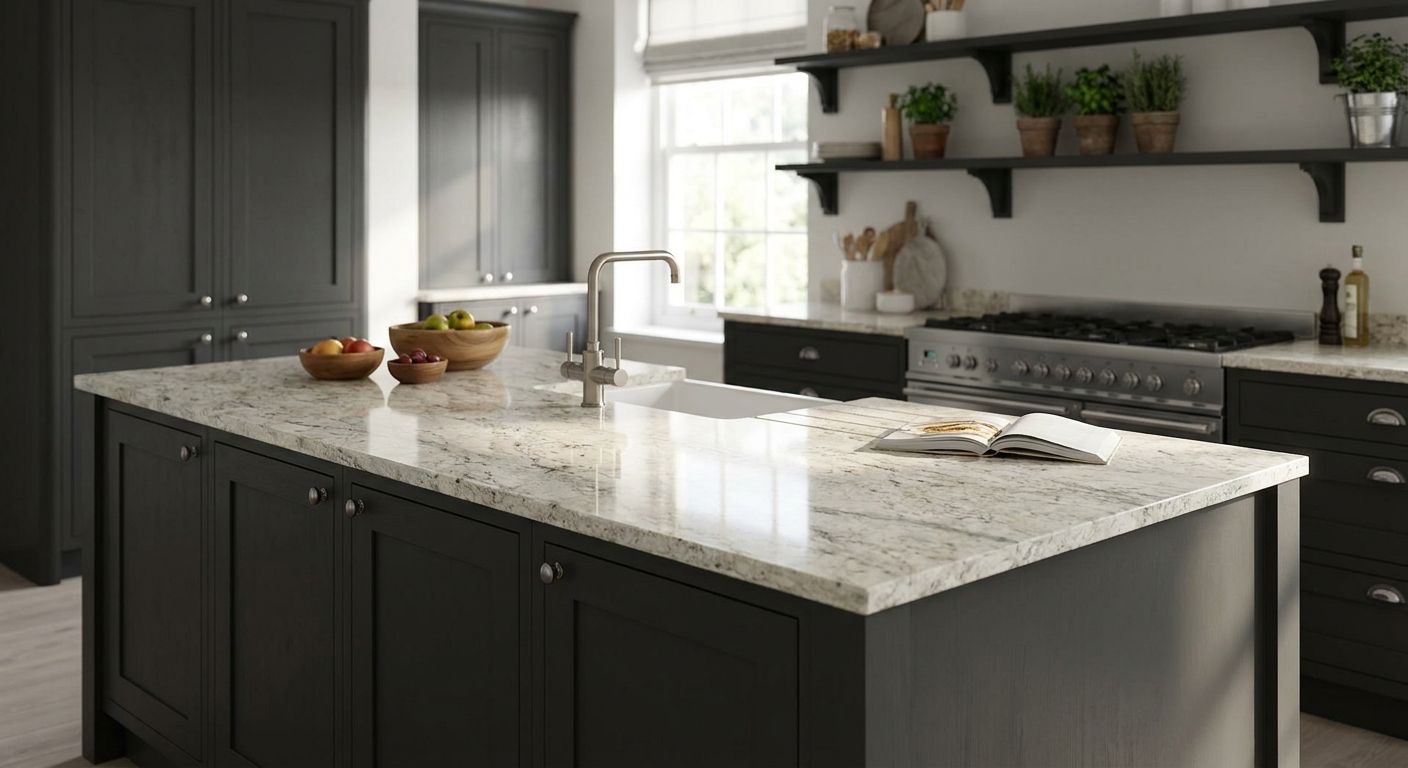
3. Granite — the budget-friendly veteran
Granite sits at 6-7 on the Mohs scale, still hard enough to resist most scratching from pet nails and kitchen tools. It's been the default family kitchen surface for decades, and for good reason: it's widely available, comes in a huge range of colors, and costs less per square foot than quartzite in most New England markets.
The tradeoff is sealing. Granite needs resealing roughly every 1-2 years to keep its porosity low enough to resist staining from wine, oil, and pet accidents. Skip that maintenance and it starts absorbing spills instead of shedding them. The granite countertops for kitchen islands option remains a strong choice for families watching the budget who don't mind the annual upkeep.
Verdict: Buy — with the sealing schedule built into the plan, not skipped.
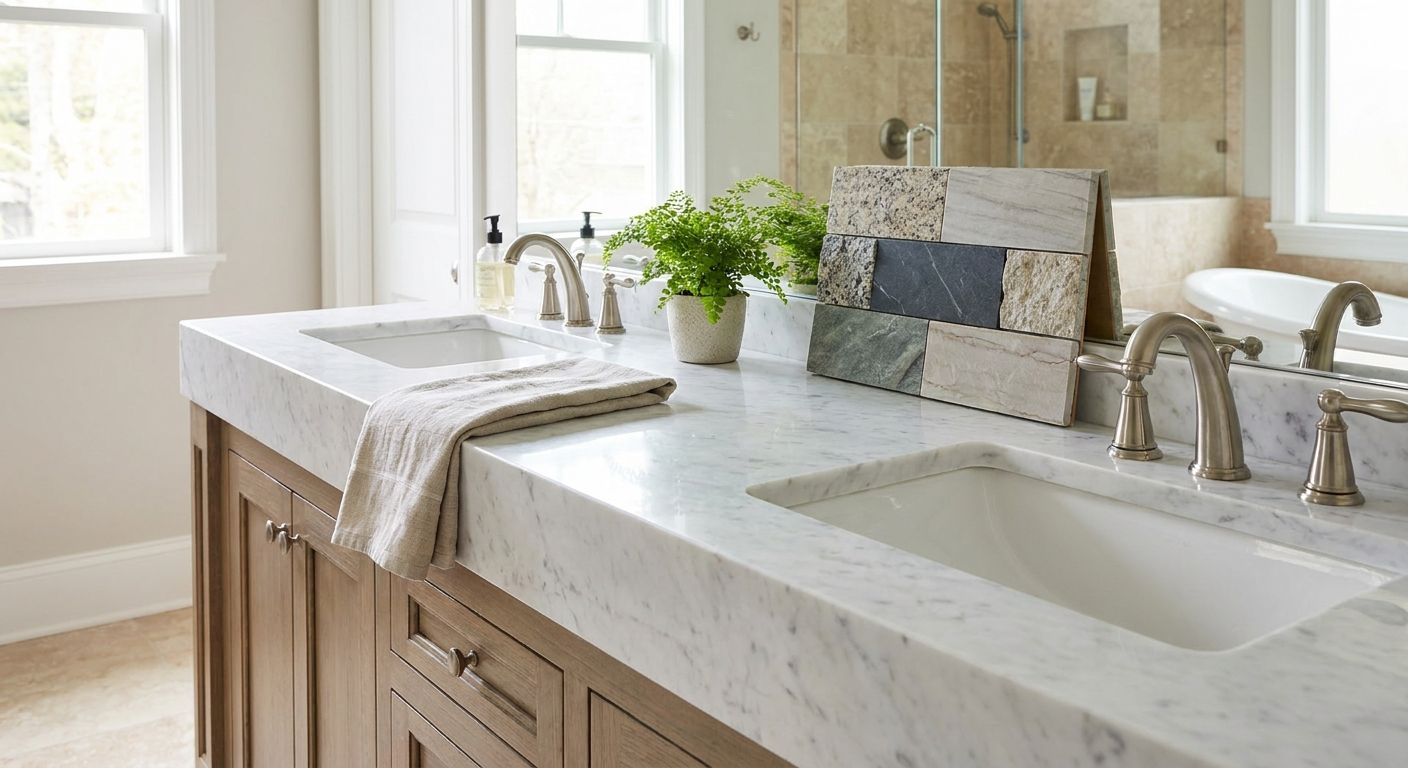
4. Marble — the beautiful pick that won't survive juice boxes
Marble scores a 3-4 on the Mohs hardness scale, which makes it noticeably softer than the other three and far more porous. Acidic spills — orange juice, wine, tomato sauce — start etching the surface on contact, leaving dull marks that don't wipe away. Pet claws and dropped toys scratch it more easily than granite or quartz.
Marble still has a place in a home with kids and pets — just not on the kitchen prep counter. A powder room vanity or a fireplace surround sees far less daily abuse and lets marble's veining do what it does best.
Verdict: Skip for a busy family kitchen island; reconsider for lower-traffic surfaces.
5. Laminate — the wallet-saver with a shelf life
Laminate costs less upfront than any natural or engineered stone, but the surface layer chips and delaminates at seams faster under daily kid-and-pet wear. Heat and sharp scratches leave permanent marks that can't be buffed out the way stone can.
It's a reasonable choice for a rental or a short-term fix, not a forever kitchen.
Verdict: Wait — fine as a placeholder, not a long-term family surface.
6. Butcher block and wood — the pet-scratch magnet
Wood countertops look warm and work well for prep zones, but they're the softest material on this list and show every scratch from dog nails within months. They also need regular oiling to resist water and stain absorption — maintenance most households skip once the novelty wears off.
Verdict: Skip for primary surfaces in a home with an active dog or cat.
Comparison table
| Material | Mohs hardness | Sealing needed | Heat resistance | Verdict for kids & pets |
|---|---|---|---|---|
| Quartz | 7 | Never | Good (no direct hot pans) | Buy |
| Quartzite | 7 | Occasional | Excellent | Buy |
| Granite | 6-7 | Every 1-2 years | Excellent | Buy with upkeep |
| Marble | 3-4 | Frequent | Good | Skip for kitchens |
| Laminate | Low | None | Poor | Wait |
| Butcher block | Low | Frequent oiling | Poor | Skip |
“If you can't wipe it clean with a paper towel in ten seconds, it's the wrong stone for a family kitchen.”
Where to buy
Getting the right material installed matters as much as picking it. A few rules that hold up across New England fabricators in 2026:
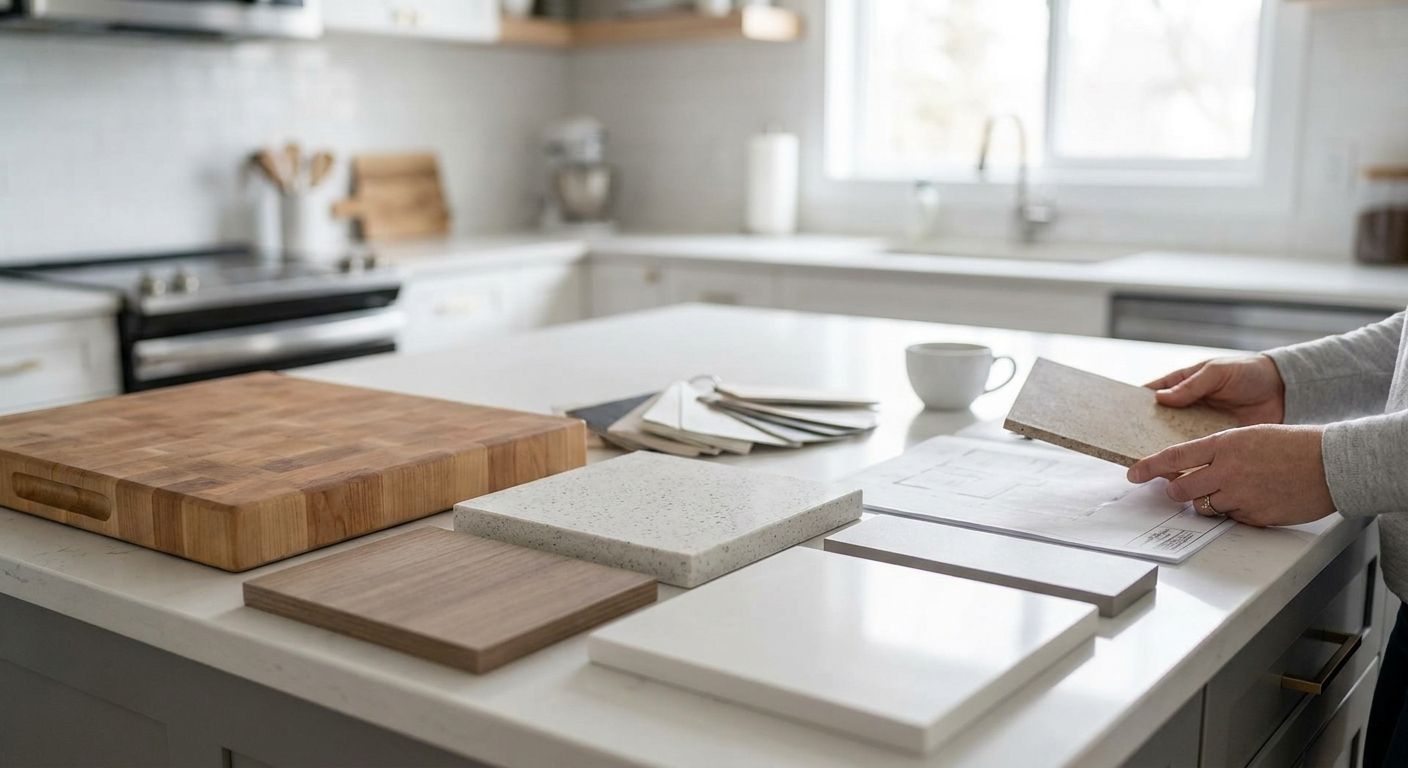
- Ask to see the exact slab in your kitchen's lighting before it's cut — quartz and quartzite both vary lot to lot.
- Confirm the sealing schedule and warranty terms in writing before granite or quartzite gets installed, not after.
- Work with a fabricator who installs the material daily, not one who treats stone as a side offering — installation quality affects seam visibility and edge durability as much as the slab itself.
Soares Stone fabricates and installs quartz, granite, and quartzite countertops across New England, and material selection conversations are part of every estimate.
Get a free countertop estimate
Talk through material options for your kitchen before you commit.
FAQ
What is the best countertop for homes with kids and pets in 2026?
Quartz is the best overall pick for homes with kids and pets in 2026 because it's non-porous and never needs sealing. Quartzite ties it closely for households that want a natural stone look with the same 7 rating on the Mohs hardness scale.
Is granite safe for a kitchen with kids and pets?
Yes, granite works well for kids and pets as long as it's resealed every 1-2 years. Skipping that maintenance lets spills and pet accidents soak into the surface instead of wiping off.
Why is marble not recommended for family kitchens?
Marble scores only 3-4 on the Mohs hardness scale and etches when acidic liquids like orange juice or wine touch the surface. It scratches more easily under pet claws than granite, quartz, or quartzite.
Does quartz scratch from pet nails?
Quartz resists scratching from pet nails because it rates a 7 on the Mohs hardness scale, the same as quartzite. Only harder materials like diamond or sapphire tools would leave a mark.
How often does quartzite need sealing compared to granite?
Quartzite needs sealing less often than granite because it's denser and less porous, though both are natural stones that require some maintenance. Granite typically needs resealing every 1-2 years; quartzite stretches longer between applications.
Can marble be used anywhere in a house with pets?
Marble works fine in lower-traffic spots like a powder room vanity or fireplace surround where daily spills and scratching are less likely. It's the kitchen prep counter and island where marble struggles most with kids and pets.
Is laminate a good temporary option for a family kitchen?
Laminate works as a short-term or budget placeholder but chips and delaminates faster than stone under daily kid-and-pet wear. It's a reasonable wait-and-upgrade choice, not a long-term family kitchen surface.
What countertop material resists heat best for a busy kitchen?
Quartzite and granite both resist heat better than quartz because they lack a resin binder that can scorch under direct contact with hot pans. Quartz still handles moderate heat fine with a trivet.
One last thing
Quartz's resin binder is the reason it's an indoor-only material — it's not UV-stable, which is exactly why quartzite shows up so often in outdoor kitchen builds instead. If a family is weighing an indoor-outdoor kitchen combo in 2026, that single fact usually settles the material choice before price even enters the conversation.