Granite and quartz countertops recoup more of their installed cost at resale than marble or quartzite in most New England kitchens, and the material you pick in 2026 shows up on every listing photo and every home inspector's checklist.
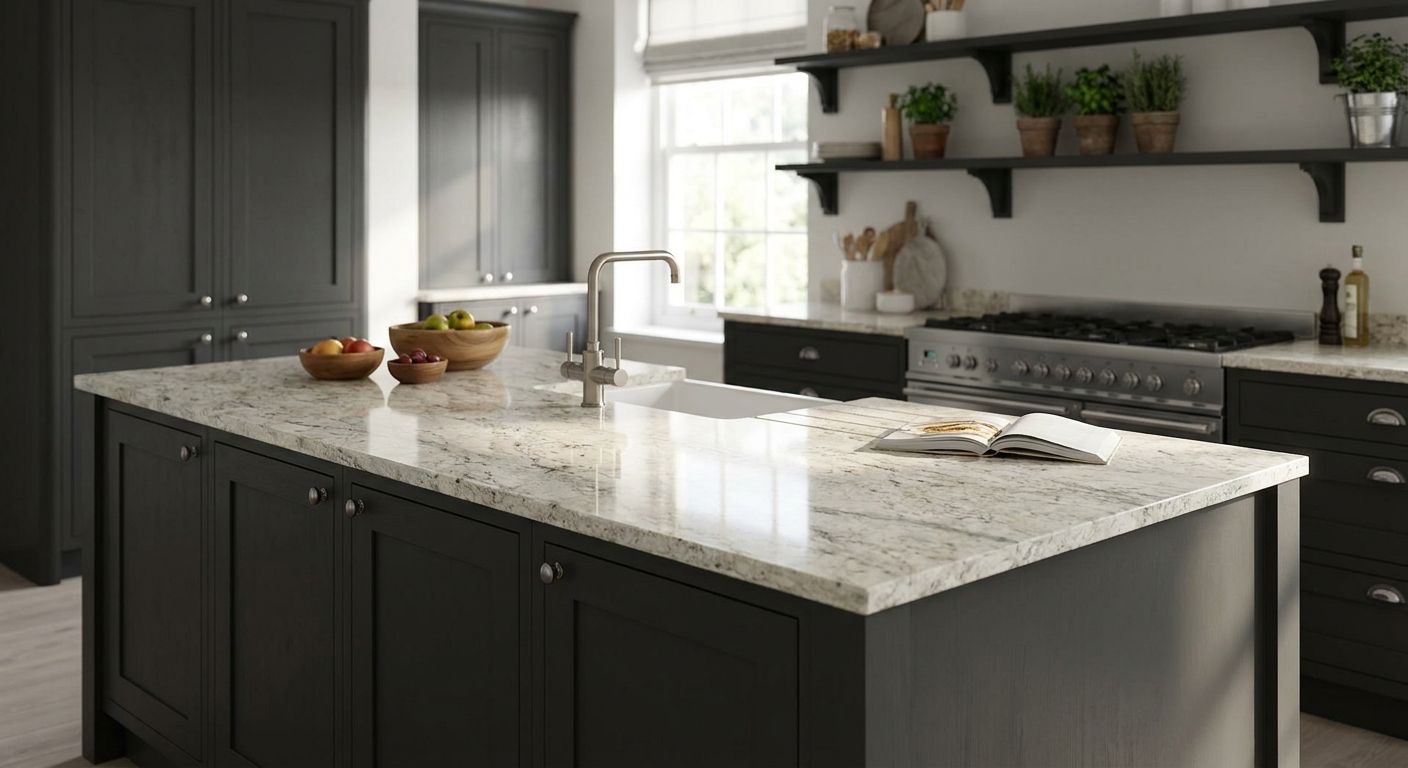
- Granite countertops for kitchen islands rank as the best countertop material for resale value in 2026 — Buy.
- Quartz countertops for kitchen islands come in a close second for low-maintenance resale appeal — Buy.
- Quartzite countertops for busy family kitchens add a luxury signal for higher-end listings — Consider.
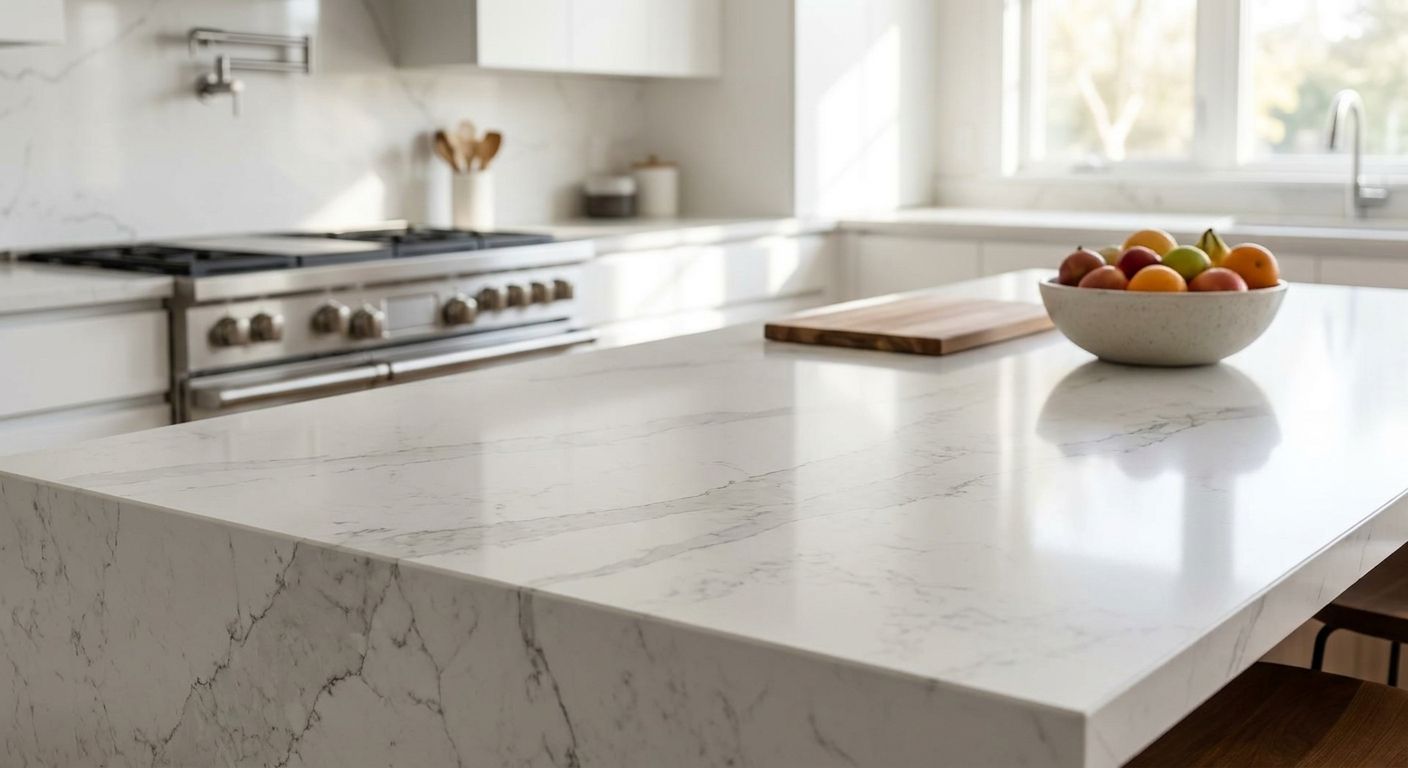
- Marble countertops for kitchen islands photograph beautifully but etch easily — use selectively, not throughout.
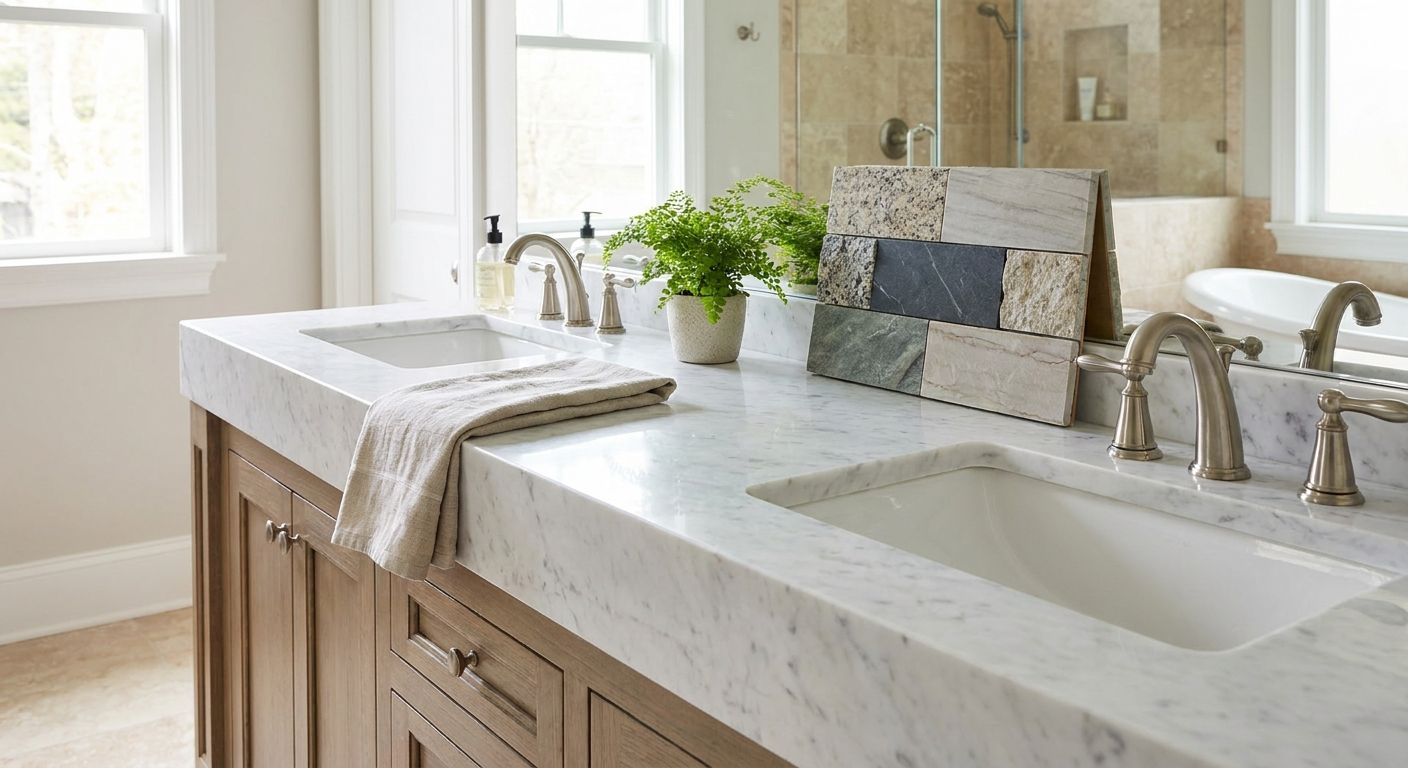
- Granite countertops for bathroom vanities boost resale at lower cost than a full kitchen remodel — Buy.
Why this matters
Appraisers don't grade countertops on beauty alone. They grade them on what a buyer's inspector will flag six months after closing, and that means hardness, staining, and maintenance history carry more weight than color or veining. A New England fabricator like Soares Stone sees this play out every renovation season: homeowners who chase the trendiest slab often lose ground with buyers who want a countertop that survives daily use without babysitting.
Resale value in 2026 rewards materials that photograph well in a listing and still pass a home inspection two years later. Granite and quartz do both. Marble does the first and struggles with the second unless it's confined to a low-traffic accent. Quartzite splits the difference, but its price and limited slab supply keep it out of reach for a lot of resale-focused remodels.
How this ranking works
This ranking weighs three factors that actually move resale value: hardness and scratch resistance (Mohs scale, a geological standard), maintenance burden (sealing, staining, etching), and how consistently a material appears as a selling point in renovated New England kitchens and baths. Style trends shift year to year, but the physical properties of stone don't, and that's what an appraiser or a home inspector actually measures.
Each material below gets a hook that names what it's known for, one hard number, and a verdict you can act on before you sign a fabrication contract.
The ranked list
1. Granite countertops for kitchen islands — the safest resale bet
Granite scores 6 to 6.5 on the Mohs hardness scale, hard enough to shrug off knife drags and hot pans without a cutting board. It's been the default "upgraded kitchen" material in real estate listings for two decades, and that recognition hasn't faded going into 2026.
Buyers touring a resale listing still read granite as a finished, move-in-ready kitchen, and it appraises consistently across New England markets whether the home is a starter cape or a colonial. Granite countertops for kitchen islands remain the pick with the widest buyer appeal and the lowest maintenance surprise. Verdict: Buy.
2. Quartz countertops for kitchen islands — the low-maintenance favorite
Quartz is engineered from roughly 90% ground quartz bound with resin, which means no sealing, no annual maintenance, and a surface that resists staining better than natural stone. That's a selling point buyers can verify themselves during a walkthrough — no oil test, no etch marks from a lemon wedge left overnight.
Quartz's uniform pattern also photographs cleanly for listing photos, which matters more than people admit; a busy, high-contrast slab can read as dated in five years, while quartz's consistency ages neutrally. Quartz countertops for kitchen islands trade a little bit of "natural stone" prestige for a material buyers trust without a maintenance lecture. Verdict: Buy.
3. Quartzite countertops for busy family kitchens — the luxury upgrade buyers notice
Quartzite hits 7 on the Mohs scale, the same hardness as quartz, but it's a natural metamorphic stone with the movement and veining people usually associate with marble. That combination — durability plus a high-end look — is why it reads as a luxury signal in higher-priced New England listings.
The catch is supply and price: true quartzite slabs are rarer than granite or quartz, and buyers in mid-market homes may not recognize the difference between quartzite and a good marble-look quartz. Quartzite countertops for busy family kitchens earn their premium in homes priced to compete on finish quality, not in every remodel. Verdict: Consider for higher-end listings, Skip if the renovation budget is resale-margin sensitive.
4. Marble countertops for kitchen islands — the wildcard
Marble scores only 3 to 4 on the Mohs scale, soft enough that lemon juice, wine, or vinegar can etch the surface within minutes of contact. It's still the material buyers point to in listing photos and open houses because nothing else reads "custom" the way marble does.
The honest trade-off: marble countertops for kitchen islands look extraordinary on day one and show wear fastest of any material on this list. Fabricators who want the marble look without the etching risk usually confine it to an island or a backsplash rather than the full run of counters. Verdict: Hold — use selectively as an accent, not as the primary work surface.
5. Granite countertops for bathroom vanities — the value-add outside the kitchen
Appraisers in 2026 increasingly credit an updated primary bathroom close to the same weight as an updated kitchen, and a stone vanity top is one of the cheapest ways to get that credit. Granite resists water spotting and doesn't need the yearly resealing marble requires around a sink where standing water is constant.
Homeowners chasing resale value who've already handled the kitchen often overlook the bathroom, but granite countertops for bathroom vanities close that gap for a fraction of a full kitchen remodel's cost. Verdict: Buy for bathroom-focused resale upgrades.
Get a resale-ready countertop estimate
Soares Stone fabricates and installs the materials above across New England.
Material comparison at a glance
| Material | Hardness (Mohs) | Maintenance | Resale signal | Verdict |
|---|---|---|---|---|
| Granite | 6-6.5 | Periodic sealing | Broad buyer recognition | Buy |
| Quartz | 7 | None required | Low-maintenance selling point | Buy |
| Quartzite | 7 | Periodic sealing | Luxury signal, limited supply | Consider |
| Marble | 3-4 | Frequent sealing, etches easily | High visual impact, wear risk | Hold |
Where to source your countertop material
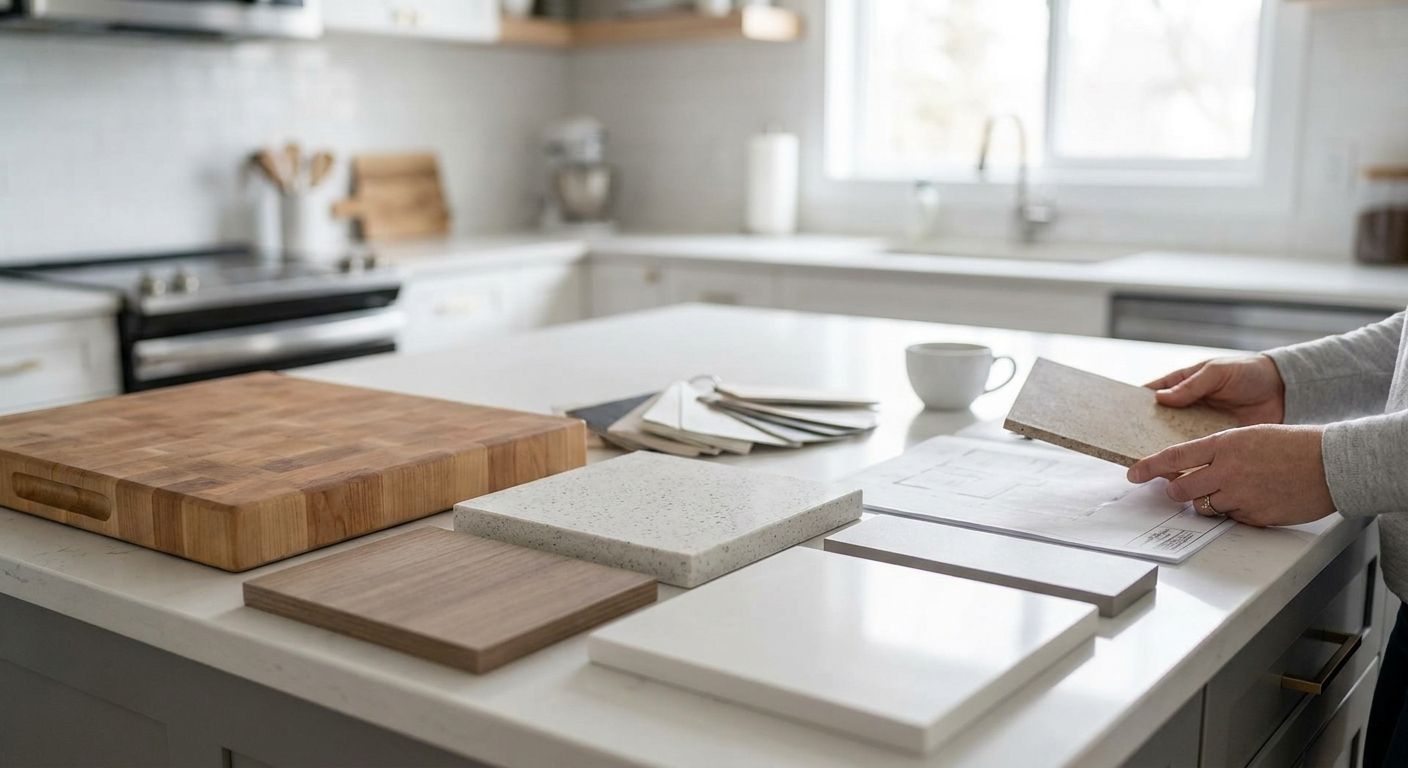
- Get slab-level pricing, not per-square-foot averages. Granite and quartz pricing swings by slab grade and origin; a quote based on the actual slab you'll get installed beats any published average.
- Confirm the fabricator handles both natural and engineered stone. A shop that only cuts quartz can't advise honestly on whether granite or quartzite fits your resale timeline better.
- Ask how the fabricator seams and supports islands. Overhangs on kitchen islands need proper support brackets regardless of material — a resale-focused buyer's inspector will check this.
Soares Stone fabricates granite, quartz, marble, and quartzite for kitchens, bathrooms, and fireplaces across New England, and a family-owned stone fabricator that installs every material on this list can walk you through which one actually fits your home's resale profile instead of just its trend.
FAQ
What is the best countertop material for resale value in 2026?
Granite and quartz are the best countertop material for resale value in 2026 because they combine broad buyer recognition with low maintenance and hardness of 6 or higher on the Mohs scale. Marble and quartzite can add visual appeal but carry more upkeep or cost tradeoffs.
Is quartz better than granite for resale value?
Quartz and granite perform similarly for resale value, with quartz winning on zero-maintenance appeal and granite winning on broad buyer familiarity. Either is a safer resale bet than marble.
Does marble hurt resale value?
Marble doesn't hurt resale value outright, but its 3 to 4 Mohs hardness means it etches easily from acidic spills, which some buyers' inspectors flag as a maintenance concern. It works best as an island or backsplash accent rather than a full kitchen countertop.
How much does a granite or quartz countertop upgrade cost before resale?
Cost varies by slab grade, square footage, and edge detail, so get a fabricator's slab-level quote rather than relying on a published national average. A local New England fabricator can price the exact slab you're considering.
Is quartzite worth it for a resale-focused remodel?
Quartzite is worth it mainly in higher-end listings where buyers already expect premium finishes, since its 7 Mohs hardness matches quartz but its price and limited slab supply reduce the resale margin in mid-market homes.
Do bathroom countertops affect resale value as much as kitchen countertops?
Bathroom countertops carry real but smaller weight than kitchen countertops in most 2026 resale comps, though an updated primary bathroom vanity narrows that gap. Granite vanity tops are one of the lowest-cost ways to capture that value.
Should I match my countertop material to my home's price range?
Yes — quartzite and premium marble slabs make sense in higher-priced listings where buyers expect luxury finishes, while granite and quartz deliver the strongest resale return across mid-market New England homes in 2026.
One last thing
The detail most homeowners miss: quartzite and marble can look nearly identical from three feet away, but only one of them survives a spilled glass of wine without a mark. If you're renovating specifically to sell, pick the material by its Mohs number first and its veining second — buyers notice the look in a listing photo, but their inspector notices the hardness.