Picking the wrong countertop color in a small kitchen makes 120 square feet feel like 80. Picking the right one does the opposite — and in 2026, the difference between a cramped galley kitchen and an open-feeling one often comes down to slab color, not square footage.
- Bright white and warm greige quartz top the list of best countertop colors for small kitchens in 2026 — both reflect light and hide seams.
- Soft taupe granite is the budget pick; it costs less than quartz and still brightens a tight kitchen. Buy.
- Pale blue-gray marble looks stunning but needs sealing twice a year in New England humidity. Consider for islands, not full runs.
- Charcoal and black stone work only as an accent in a small kitchen, never as the main surface. Skip for full coverage.
- Standard 3cm slabs in light tones outperform dark 2cm remnants for making a tight kitchen feel bigger.
Why this matters
A small kitchen amplifies every design decision. Dark countertops absorb light and visually lower ceilings; busy veining in a tight space reads as clutter instead of luxury. If you're weighing options, the quartz countertops for small kitchens page breaks down material choices — this guide focuses specifically on color, since color drives perceived square footage more than the stone type itself.
Most designers treat anything under roughly 150 square feet as a "small" kitchen, and at that size, a countertop color that reads as heavy from six feet away reads as overwhelming from three. That's the whole game here: light reflects, dark absorbs, and busy patterns compete with cabinetry for attention.
How we ranked
Each color family below is judged on four things that matter specifically for small kitchens: light reflection, maintenance load, price relative to comparable materials, and how well it pairs with common small-kitchen cabinet colors (white, gray, navy). Verdicts factor in New England conditions — humidity, seasonal light changes, and the reality that small kitchens get heavier daily use per square foot than large ones. Every recommendation below reflects what actually holds up in a working kitchen in 2026, not just what photographs well.
The ranked list
1. Bright White Quartz — the safe pick
Engineered quartz is roughly 90% natural quartz bound with resin, which gives bright white slabs a consistent, low-veining surface that doesn't compete visually with cabinetry. In a small kitchen, that consistency matters more than drama — a busy pattern shrinks a room, a clean white surface opens it.
White quartz pairs with almost any cabinet color and never goes out of style, which matters if you're not planning to redo the kitchen again in five years. Verdict: Buy.
2. Warm Greige Quartzite — the wildcard
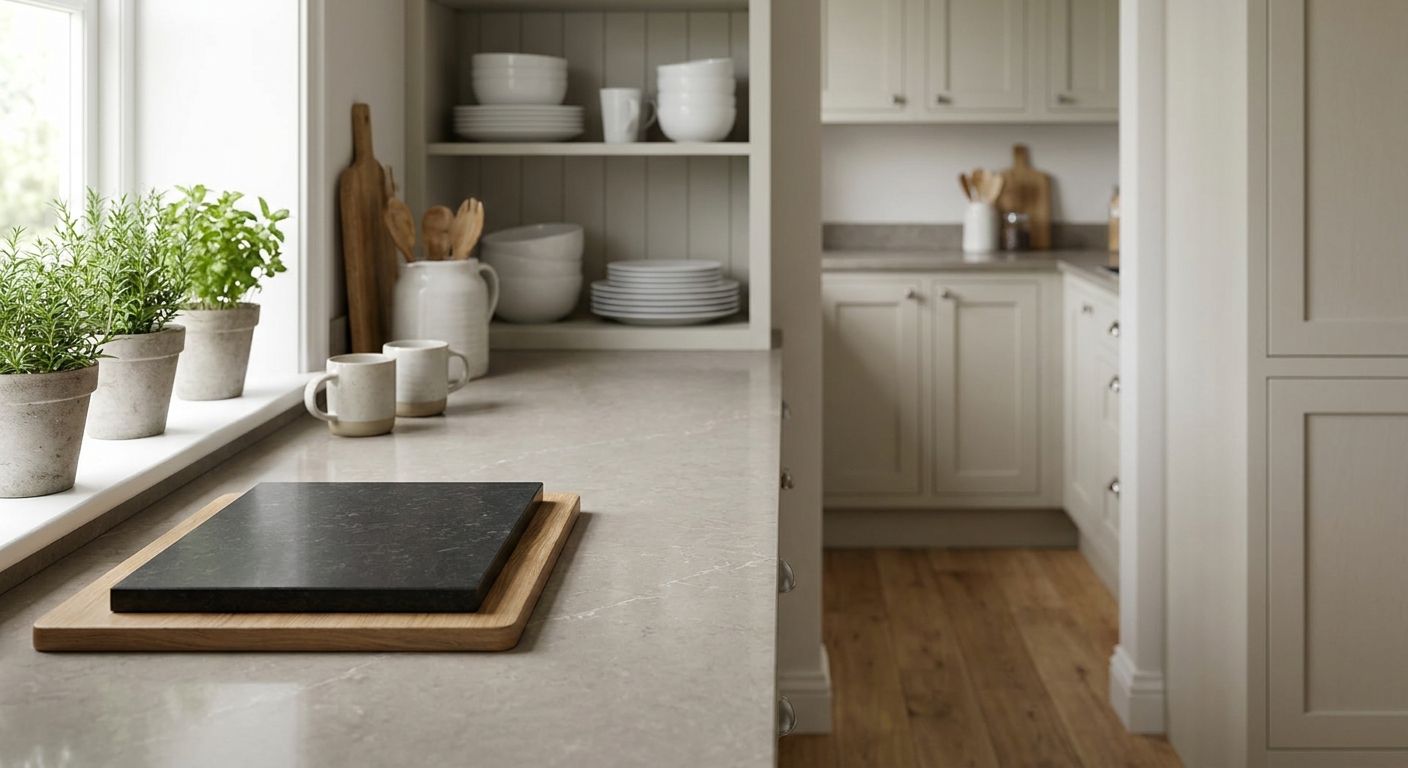
Quartzite in warm greige tones gives you the light-reflecting benefit of white without the stark, clinical look some homeowners want to avoid. It's harder than granite and holds up to daily knife contact and hot pans better than most engineered surfaces.
The tradeoff: natural quartzite needs sealing, and slab-to-slab variation means you should see the actual piece before committing, not just a sample chip. Still, for a small kitchen that wants warmth without going dark, this is the pick that surprises people. Verdict: Buy.
3. Soft Taupe Granite — the budget pick
Granite in soft taupe or warm gray tones runs less expensive than comparable quartz or quartzite in most cases, and it still does the job of bouncing light around a tight room. Granite's natural speckling is subtler in lighter tones, which keeps the surface from looking busy in a small footprint.
If you're managing renovation costs, this is where you save money without sacrificing the brightness a small kitchen needs. Check how to choose between quartz and quartzite countertops if you're still weighing granite against engineered options. Verdict: Buy.
4. Pale Blue-Gray Marble — the design statement
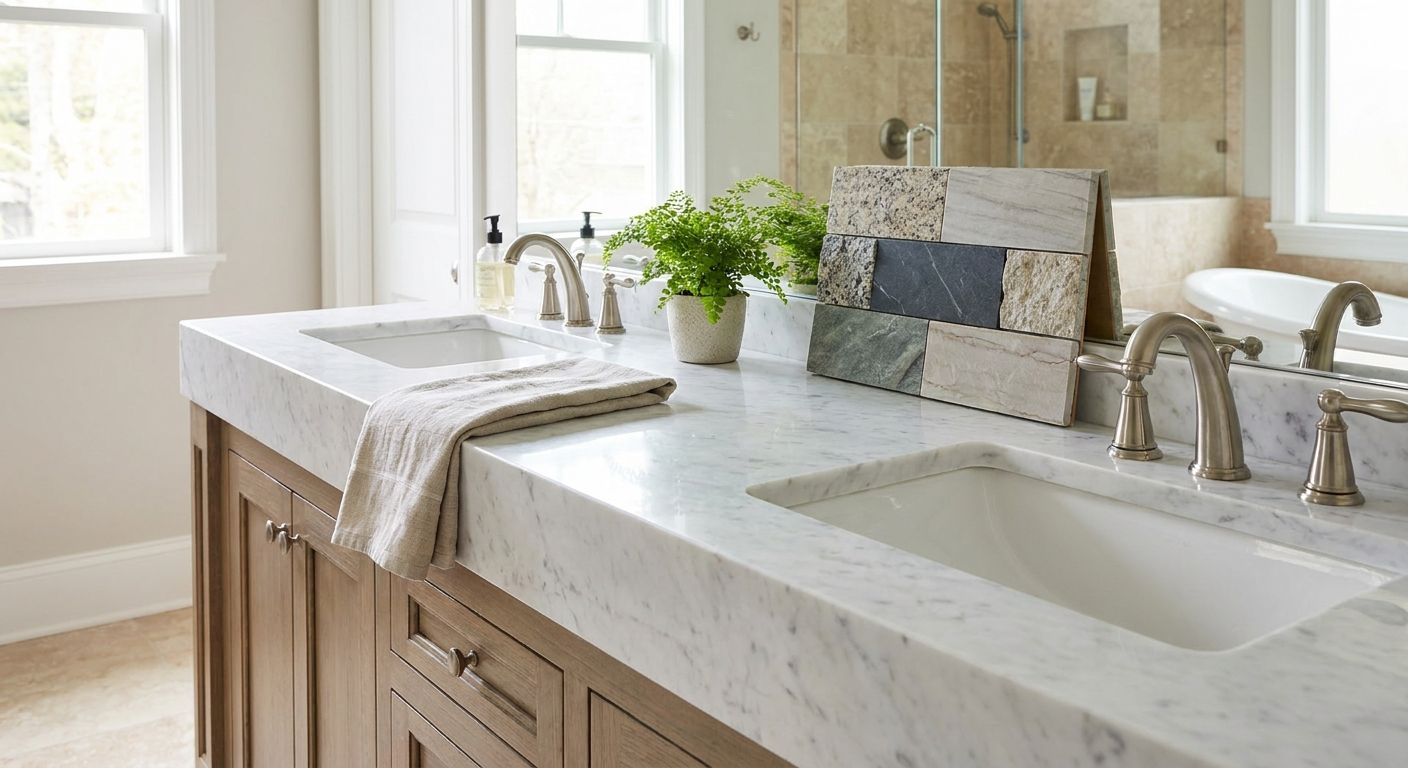
Marble in pale blue-gray delivers a look no engineered material fully replicates, and in a small kitchen it can feel genuinely luxurious rather than overwhelming, because the cool undertone recedes visually. But marble is porous, and in a New England kitchen with humid summers and dry winter heat, it needs sealing roughly twice a year to resist etching from citrus and wine.
For a full run of countertops in a small, heavily used kitchen, that maintenance load is real. For an island or a secondary surface, it's worth it. Verdict: Consider — for islands, not full kitchen runs.
5. Warm Cream Quartz with Subtle Veining — the crowd-pleaser
Cream-toned quartz with faint gold or gray veining threads the needle between plain white and full-drama marble. It reads warm under both daylight and evening kitchen lighting, which matters in small kitchens that often have only one window.
Because it's engineered, it needs zero sealing and resists staining better than natural stone, which is a real advantage in a kitchen where every surface gets used constantly. Verdict: Buy.
6. Charcoal or Black Granite — the accent-only pick
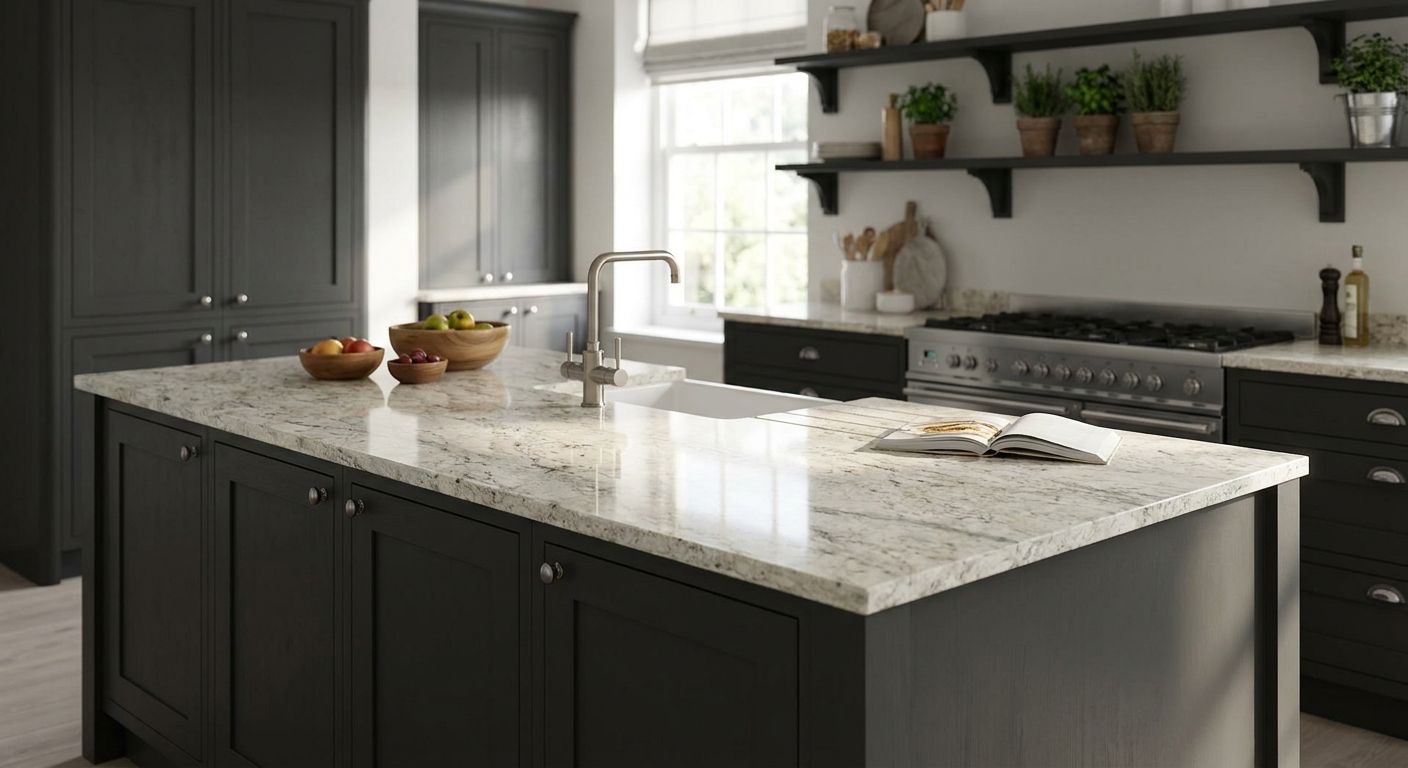
Dark stone photographs beautifully in large kitchens with strong natural light. In a small kitchen, a full run of charcoal or black countertop absorbs available light and can make the room feel smaller than it is, especially paired with dark cabinets.
Used as a contrast on a small island rather than the perimeter, it can work. As the dominant surface in a tight kitchen, it works against you. Verdict: Skip for full coverage, Consider as an island accent.
Comparison table
| Color family | Light reflection | Maintenance | Price tier | Verdict |
|---|---|---|---|---|
| Bright white quartz | High | Low (no sealing) | Mid | Buy |
| Warm greige quartzite | High | Medium (sealing needed) | Mid-high | Buy |
| Soft taupe granite | Medium-high | Medium (sealing needed) | Lower | Buy |
| Pale blue-gray marble | Medium-high | High (sealing 2x/yr) | High | Consider |
| Warm cream quartz | High | Low (no sealing) | Mid | Buy |
| Charcoal/black granite | Low | Medium (sealing needed) | Mid | Skip (full run) |
Not sure which color fits your kitchen?
See slabs in person before you commit to a color.
Where to buy
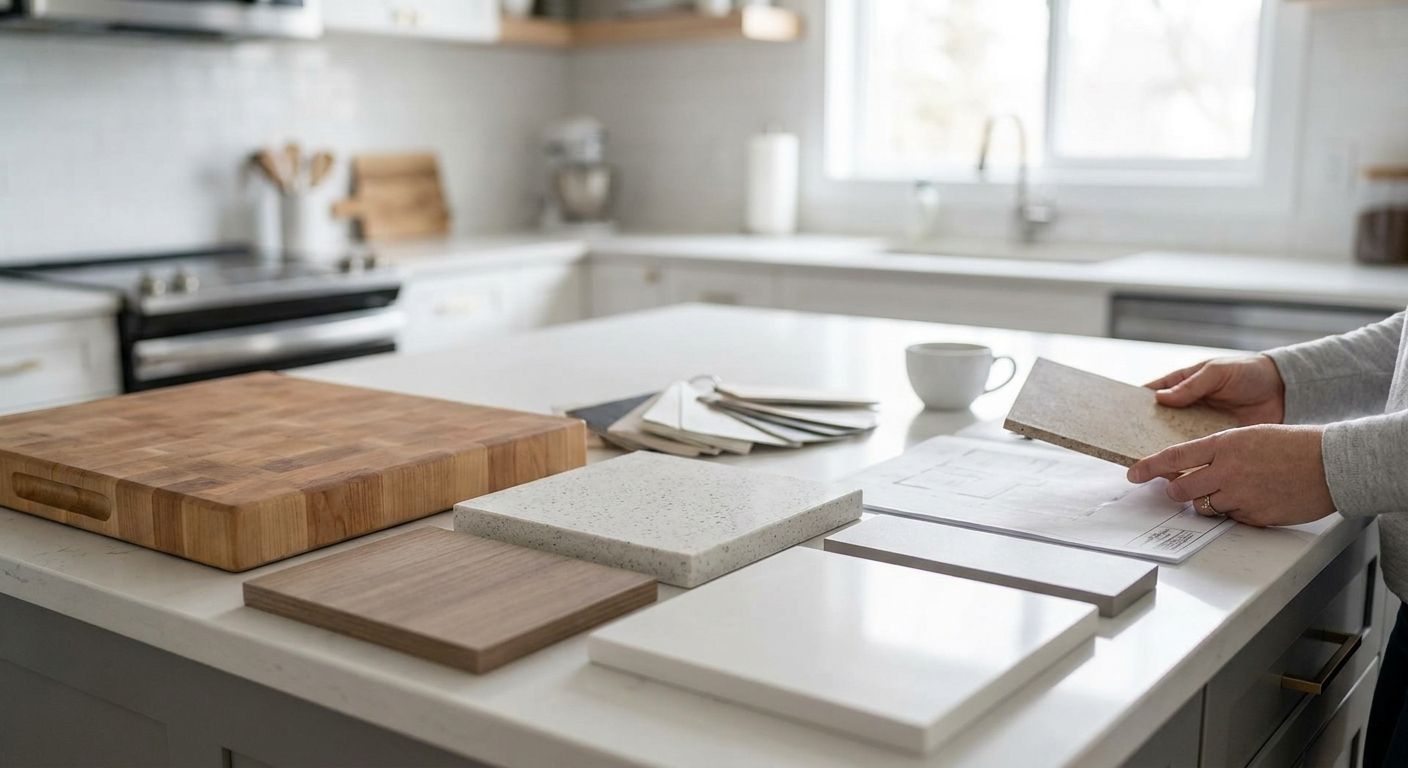
- See the full slab, not a sample chip. Veining and undertone shift dramatically between a 3-inch sample and a full 3cm slab — what looks warm cream on a chip can read stark white across 30 square feet.
- Match the color to how you actually use the kitchen. If resale value matters more than personal taste, the countertop material for resale value guide covers which finishes appraise best in 2026.
- Ask about maintenance before you fall in love with a look. A stunning marble slab that needs sealing twice a year is a different commitment than a quartz surface that needs none — know which one you're signing up for.
FAQ
What is the best countertop color for a small kitchen?
Bright white and warm greige are the best countertop colors for small kitchens in 2026 because they reflect available light and don't compete visually with cabinetry. Cream quartz with subtle veining is a close second for kitchens that want warmth.
Do dark countertops make a small kitchen look smaller?
Yes, a full run of dark countertop absorbs light and can make a small kitchen feel more closed in, especially with dark cabinets. Dark stone works better as an accent on a small island than as the main surface.
Is quartz or granite better for a small kitchen?
Quartz needs no sealing and resists staining better, which matters in a small kitchen with heavy daily use. Granite in lighter tones costs less and still brightens the space, making it the better budget option.
How much sealing does marble countertop need?
Marble countertops typically need sealing about twice a year in humid New England conditions to resist etching from acidic foods. That maintenance load is one reason marble works better on a small island than a full countertop run.
What countertop thickness is standard for kitchens?
Most kitchen countertops are fabricated in 2cm or 3cm slab thickness, with 3cm being the more common choice for durability. Thickness doesn't change color perception much, but it affects edge profile options.
Does countertop color affect resale value?
Light, neutral countertop colors like white and warm greige tend to appraise well because they appeal to the widest range of buyers. Bold or dark colors can narrow buyer appeal in a small kitchen listing.
Can I mix a light countertop with dark cabinets in a small kitchen?
Yes, pairing a light countertop color with dark lower cabinets is one of the most effective combinations for small kitchens in 2026. The light surface keeps the sightline bright while the dark cabinets add contrast without shrinking the room.
What's the most low-maintenance countertop color for a busy kitchen?
Engineered quartz in white or cream tones needs no sealing and resists staining, making it the lowest-maintenance choice for a small, busy kitchen. Natural stone in any color requires periodic sealing to perform the same way.
One last thing
The detail most homeowners miss: matching the countertop color closely to the backsplash removes the visual break between the two surfaces, and that continuous sightline does more to make a small kitchen feel larger than the countertop color alone. A bright white quartz counter with a bright white backsplash reads as one continuous plane instead of two competing surfaces — try it before you assume you need a contrasting backsplash for "interest."