Quartz backsplashes turn a kitchen remodel's countertop slab into a continuous wall surface, cutting grout lines and giving New England kitchens a cleaner, more durable finish than tile in 2026.
- Full-height quartz backsplashes matched to your island slab are the strongest pick for 2026 remodels — Buy if your budget allows a second slab cut.
- The 4-inch standard ledge backsplash stays the budget-friendly default for small kitchens and still blocks splatter and moisture.
- Quartz backsplashes for kitchen remodels resist staining better than marble alternatives, though marble wins on veining variety.
- Skip mismatched slab lots — even a half-shade difference between counter and backsplash shows under kitchen lighting.
Why this matters
A backsplash isn't decoration — it's the wall surface that takes grease, water, and daily wipe-downs behind your range and sink. Tile grout stains and needs re-sealing; a quartz backsplash doesn't.
Soares Stone fabricates and installs quartz, granite, and marble surfaces across New England, and the backsplash decision is one homeowners get wrong more often than the countertop itself. Pick the wrong height or the wrong slab match, and you're staring at a seam line every time you cook in 2026 and beyond.
The backsplash also affects your total remodel cost. A 4-inch standard ledge uses a fraction of the material a full-height slab needs, so the choice isn't just aesthetic — it's a line item.
Who this is for
This guide is for homeowners mid-remodel who've already picked a quartz countertop and need to decide what goes on the wall behind it. If you're weighing quartz against tile, natural stone, or a painted wall, the criteria below apply whether you're finishing a full kitchen gut or just refreshing the wall behind a range.
What to look for in quartz backsplashes for kitchen remodels
Slab match consistency
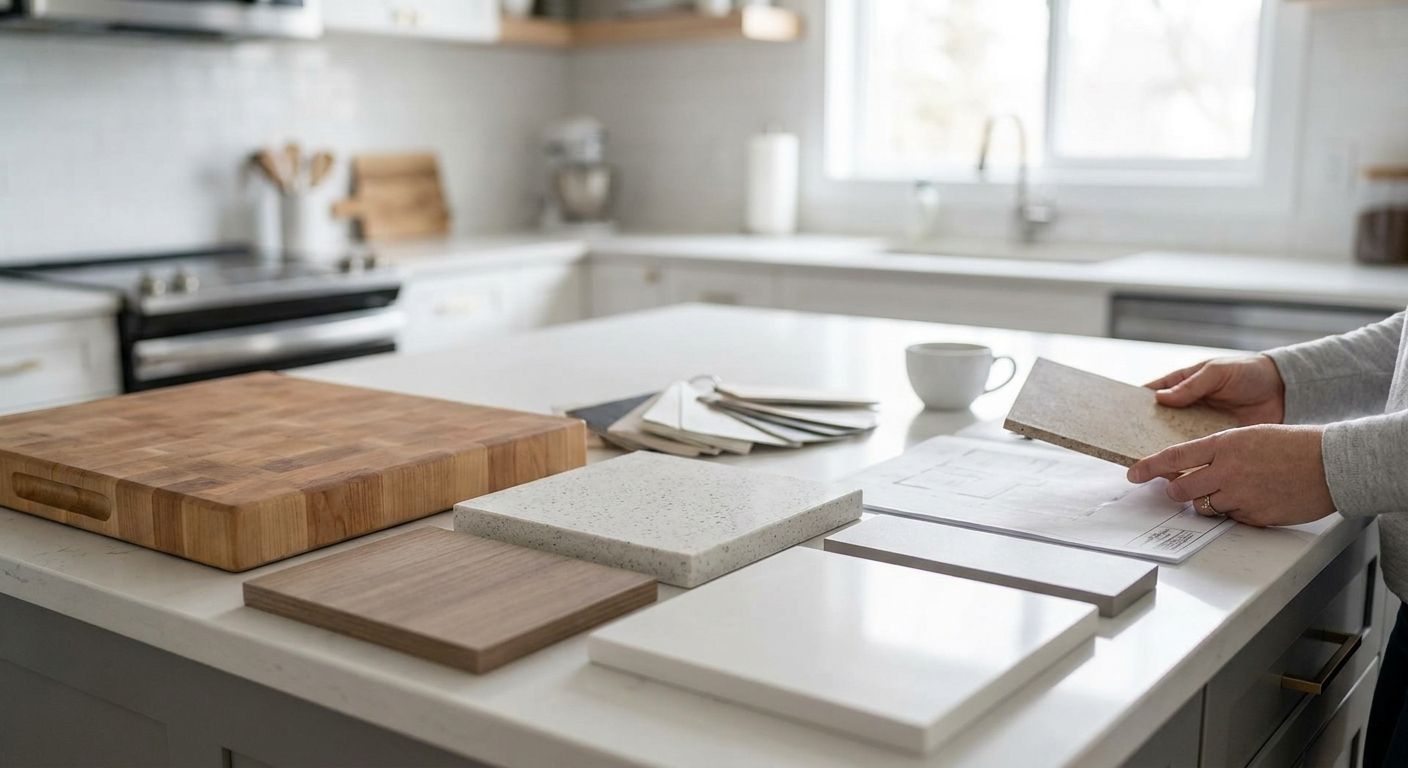
Quartz is manufactured in batches, and even the same pattern name can shift shade between lots. Order backsplash material from the same slab as your countertop whenever a full-height or waterfall look is the goal — a half-shade mismatch is obvious under kitchen pendant lighting and can't be fixed after installation.
Height and coverage
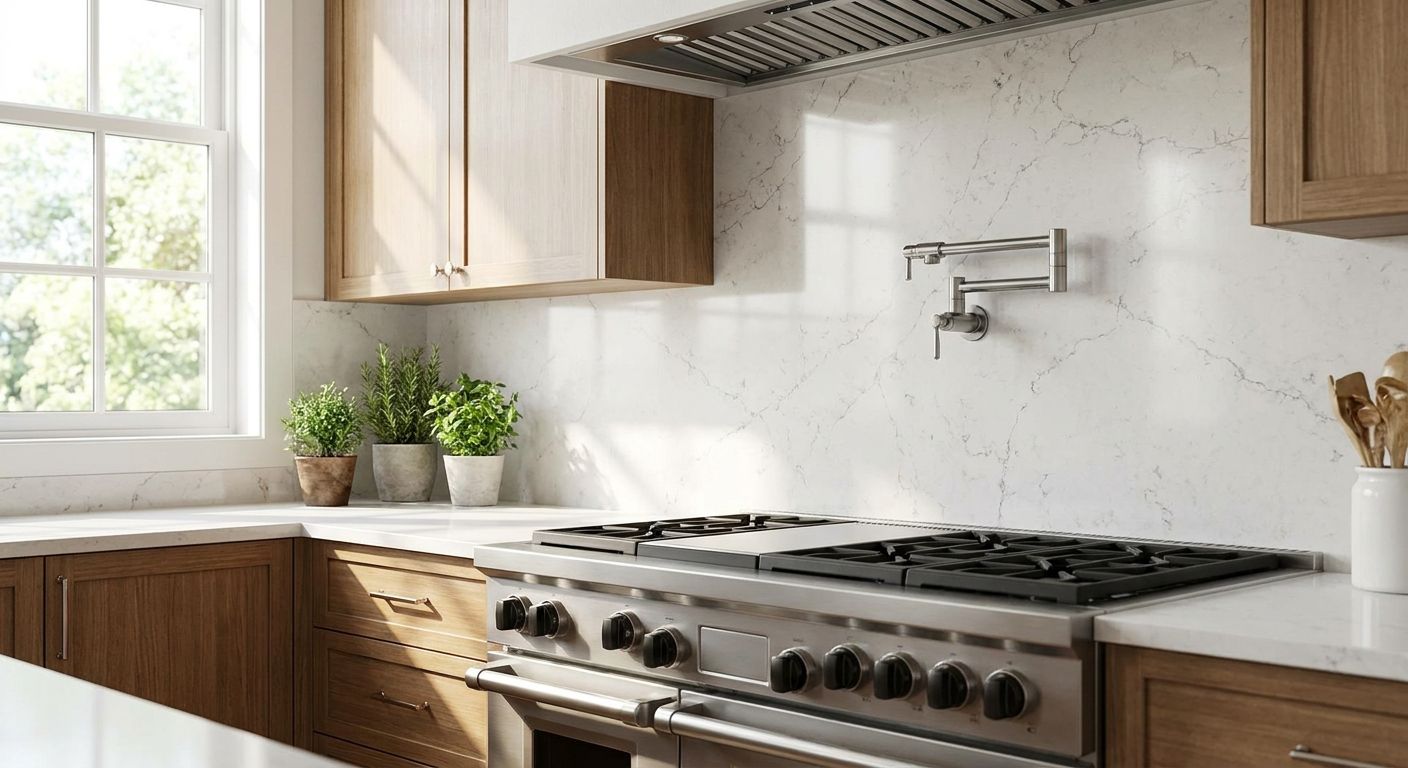
The two standard options are a 4-inch ledge backsplash or a full-height slab that runs to the underside of your upper cabinets. The 4-inch option is the traditional choice and costs less because it uses scrap or remnant material from the countertop cut. Full-height coverage eliminates the painted wall section above the counter entirely, which matters most behind a range where grease travels higher than four inches.
Seam and edge placement
Quartz slabs run up to roughly 120 to 126 inches in standard production, so a wide kitchen wall may need a seam regardless of which height you pick. A fabricator should plan seam placement away from the cooktop's direct sightline — behind an upper cabinet edge, not centered above the stove.
Cutout precision around outlets and windows
A backsplash wall usually has outlets, a window trim line, or a range hood cutout to work around. Precision templating before fabrication matters more here than on an open countertop, since a backsplash panel is visible from every angle in the room.
Maintenance versus other materials
Quartz doesn't need sealing and resists staining from oil, wine, and coffee splatter better than marble or granite. If you're deciding between quartz and quartzite countertops for the counter itself, that same durability logic carries over to the backsplash — quartz is the lower-maintenance pick behind a busy range.
Cost relative to tile
A slab backsplash costs more upfront than subway tile per square foot, but it eliminates grout maintenance for the life of the kitchen. For a 2026 remodel budget, factor the backsplash into the same slab order as the countertop — ordering it separately later almost always costs more due to a second fabrication trip.
Top picks for quartz backsplashes for kitchen remodels
The seamless pick: full-height slab matched to your island
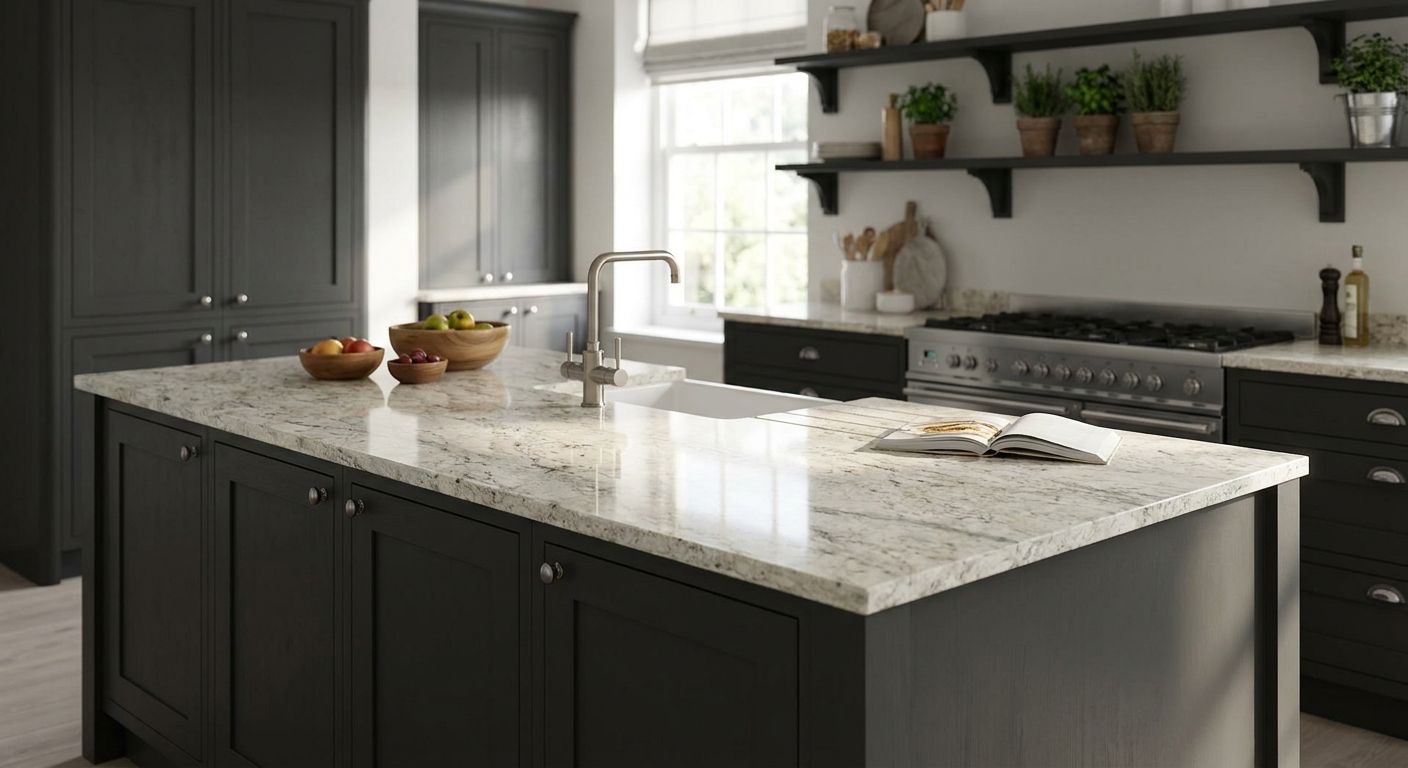
If your remodel centers on a large island, matching the backsplash slab to the same quartz used on quartz countertops for kitchen islands creates a continuous look from island to wall. One spec that matters: order both cuts from the same slab lot, not just the same pattern name, to guarantee vein and shade continuity. Buy if your kitchen has a range wall wider than 8 feet — the visual payoff is largest there.
The budget pick: 4-inch standard ledge
The 4-inch ledge backsplash is the default for a reason — it uses less material and installs in less time than a full-height slab. This is the strongest option for quartz countertops for small kitchens, where a shorter run means the remnant slab piece often covers the whole backsplash with zero extra ordering. Buy for galley kitchens and any remodel where the budget needs to stretch further on cabinetry or appliances instead.
The softer-look pick: marble alternative
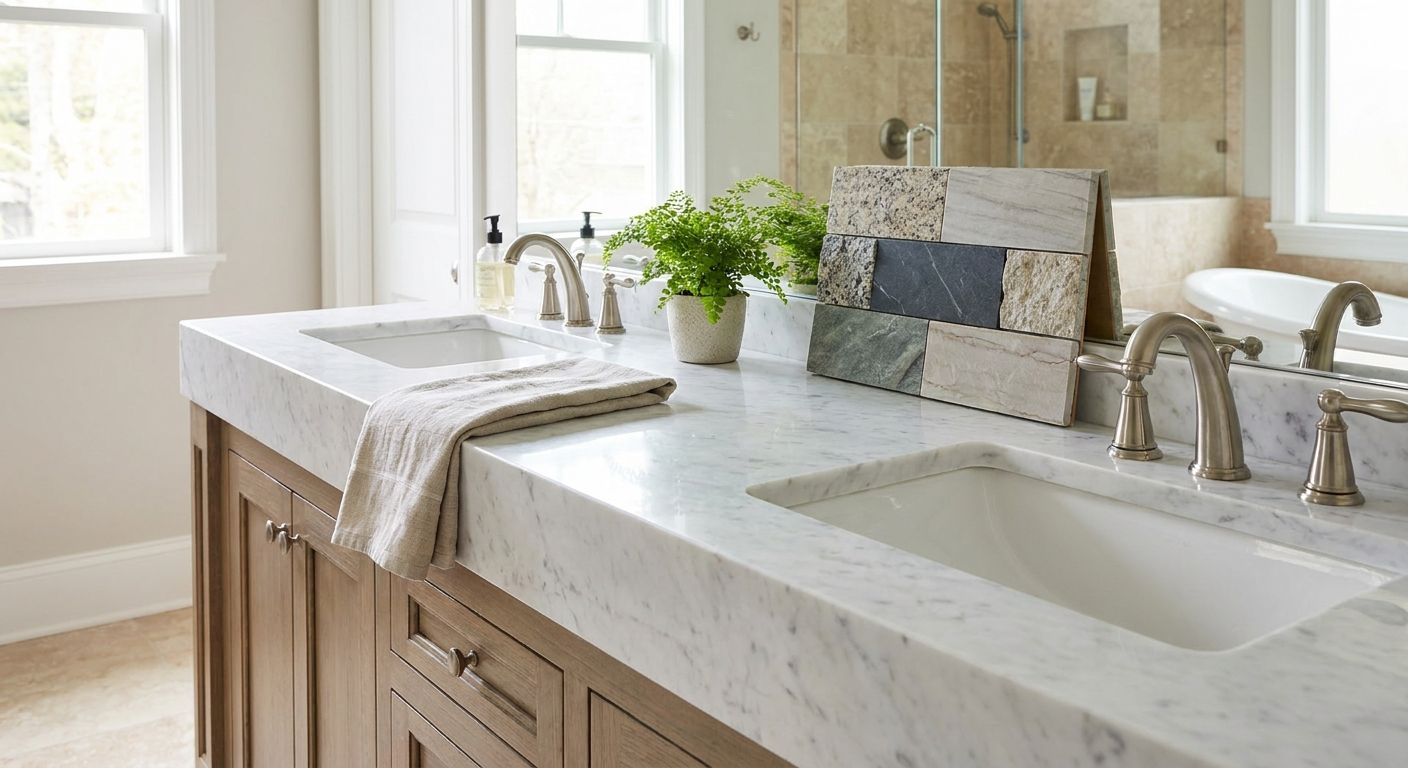
Some homeowners want more veining movement than quartz patterns typically offer. Marble backsplashes for kitchen remodels deliver that natural variation, at the cost of needing periodic sealing that quartz doesn't require. Consider this pick only if you're comfortable with an annual sealing routine — otherwise the maintenance gap between marble and quartz shows up within a year or two.
The utility-grade pick: laundry and mudroom spillover
Remodels that extend quartz into a laundry room or mudroom off the kitchen benefit from a matching backsplash treatment behind the utility sink, the same logic used for quartz countertops in laundry rooms. It's a lower-visibility application, so remnant slab pieces work well here and keep material cost down. Consider it as a way to use leftover slab from the main kitchen order rather than ordering fresh material.
What to avoid
- Mismatched slab lots. Ordering backsplash quartz weeks or months after the countertop, from a different lot, almost guarantees a visible shade or pattern shift.
- Thin panel substitutes. Some suppliers offer thinner quartz panels marketed for backsplash use — they chip more easily around outlet cutouts than standard 2cm or 3cm slab material.
- DIY tile-look laminate. Printed laminate panels that mimic quartz veining photograph well but scratch and delaminate at seams within a few years — they're not the same product as fabricated quartz slab.
Get a quote on your backsplash
Match your quartz backsplash to your countertop slab before your remodel schedule locks in.
Verdict comparison
| Option | Height | Best for | Maintenance | Verdict |
|---|---|---|---|---|
| Full-height slab match | To cabinet underside | Wide range walls, islands | Low | Buy |
| 4-inch standard ledge | 4 inches | Small kitchens, tight budgets | Low | Buy |
| Marble alternative | Either | Homeowners wanting more veining | Moderate (sealing) | Consider |
| Utility-grade remnant | 4 inches | Laundry/mudroom spillover | Low | Consider |
| Thin laminate panel | Varies | Nobody, long term | High (chipping) | Skip |
FAQ
What's the best height for a quartz backsplash in a kitchen remodel?
A 4-inch standard ledge backsplash is the most common height for 2026 kitchen remodels and works well for most budgets. Full-height backsplashes that run to the cabinet underside cost more but eliminate the painted wall section behind the range entirely.
Is a quartz backsplash better than tile?
Quartz backsplashes don't need grout maintenance and resist staining better than most tile grout lines. Tile costs less upfront but requires periodic re-sealing of grout to prevent staining and mold.
Does a quartz backsplash need to match the countertop exactly?
It doesn't have to match, but ordering both from the same slab lot avoids visible shade or vein differences. Mismatched lots of the same pattern name can still show a noticeable shift under kitchen lighting.
How much quartz do I need for a backsplash?
A 4-inch ledge backsplash typically uses remnant material left over from the countertop cut, while a full-height backsplash usually requires ordering a separate slab section. The exact amount depends on your wall's linear footage and window or outlet cutouts.
Can I use quartz backsplash behind a gas range?
Yes, quartz backsplashes handle heat exposure from a gas range better than laminate alternatives, though direct prolonged contact with an open flame should still be avoided. Standard clearance codes for range hoods and backsplash material still apply.
Is marble or quartz better for a kitchen backsplash?
Quartz backsplashes resist staining and don't require sealing, making them the lower-maintenance choice behind a busy range. Marble offers more natural veining variation but needs periodic sealing to prevent etching and staining.
Do quartz backsplashes need seams?
Walls wider than the standard slab length of roughly 120 to 126 inches need at least one seam regardless of backsplash height. A fabricator should place that seam away from the direct sightline above a cooktop.
One last thing
Most homeowners planning a 2026 remodel order the backsplash as an afterthought weeks after the countertop template is done — that's the single biggest reason for visible slab mismatches. Order both cuts in the same fabrication run, even if installation happens in two phases, and the shade and vein match stays consistent for the life of the kitchen.