Farmhouse kitchens live on details you touch every day, and the edge on your countertop is one of them. The wrong profile clashes with an apron-front sink and shiplap backsplash; the right one disappears into the room while doing its job for decades.
- Eased edge is the top pick among best countertop edge profiles for farmhouse kitchens in 2026 — Buy.
- Quarter-round bullnose ranks second for kids and pets underfoot; Consider.
- Chiseled edge on granite or quartzite adds rustic texture without extra chip risk; Buy.
- Skip ogee edges in farmhouse kitchens — the carved curves read too formal next to shiplap and apron sinks.
Why this matters
Edge profile decisions get made in the last five minutes of a countertop consultation, right after the slab is picked and right before the deposit. That's backwards. The edge is what your hand feels every time you lean on the counter, and it's what determines whether an apron sink and farmhouse island actually look designed together or just assembled.
Soares Stone fabricates and installs marble, granite, quartz, and quartzite across New England kitchens, and the edge conversation comes up on nearly every farmhouse job. The profile you choose changes the silhouette of the whole counter, not just the corner.
How we ranked these edge profiles
This list ranks edge profiles on four things: how they read against farmhouse cues like apron sinks and open shelving, how they hold up to daily kitchen wear, how well they pair with common farmhouse materials (granite, quartzite, honed marble), and how forgiving they are for DIY-adjacent homeowners who want a low-fuss counter in 2026. Profiles that look right in a showroom but fight the material or the room get flagged, not just ranked lower.
The ranked list
1. Eased Edge — the safe pick
An eased edge softens the top corner with a slight 1/8 inch radius, leaving the counter looking flat and clean from across the room. It's the most common profile fabricators cut in New England because it works on every material, from soft marble to dense quartzite, without adding labor complexity.
On a farmhouse counter, the eased edge lets the sink, the hardware, and the backsplash do the talking. It doesn't chip easily, it doesn't collect crumbs in a groove, and it ages the same in 2026 as it will in 2036. Verdict: Buy.
2. Quarter-Round Bullnose — the family pick
The quarter-round bullnose rounds the top edge to a 1/4 inch radius, giving the counter a noticeably softer feel under the hand than an eased edge. It's the profile most fabricators recommend when there are young kids or older adults in the house, since there's no sharp corner to catch a hip or elbow.
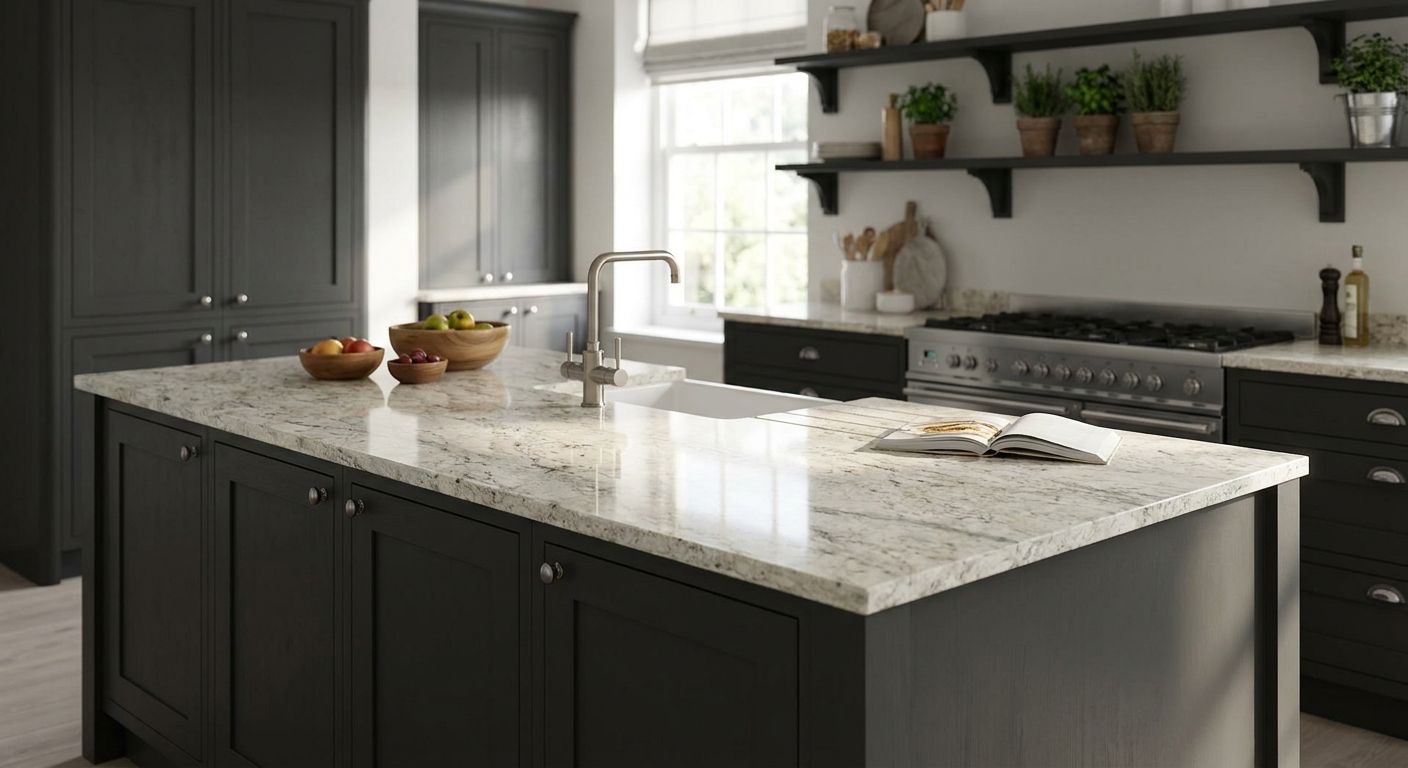
On granite islands especially, the quarter-round holds detail well and doesn't show wear the way a knife-edge profile does over a decade of daily bumps. If your farmhouse island doubles as a homework table and a prep station, this is the edge built for that job. Check it against a granite countertop for a kitchen island before finalizing. Verdict: Buy.
3. Chiseled Edge — the rustic pick
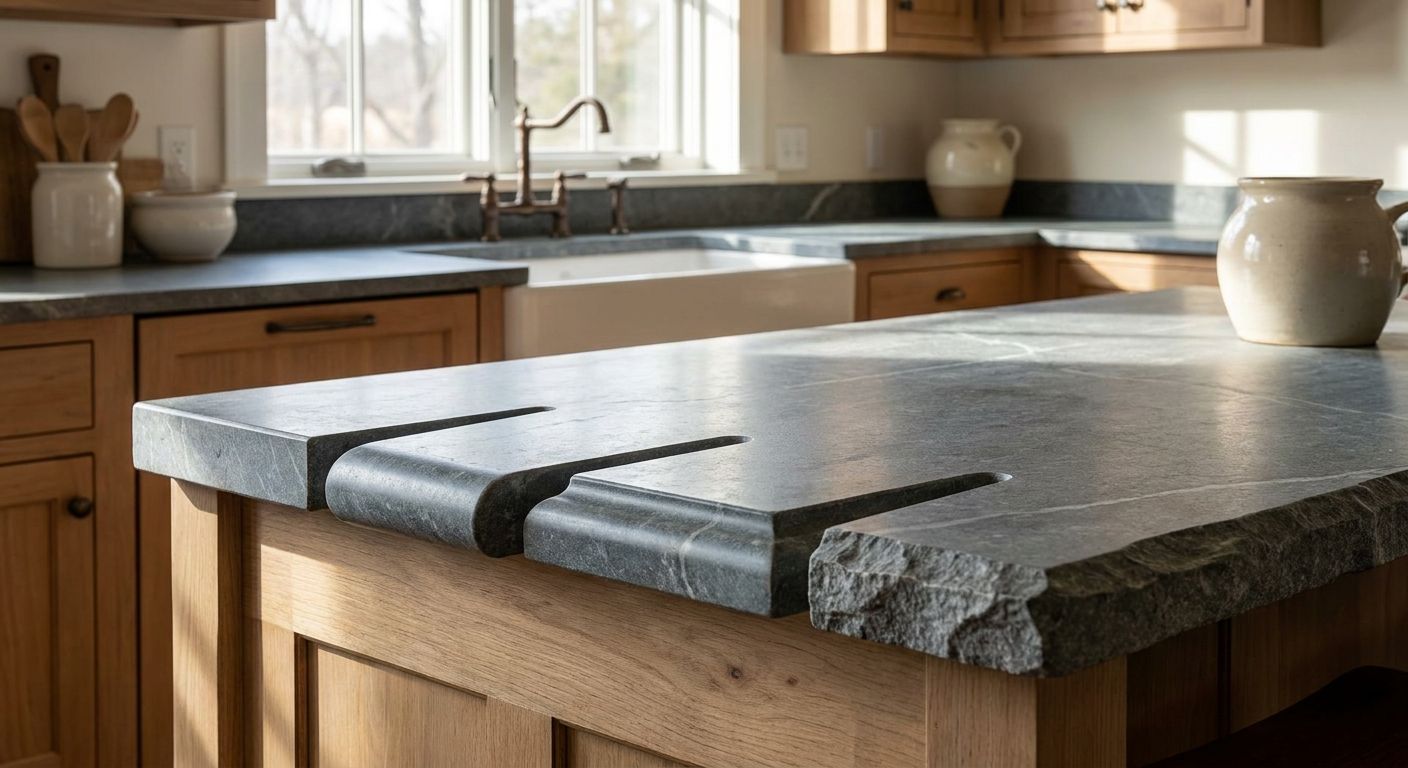
A chiseled or rough-cut edge leaves the perimeter fractured and uneven on purpose, mimicking the look of hand-quarried stone. It only works on granite and quartzite — marble is too soft and chips unpredictably along a chiseled cut.
This is the edge that reads most "farmhouse" in the literal sense, especially paired with a honed or leathered finish instead of polish. It hides fingerprints and light scratching better than any smooth profile on this list, which matters in a kitchen that gets used hard. Verdict: Buy for granite or quartzite; Skip on marble.
4. Beveled Edge — the modern-farmhouse pick
A beveled edge cuts a flat angled face into the top corner instead of a curve, giving the counter a crisp line that reads more architectural than rustic. It splits the difference between a soft farmhouse look and a cleaner transitional kitchen.
This profile shows up most often in 2026 builds that mix farmhouse cues — shiplap, apron sink — with quartz counters and matte black fixtures. It's a strong pick if your kitchen leans modern-farmhouse rather than full rustic. Verdict: Consider.
5. Waterfall Edge — the wildcard
A waterfall edge carries the countertop material straight down the side of the island to the floor, replacing a wood or cabinet panel with continuous stone. It's not a corner profile like the others on this list — it's a full design decision that changes how the whole island reads.
On a farmhouse island, a waterfall edge in a veined marble or quartzite creates a strong focal point without adding ornamentation. It costs more in slab yield than any edge on this list because it requires extra material and precise mitered seams, so it only makes sense if the island is the room's centerpiece. See how it plays out on a marble countertop for a kitchen island. Verdict: Consider for statement islands; Skip if budget is tight.
6. Ogee Edge — the one to skip
An ogee edge carves an S-curve into the top corner, alternating concave and convex cuts for an ornate, traditional look. It was standard in granite kitchens through the 2000s and still shows up in builder-grade catalogs.
It fights almost everything a farmhouse kitchen is going for. The carved detail reads formal next to shiplap, an apron sink, and open shelving, and it's harder to keep clean because crumbs and grease sit in the grooves. Verdict: Skip.
Comparison table
| Edge Profile | Best Material Pairing | Radius / Style | Verdict |
|---|---|---|---|
| Eased Edge | Any (marble, granite, quartz, quartzite) | 1/8 inch radius | Buy |
| Quarter-Round Bullnose | Granite, quartz | 1/4 inch radius | Buy |
| Chiseled Edge | Granite, quartzite only | Fractured, irregular | Buy (granite/quartzite) |
| Beveled Edge | Quartz, granite | Flat angled face | Consider |
| Waterfall Edge | Marble, quartzite | Full-height mitered | Consider (statement islands) |
| Ogee Edge | Granite | S-curve carved | Skip |
Where to buy
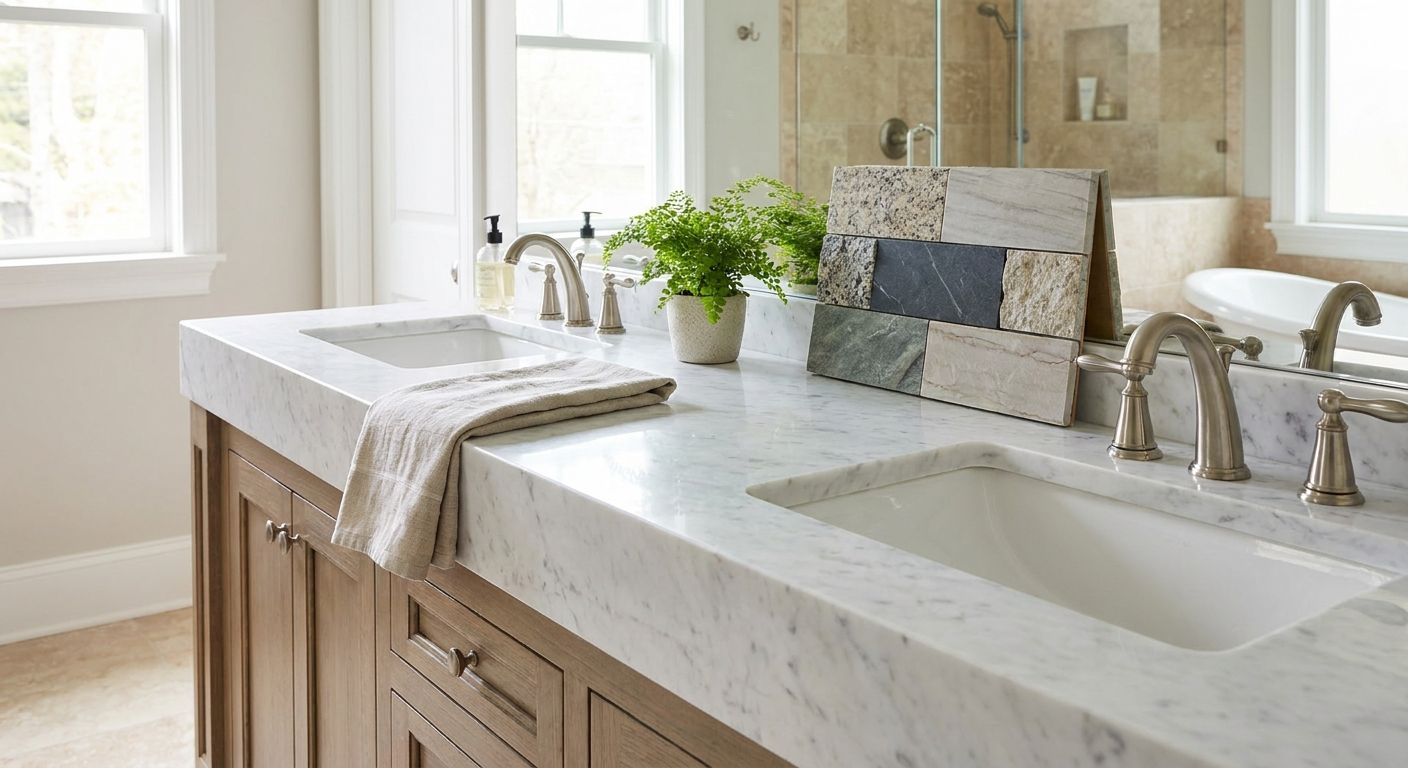
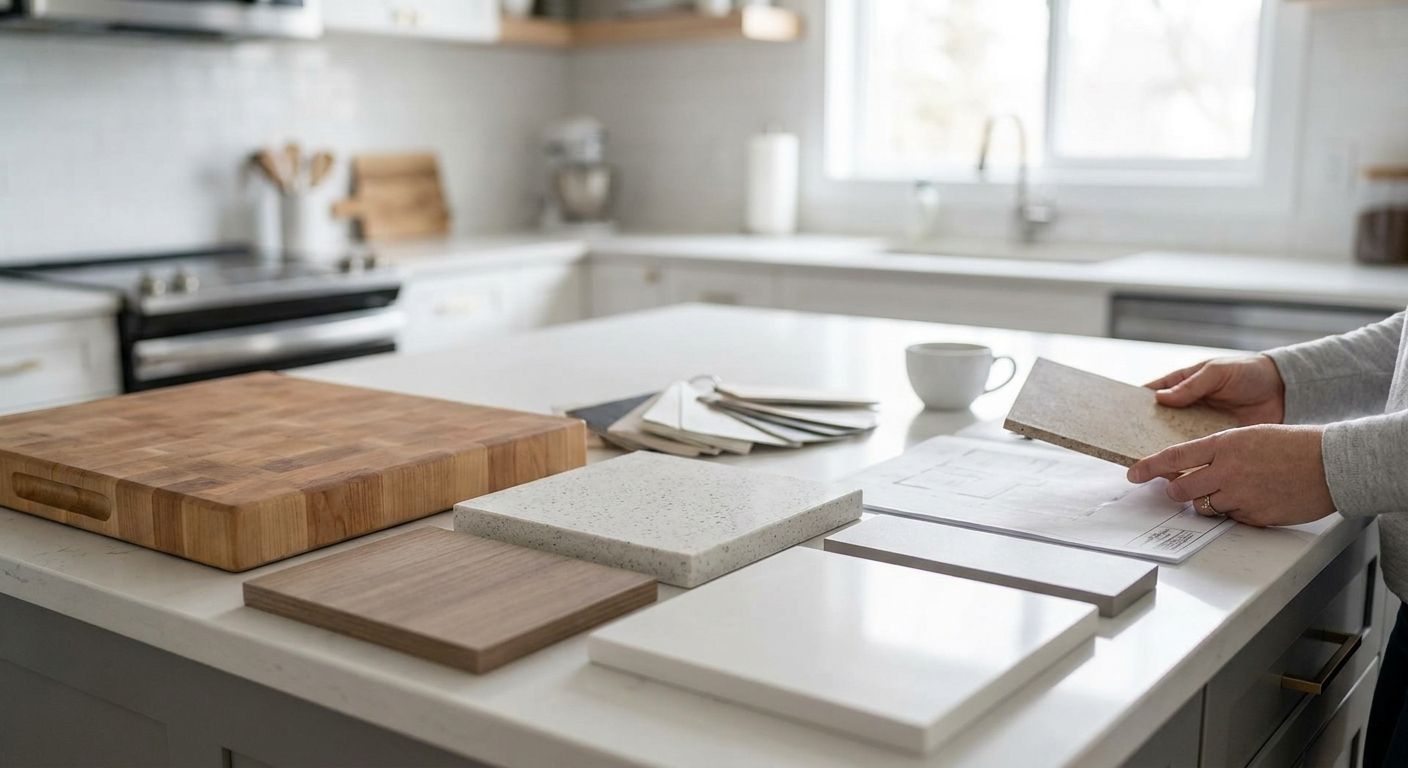
- See the edge cut on a physical sample before you sign, not a catalog photo. Radius and chisel depth vary by fabricator, and photos flatten texture that matters on a chiseled or ogee edge.
- Match the edge to the material's hardness. A chiseled edge on marble chips within months; the same cut on granite or quartzite holds for decades.
- Ask how the edge interacts with your sink style. An apron-front sink needs enough clearance at the front edge that a heavy bullnose or waterfall detail doesn't crowd the basin.
FAQ
What's the best countertop edge profile for a farmhouse kitchen in 2026?
The eased edge is the top pick for farmhouse kitchens in 2026 because it works on every stone type and keeps the counter looking clean and understated. The quarter-round bullnose is a close second for households with kids.
Is a beveled edge better than an eased edge for farmhouse style?
Neither is objectively better — the beveled edge suits a modern-farmhouse kitchen with quartz and matte fixtures, while the eased edge suits a more classic farmhouse look. Pick based on how rustic versus architectural the rest of the kitchen reads.
Does a chiseled edge cost more than an eased edge?
Ornate or hand-worked edges like chiseled and ogee typically carry a higher linear-foot charge than simple profiles like eased or quarter-round because they take more labor time. Ask your fabricator for the exact 2026 pricing on your chosen material.
Does a chiseled edge chip more than an eased edge?
On granite or quartzite, no — the fractured look is intentional and additional small chips blend into the existing texture. On marble, a chiseled edge chips unpredictably because the stone is softer.
Can you get a waterfall edge on a farmhouse island?
Yes, a waterfall edge works on a farmhouse island, especially in veined marble or quartzite where the continuous stone panel becomes the room's focal point. It requires more slab material than a standard edge because of the mitered seam down to the floor.
What edge profile works best with an apron-front sink?
An eased edge or quarter-round bullnose works best with an apron-front sink because both keep enough clearance at the front lip for the sink to sit flush. Heavier profiles like a full bullnose or ogee can crowd the basin.
Is ogee edge ever right for a farmhouse kitchen?
Rarely — the ogee's carved S-curve reads formal and traditional, which clashes with the plain lines of shiplap, open shelving, and apron sinks typical of farmhouse kitchens. It fits better in a colonial or traditional kitchen.
What material pairs best with a chiseled edge?
Granite and quartzite pair best with a chiseled edge because both are hard enough to hold the fractured detail without ongoing chipping. Marble and quartz are too soft or too engineered for the technique to hold up.
One last thing
Most homeowners assume the edge has to match on every counter in the kitchen. It doesn't — an island can carry a waterfall edge while the perimeter counters run a plain eased edge, and the mix reads intentional rather than mismatched as long as the material stays consistent. That single move is how a lot of 2026 farmhouse kitchens get the statement island without paying for a waterfall edge on 40 linear feet of perimeter counter.